
Field Hockey
Dhaka United Enter Premier Hockey as Women Goalkeeper Development Signals Progress
बांग्लादेश फील्ड हॉकी: ढाका यूनाइटेड ने 10 मैचों में 28 अंकों के साथ फर्स्ट डिवीजन जीता और प्रीमियर लीग में प्रोमोशन पाया; ढाका वांडरर्स 27 अंकों पर दूसरे, रेयर बाजार शून्य अंकों पर रेलिगेट। 22 जिलों की 24 महिला गोलकीपरों का 15-दिवसीय शिविर बांग्लादेश हॉकी फेडरेशन और बीआरएसी बैंक ने आयोजित किया। मैच-स्तरीय आंकड़े, एफआईएच रैंकिंग और वित्तीय विवरण उपलब्ध नहीं।
Bangladesh domestic field hockey has produced two significant signals: Dhaka United won the First Division title and earned promotion to the Premier League, while a women's goalkeeper development camp brought together 24 trainees from 22 districts. Dhaka United finished with 28 points from 10 matches. Dhaka Wanderers were second with 27 points, and Rayer Bazar finished bottom with zero points, leading to relegation. The competition involved 11 teams, with each side playing 10 matches, a format consistent with a single round-robin. However, the available information does not include match-level statistics, goal distribution, penalty corner conversion, shot counts, or head-to-head results. This limits how far the title can be interpreted tactically.
The trophy presentation took place at Maulana Bhasani Stadium. The one-point gap between Dhaka United and Dhaka Wanderers indicates a close title race, but it does not prove that the two teams had equal technical quality. Complete standings from third to tenth place are not available, so the competitive depth of the middle order cannot be assessed.
For Dhaka United, the championship shows domestic consistency but does not guarantee Premier League success. Next season will test squad depth, fitness, defensive organization, and penalty corner performance at both ends. Squad retention, recruitment, medical support, tactical analysis, and financial planning will matter. The report provides no information on the club's capacity in these areas.
Dhaka Wanderers, described as a traditional club, finished one point behind the champion. Tradition may support institutional continuity, but it does not by itself establish current management quality. Rayer Bazar's zero-point campaign is a serious performance warning. A season without any points may point to issues in coaching, finances, player availability, technical preparation, or talent depth, but the available information does not confirm any single cause.
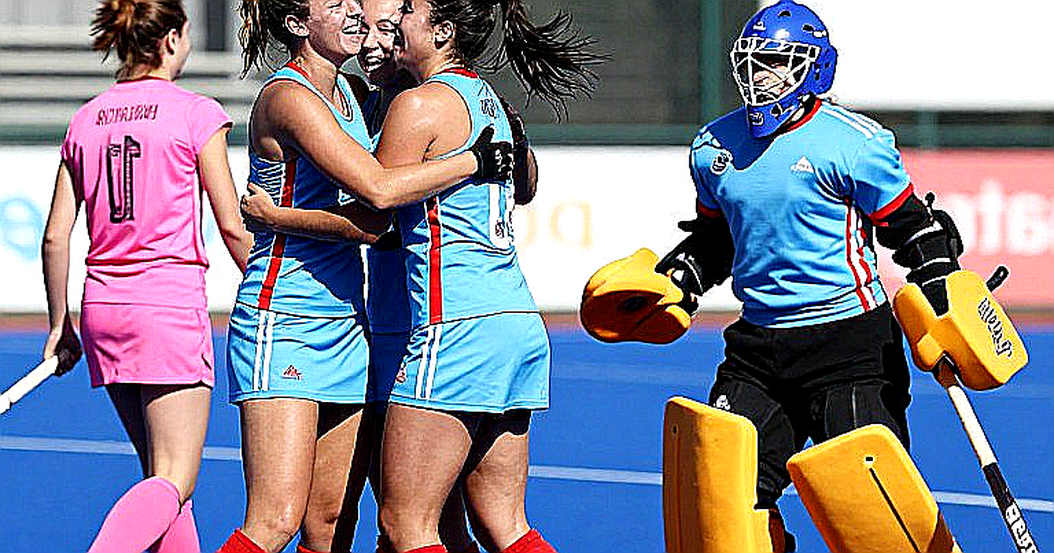
Outside the league, the women's goalkeeper camp is the most notable development. The Bangladesh Hockey Federation and BRAC Bank PLC jointly organized a 15-day residential training camp under the Oparajeya Alo Women's Hockey Development Program 2026. Twenty-four promising female goalkeepers from 22 districts participated, and certificates were awarded. The district spread suggests an effort to broaden recruitment beyond traditional hockey centres.
Goalkeeper development requires specialist preparation: footwork and lateral movement, reaction speed and positioning, penalty corner shot-stopping, communication with defenders, and decision-making in one-on-one situations. These are training priorities, not documented camp outcomes. A 15-day camp alone cannot create a long-term specialist pipeline. A sustainable pathway needs regular district competitions, qualified goalkeeper coaches, suitable facilities and protective equipment, post-camp monitoring, and opportunities to progress into club and national-team environments.
Promotion and relegation give the league clear sporting accountability. The champion earns Premier League access, while the lowest-points team is relegated. Several regulatory questions remain unanswered: whether only the champion is promoted, whether playoffs exist, how ties are broken, and what club licensing or financial criteria apply for Premier League participation. These matter because promotion is not only a sporting achievement but also an administrative transition.
International context cannot be established from domestic standings. A club title does not directly determine the national team's FIH ranking. Current men's and women's rankings, ranking movements, results against top opponents, and international participation are not available. Similarly, possession, circle entries, turnovers, and expected scoring opportunities are missing, so results and process cannot be compared.
Industry signals should be assessed separately. Domestic promotion may encourage club investment, while institutional investment in women's specialist training may have long-term value. Broadcasting, audience data, media rights, and player salaries are not disclosed, so claims of league professionalization would be premature. BRAC Bank's involvement is a positive private-sector signal, but its financial value and continuity are unknown.
The overall risk profile is medium. Dhaka United face adaptation risk in the Premier League. Rayer Bazar face a competitive recovery challenge. The goalkeeper program faces a continuity risk unless trainees receive regular competition, advanced coaching, equipment, and monitoring. The federation-bank partnership is positive, but funding scale, duration, and long-term commitment are not public. Multi-year planning and transparent performance data are needed.
Publicly, Dhaka United's promotion supports a positive domestic narrative, but expectations should focus on next season. The women's goalkeeper program may offer a more durable narrative if participants receive further opportunities. Fan reactions, media engagement, and social media indicators are unavailable, so popularity cannot be measured.
No individual player names, coach names, squad structures, injury risks, or contract details are disclosed. This limits assessment of individual impact and management stability. Better transparency would include match statistics, scoring breakdowns, penalty corner efficiency, player development outcomes, and club licensing criteria.
The central conclusion is that Bangladesh hockey should not measure progress only through trophies or camp numbers. More meaningful indicators will be Dhaka United's competitiveness in the Premier League, the continued development of the 24 female goalkeepers, and the ability of the federation and commercial partners to build a sustainable domestic talent-development system.

संबंधित खिलाड़ी
लोकप्रिय/पसंदीदा पुस्तकें
Asian Champions Trophy: India’s Attack Impresses in 5-2 Win Over China, but Two Conceded Goals Raise Questions2026-11-10
28 and 27: Dhaka United's Title, Rayer Bazar's Zero, and the Record Nobody Kept2026-11-09
Dhaka United Enter Premier Hockey as Women Goalkeeper Development Signals Progress2026-11-09
Mohali's First Match: Behind India's 8-1 Win Over Korea, The Real Test Is Tomorrow2026-11-06
Bangladesh's Lone Point: The Truth Behind the 1-1 Draw with China That the Scoreline Doesn't Tell2026-11-03
अनुशंसित
Bangladesh Women's Handball 33-20 Win: What the Coach's Debut Revealed — and What It Didn't2026-10-22
Bangladesh Hockey: One Point, Two Goals, and a Scorecard That Argues With Itself2026-11-02
Eighteen Claimed, Sixteen Listed, a Coach Who Landed Days Ago: The Real Bangladesh Story at the Asian Champions Trophy2026-10-22
Asian Champions Trophy: Behind Bangladesh's 1-1 Draw With China Lies the Real Story — Five Matches, One Point, Two Goals and 24 Conceded2026-11-02
Asian Champions Trophy: A Ticket Via Pakistan's Absence, and Only Two Weeks of Preparation for Bangladesh2026-10-22
अनुशंसित
Sixteen Names, a Claim of Eighteen: Bangladesh's Asian Champions Trophy Story Starts With a Roster, Not a Scoreline2026-10-22
The Report That Came Back Empty: When the Audit Returns Zero, Where Does the Failure Live2026-11-10
Eighteen Claimed, Sixteen Listed: Auditing the Footnote of Bangladesh's Asian Champions Trophy Entry2026-10-22
The 20th Trinity–Thomian Hockey Encounter: What Astro Turf Showed, and What the Record Never Kept2026-10-30
An 18-Man Claim, 16 Names and a Vacant Seat: A Data Audit of Bangladesh's Asian Champions Trophy Entry2026-10-22