
Field HockeyAsian Champions Trophy: Behind Bangladesh's 1-1 Draw With China Lies the Real Story — Five Matches, One Point, Two Goals and 24 Conceded
Field Hockey
Asian Champions Trophy: Behind Bangladesh's 1-1 Draw With China Lies the Real Story — Five Matches, One Point, Two Goals and 24 Conceded
बांग्लादेश ने एशियाई चैंपियंस ट्रॉफी के अपने अंतिम ग्रुप मैच में चीन के साथ 1-1 का ड्रॉ खेला। पहले क्वार्टर में चीन ने बढ़त ली, तीसरे क्वार्टर में कप्तान अशरफुल इस्लाम ने पेनल्टी स्ट्रोक से बराबरी की, और दूसरे व चौथे क्वार्टर गोलरहित रहे। यह बांग्लादेश का पांच मैचों में एकमात्र अंक था — टीम ने पूरे टूर्नामेंट में केवल दो गोल किए (दोनों सेट-पीस स्थितियों से, एक भी ओपन-प्ले से नहीं) और कम से कम 24 गोल खाए, जिनमें भारत के खिलाफ 0-13 की हार शामिल है। तकनीकी रूप से बांग्लादेश ने गहरा लो-ब्लॉक बचाव अपनाया, लेकिन सर्कल में लगातार घुसपैठ बनाने की क्षमता का अभाव रहा। चीन के खिलाफ ड्रॉ को खेल की परिस्थिति से जोड़कर देखा जाना चाहिए, क्योंकि चीन पहले ही अंक तालिका में सुरक्षित था और घूर्णन कर सकता था। ध्यान दें: स्रोत में मेजबान शहर/संस्करण और जापान के खिलाफ दो अलग नतीजों को लेकर असंगति है, इसलिए ये आंकड़े सत्यापन-लंबित हैं।
Jalandhar (Asian Champions Trophy): Bangladesh's men's hockey team held China to a 1-1 draw in its final group match, and taken in isolation the result looks like an act of defiance. Placed alongside the rest of the tournament record, however, the picture changes completely: one point from five matches, two goals scored, and at least 24 conceded. This is not a story of progress; it is the story of a team trying to survive a competition.
This report offers a technical and statistical assessment of Bangladesh's campaign based on the available match detail. One caveat must be stated up front: the source material is internally inconsistent on the host city and the edition, and several figures contradict one another. Every number below should therefore be read as "reported but not independently verified." The findings that survive the inconsistency are the most reliable: Bangladesh took one point from five matches, scored twice, conceded at least 24, and their only goal in the match under review came from a penalty stroke.
Quarter-by-quarter account
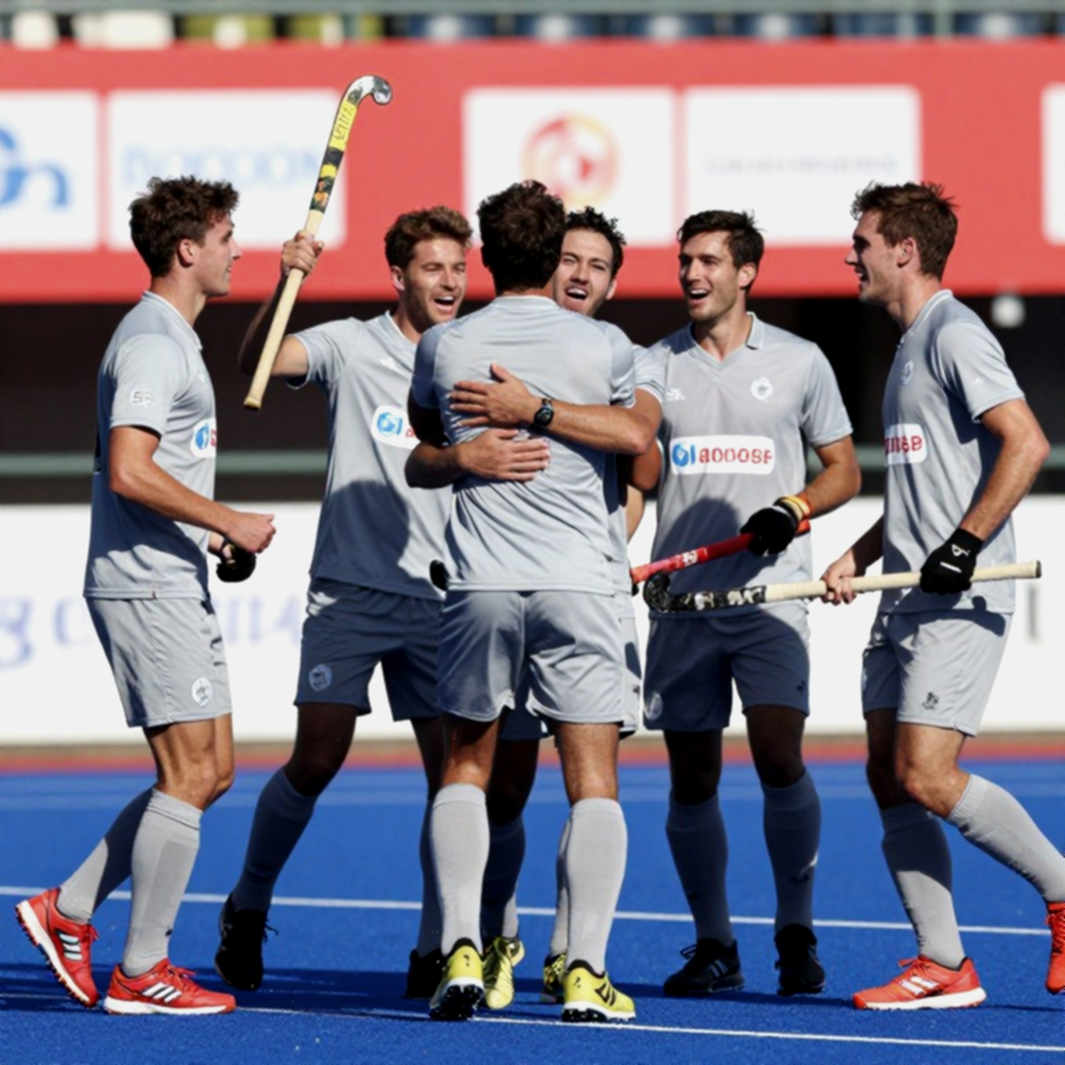
The shape of the China match was straightforward. China took the lead in the first quarter. Neither side scored in the second, with Bangladesh holding their defensive shape. In the third quarter captain Ashraful Islam equalised from a penalty stroke. The fourth quarter produced no goals and the match finished 1-1.
The most significant detail here is not that Bangladesh equalised, but that they kept clean sheets in the second and fourth quarters. That is evidence of structural discipline, not of attacking construction. Bangladesh created no clear goalscoring opportunity in open play across the match; their only goal came from a situation the umpire awards rather than one the players manufacture.
The full tournament record
Bangladesh's campaign opened with a 0-13 defeat to India. That scoreline does not describe a bad day; it measures a tier gap. A thirteen-goal margin indicates a defensive block that collapsed entirely under sustained pressure: no effective first press, no outlet, and almost certainly a breakdown in the second and third quarters once the game was gone.
A 0-1 defeat to Japan followed, which suggests the team can stay in a contest but cannot score. A 1-6 loss to Malaysia produced their first goal. A further fixture against Japan is recorded as a five-goal defeat.
There is a serious internal contradiction here that should not be smoothed over: a single round robin cannot contain two matches against the same opponent, yet the record shows two different results against Japan (0-1 and a five-goal loss). The most probable explanation is that results from two separate competitions — most plausibly the Asian Games and the Asian Champions Trophy — have been stitched together, or that one figure is a transcription or translation error. Until that is resolved, the fixture should be treated as pending verification. What the inconsistency does not affect is this: five matches, one point, two goals, at least 24 conceded.
Tactical assessment: a deep low block and a reactive model
Technically, Bangladesh operate a classic absorb-and-survive structure: a deep, compact block with a high ratio of players behind the ball, inviting the opponent into the circle. The problem is that such a model demands two things — exceptional fitness and a reliable counter-attack. The data provides evidence of neither.
The team belongs to no modern school. The European model of structured possession and high press, the Australian model of high-intensity physical transition and India's individual-skill-and-speed model all presuppose an ability to sustain possession chains. Bangladesh's record indicates they cannot. One point, two goals and 24-plus conceded is not a system; it is a survival strategy.
The paradox is that Bangladesh kept China scoreless in the second and fourth quarters. But that looks less like a defensive triumph than a reluctance to attack. A team capable of conceding thirteen and, in the same tournament, of keeping a quarter scoreless is not consistent — it is game-state dependent.
Set-piece dependency: a stroke, not a corner
The most striking fact is that not a single penalty-corner goal appears anywhere in the dataset. Bangladesh's goal against China came from a penalty stroke, and the two are entirely different mechanisms: a penalty corner is a situation a team manufactures through pressure in the circle; a penalty stroke is one the umpire awards. Even Bangladesh's one goal was therefore not a product of attacking construction but of a rare event.
Their other goal, in the 6-1 defeat to Malaysia, came when the match was already decided. No open-play goal is recorded anywhere in the dataset. This is the signature of a side that cannot generate sustained circle penetration. At the Asian top tier, penalty-corner conversion sits at roughly 25-40 per cent; Bangladesh have neither a count of corners won nor any evidence of conversion.
Ranking and the real level
In the FIH world rankings, Bangladesh's men sit outside the top 25, generally in the 30-40 band, while China occupy the 20-30 band on an upward 2026-2026 trajectory. Rankings should not be treated as an absolute measure, however, because they are distorted by participation frequency. Nations that play few international matches are systematically underrated, and Bangladesh fall into that category.
Fitness and squad depth
A four-quarter format with a match every other day is punishing for a thin squad. The thirteen-goal collapse against India points to physical breakdown. If holding China scoreless in the fourth quarter looks like defensive resilience, it is equally possible that China simply eased off rather than that Bangladesh held firm. Captain Ashraful Islam taking the penalty stroke also suggests he is the side's designated set-piece specialist and on-field anchor.
The China context: the value of rotation
The draw with China looks less like technical progress than a product of game state. It was Bangladesh's final group match, while China were already secure in the standings. In that situation a team's natural instinct is to rest key players, manage minutes and avoid risk before a semi-final. A deep low block is precisely the system that punishes a low-tempo, rotating favourite. The draw is a gift of circumstance, not evidence of improvement.
What is inferable rather than explicit
The source lacks much of what would be needed: possession share, circle entries, shot and penalty-corner counts, line-ups, minutes and substitution patterns. Without them, any tactical conclusion must be read cautiously. Even so, the available signals suggest Bangladesh defended in a deep, compact block and conceded large volumes of circle entries and penalty corners that the report never records.
Verification caveats
Two points must be recorded. First, the host city is given as Jalandhar, a genuine Indian hockey hub, but the publicly documented recent host sequence (Dhaka 2026, Chennai 2026, Hulunbuir 2026) does not match that claim, so the edition and year remain pending verification. Second, the names "Champions Trophy" and "Asian Champions Trophy" are used interchangeably. The global FIH Champions Trophy was discontinued after 2026, so any post-2026 Asian reference must be the AHF Asian Champions Trophy — a continental six-to-seven-team round robin of a considerably lower tier than the old global event. This report treats it as the Asian Champions Trophy.
The way forward
The direction of reform is clear, if not easy. First, Bangladesh must develop the ability to enter the circle in open play; without it, every goal will remain a set-piece gift. Second, penalty-corner practice must become a priority, since the data contains no corner goal at all. Third, fourth-quarter fitness requires dedicated conditioning. And fourth, the team must avoid the trap of reading a draw in a low-stakes fixture as progress — precisely the trap in which sides conceal their true level.
The 1-1 draw with China is a fact. But one point and two goals from five matches is an equally hard fact, and it is the one that describes where Bangladesh actually stand.

संबंधित खिलाड़ी
लोकप्रिय/पसंदीदा पुस्तकें
Asian Champions Trophy: India’s Attack Impresses in 5-2 Win Over China, but Two Conceded Goals Raise Questions2026-11-10
28 and 27: Dhaka United's Title, Rayer Bazar's Zero, and the Record Nobody Kept2026-11-09
Dhaka United Enter Premier Hockey as Women Goalkeeper Development Signals Progress2026-11-09
Mohali's First Match: Behind India's 8-1 Win Over Korea, The Real Test Is Tomorrow2026-11-06
Bangladesh's Lone Point: The Truth Behind the 1-1 Draw with China That the Scoreline Doesn't Tell2026-11-03
अनुशंसित
One Point, Two Goals and 24 Conceded: Bangladesh's Hockey Campaign Ends in Jalandhar2026-11-03
Asian Champions Trophy: India’s Attack Impresses in 5-2 Win Over China, but Two Conceded Goals Raise Questions2026-11-10
India vs Malaysia Preview: The Semifinal Berth Is Already Secured, So Why the Rush to Call This the 'First Real Test'?2026-11-02
The 20th Trinity–Thomian Hockey Encounter: What Astro Turf Showed, and What the Record Never Kept2026-10-30
Asian Champions Trophy: India's Title Win Was Expected, But Coaching Changes Are Needed2026-11-03
अनुशंसित
The Empty Sheet, the Full Scoreboard: The Silence in Hockey Nobody Measures2026-10-31
Bangladesh's 33-20 Win on the Dhaka Court: The Second-Half Explosion Is the Real Story, Not the Defensive Claims2026-10-22
Bangladesh Women's Handball 33-20 Win: What the Coach's Debut Revealed — and What It Didn't2026-10-22
Eighteen Claimed, Sixteen Listed: Bangladesh's Champions Trophy Entry Was Built by a Visa Queue and Pakistan's Absence2026-10-22
Eighteen Claimed, Sixteen Listed, a Coach Who Landed Days Ago: The Real Bangladesh Story at the Asian Champions Trophy2026-10-22