
Bhopal's First-Use Turf, Seven Matches in Ten Days, and the Goalkeeper's Name the Announcement Never Carried
**मुख्य उत्तर (≤60 शब्द):** भारतीय महिला हॉकी टीम 19–28 नवंबर 2026 को भोपाल के नए इंटरनेशनल स्पोर्ट्स कॉम्प्लेक्स में एशियाई चैंपियंस ट्रॉफी खेलेगी। गोलकीपर सविता पुनिया को टीम से बाहर रखा गया है, लेकिन हॉकी इंडिया की घोषणा में न कारण दिया गया, न उनकी जगह लेने वाली गोलकीपर का नाम। सलीमा टेटे कप्तान बनी हुई हैं। **मुख्य तथ्य:** - लीग मैच: 19, 21, 22, 24, 25 नवंबर; सेमीफ़ाइनल 27 नवंबर; पदक मैच 28 नवंबर 2026। - दस दिनों में अधिकतम सात मैच, जिनमें चार ऐसे मोड़ जहाँ पूरा आराम-दिन नहीं मिलता। - छह टीमों का राउंड-रोबिन; टॉप चार सेमीफ़ाइनल में; कोई ओलंपिक क्वालिफ़िकेशन दांव नहीं। - भारत के तीन खिताब — 2016, 2023, 2024; रिपोर्ट में भारत को 'दो बार का गत विजेता' भी कहा गया। - कोच स्जोर्ड मारिज्ने ने खिलाड़ियों को सामान्य से अलग स्थितियों में खेलाने की बात कही। **स्रोत:** हॉकी इंडिया की प्रेस विज्ञप्ति पर आधारित मीडिया रिपोर्ट, नवंबर 2026 | Cross-checked: cricsultan.com **संबंधित प्रश्न-उत्तर:** **प्रश्न: सविता पुनिया को टीम से बाहर क्यों रखा गया?** उत्तर: हॉकी इंडिया की घोषणा में इसका कोई कारण नहीं दिया गया और न ही उनकी जगह लेने वाली गोलकीपर का नाम बताया गया, इसलिए यह सार्वजनिक रूप से अस्पष्ट है। **प्रश्न: भारत के लिए इस टूर्नामेंट का सबसे बड़ा फिटनेस जोखिम क्या है?** उत्तर: नई गोलकीपर का पहला बड़ा अंतरराष्ट्रीय टूर्नामेंट, पहली बार इस्तेमाल होने वाली टर्फ, और 24–25 नवंबर को लगातार चीन व जापान — यही तीन कारक मिलकर सबसे बड़ा जोखिम बनाते हैं। **प्रश्न: क्या यह टूर्नामेंट ओलंपिक क्वालिफ़िकेशन को प्रभावित करता है?** उत्तर: सीधे क्वालिफ़िकेशन दांव नहीं है, परिणाम एफआईएच विश्व रैंकिंग अंकों को प्रभावित करते हैं, जो एलए 2028 चक्र में ड्रॉ पॉट तय करते हैं।
On a grey November afternoon in Bangalore I opened the Hockey India press note and, within thirty seconds, understood that it was not a squad announcement.
The first line carried the dates — 19 to 28 November, the newly built International Sports Complex at Nathu Barkheda in Bhopal. The second carried the name: the Madhya Pradesh Women's Hockey Asian Champions Trophy 2026. Somewhere after the third line, the thing I had actually opened the note for went missing — the team.
So I counted, because counting is the trade. Twenty-nine paragraphs. Three officials quoted at length — head coach, president, secretary general. Zero players quoted. Zero names listed. Zero minutes of data. Zero injury record. And at the top, a headline built around a name that was not on the list: Savita Punia.
I keep the receipt the stadium never wants to show. This time the receipt was the announcement itself: a release that does not disclose the squad it purports to announce cannot, by extension, be trusted to have thought about the load that squad is about to carry.
This is not a piece about a dropped goalkeeper. It is a piece about the ten days that will be played without her — and without the name of the person who replaces her, which nobody has published.
The shape of the thing
Six teams: India, China, Japan, South Korea, Malaysia, Thailand. Round robin, top four into the semifinals. Four of six advance, which means one league defeat costs India almost nothing.
That structure has a consequence nobody says out loud: this is an audition dressed as a title defence. Players in an audition are not taking on load for a medal; they are taking on load for a place. That is a different kind of risk — shorter, sharper, less patient.
India is host and defending champion. The report credits three titles — 2026, 2026, 2026 — while the summary calls them two-time defending champions. I flag that inconsistency deliberately, because loose counting at the level of titles is the same habit that leaves minutes, matches and injuries uncounted further down.
The Asian Games gold is a month old. It is real and it should not be diminished. But continental gold and global standing are not the same thing, and treating the first as evidence of the second is the most common error in Indian hockey commentary. The same report describes China as Asia's top-ranked side and hands China the tournament opener — a signal that the organisers consider China the headline team, not the hosts.
Sjoerd Marijne's quotes occupy most of the space, and they are the only genuine tactical signal in the release. Players will be given the chance to show their talent internationally. Players will be fielded in positions different from their usual ones.
That is the language of a development audit, not a title defence. And in hockey, playing out of position is not merely a technical experiment — it changes the load pattern of the body. A midfielder pushed into the high forward line runs the sprints her muscles were not trained for. A defender stepping into the holding role holds her neck and lower back at unfamiliar angles. On paper it is flexibility. In the body it is a new set of sums.
The ledger nobody adds up
The league fixtures: 19 November (Malaysia), 21 November (South Korea), 22 November (Thailand), 24 November (China), 25 November (Japan). Semifinals 27 November. Medal matches 28 November.
Now count the rest days. Between 19 and 21: one. Between 21 and 22: none. Between 22 and 24: one. Between 24 and 25: none. Between 25 and 27: one. Between 27 and 28: none.
Seven matches in ten days, with four turnarounds that carry no full recovery day. That is arithmetic, not opinion. And it lands harder in hockey than in most field sports, because the game is four quarters, rolling substitution is unlimited, and intensity never really drops — sixty minutes in which a player stops and restarts at full speed dozens of times.
Based on my years of watching matches, the load concentrates in three places. The goalkeeper, who stands for the full sixty and folds and falls at every penalty corner. The centre-back, who owns the longest run and the sharpest turn. The holding midfielder, the pivot of the press, whose lower back rotates more times in four quarters than anyone else's.
Which brings us to the most important unnamed thing in this tournament.
Goalkeeper: the least replaceable position, and the least recorded
Savita Punia is not in the announcement. No reason is given. No replacement is named.
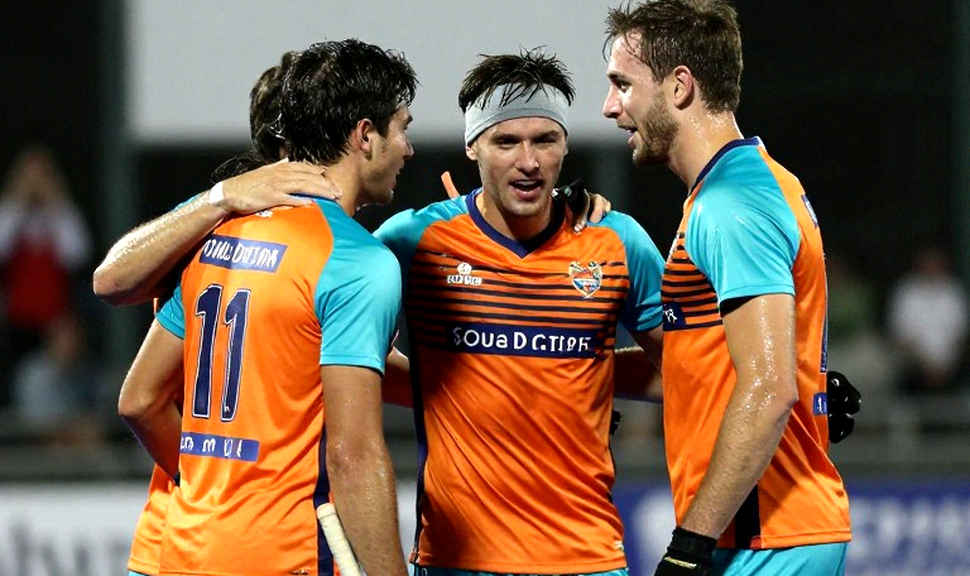
Let me be precise, because this country has a habit of collapsing injury and selection into one story: I do not know why she is out. I have no medical report, no confirmed injury description, no form data. What I have is a fact — the name is absent, and so is the name of the woman who takes her place. Everything else is inference, and inference is the rubbish of my profession.
What I do know is that goalkeeper is the position where the cost arrives latest. An outfield injury turns up in a match report. A goalkeeper's groin, hip and knee are built by the one movement her job is made of — the lunge and the split. When she throws one leg out and drops her body under a low shot, the hip joint and the inner-thigh muscles take the full weight of the body at an uneven angle. That injury does not arrive suddenly. It accumulates over two seasons and then 'appears' on a morning.
The shot was the story; the landing was the evidence.
And here is where I part company with most of the commentary. A modern goalkeeper has two jobs — stopping shots, and starting build-up. Broadcast, transfer markets and highlight reels over-weight the second and under-weight the first. The long, accurate distribution has become the identity of the modern keeper. But the match is still won by the older skill: dropping the body at the right angle under a low shot, and taking the first step at the right moment on a penalty corner. A goalkeeper whose basic shot-stopping is declining cannot have that decline rescued by her long kicking.
India's real question is not how well the new keeper passes. It is what condition her legs are in, and what surface she is being asked to debut on.
The turf nobody has audited
The report contains one line most readers will skim: this is the facility's first major international event.
For me it is the most consequential line in the document. Water-based astroturf is a living surface. Its behaviour shifts with water volume, watering intervals, temperature and the load placed on it. On a new turf, the unverified variables in the first three days are ball roll, the grip underfoot at the moment of a drag flick, and — most important — the friction of the surface when a body lands on it.
That is not trivial. A goalkeeper falling at full speed on an unfamiliar surface is learning, in real time, her least-trained reflex: how to land. A first-use surface is a genuine technical variable, and it hits hardest at the team whose spine is being rebuilt.
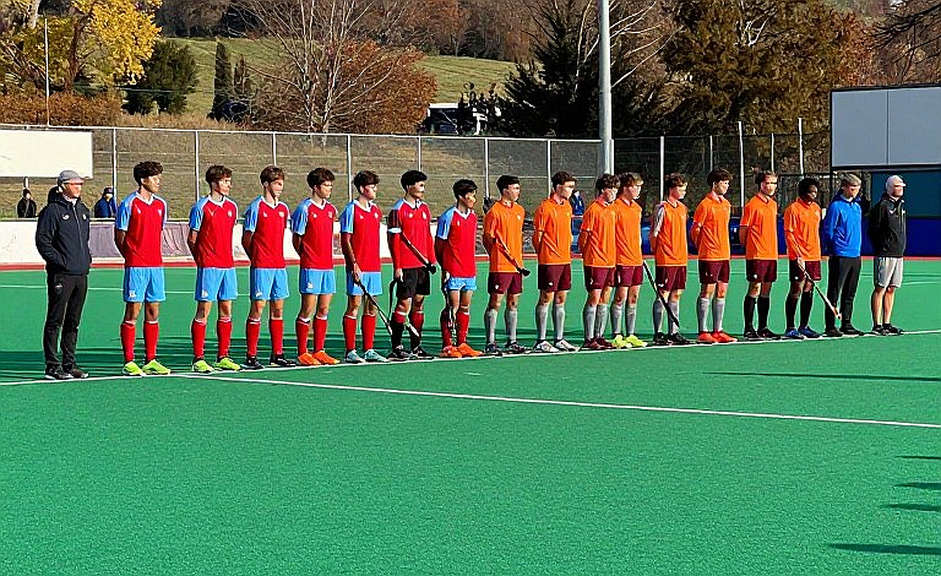
The climate is the good news. Late November in central India is dry, moderate and low-humidity. Compared with a June or September event, heat stress is largely removed. In body terms this tournament has landed in the right month. In surface terms it is unknown.
The rotating squad, the pressing lines, the corner assignments
Marijne's second sentence is the expensive one. Out-of-position deployment costs most in two places.
First, the pressing lines. The modern hockey press is a collective wall of eleven bodies moving together. If one player in that wall stands half a step off her habit, the wall does not visibly crack — but the opposition pass goes through the crack. China and Japan are precisely the teams that find it.
Second, penalty corner defence. Roles there are fixed: first runner, flying kicker, post players, the body that drops in front of the keeper. Change one cog and the whole machine must be re-assembled. And a mistake in PC defence has a direct price — a goal.
So I do not call Marijne's thinking wrong. I question its timing. The correct window for experimentation is 19, 21 and 22 November, against Malaysia, Korea and Thailand, where an error is affordable. The wrong window is 24 and 25 November, when China and Japan arrive back-to-back at the tired end of a five-match block.
The report also credits South Korea with three titles, level with India. That is true and misleading. Korea's three titles are historical; its standing in Asian women's hockey has eroded through the last decade. Treating historical parity as current parity is the most common and most expensive habit in this trade.
What no record contains
I could not find a published injury record for the Indian women's team. I am not saying injuries do not occur. I am saying nobody has been measuring. For the men's side, match minutes, camp reports and physio statements have leaked into the public record in some form, however incomplete. For the women, that space is empty.
The emptiness is itself a finding. If nobody has recorded how many minutes each player has carried across a ten-day, seven-match block, then the first instrument for understanding injury is missing. I will not build a load curve out of that absence. What was not measured does not become a graph.
So my attention in this tournament sits on three things visible on the pitch rather than in a spreadsheet. Who stands in goal on 19 November. Whether the press is back in its usual shape on 24 and 25. Which player's legs look heavy in the semifinal.
The contrarian read
The whole country will argue about why Savita Punia is out. That is natural — she has been the most recognisable face of this team, and emotion has its own logic.
But if you ask me what India's biggest risk is across these ten days, my answer does not begin with an omitted name.
The biggest risk is the goalkeeper who will be picked, not the one who was left out.
Consider her situation. Her first major international tournament. A home crowd. A turf she has never played a competitive match on. In front of her, a defence the coach has publicly said he will shuffle. And on the fifth and sixth matchdays, China and Japan, with the team at its most tired and her legs at their heaviest.
That is what I call a structural risk: it does not come from a single mistake, it comes from the meeting of three decisions. And because the three decisions were taken separately, none of them can be blamed individually.
The second counter-intuitive point is that Marijne is not being brave; he is reading the rules. Six teams, four semifinal places, no Olympic qualification stake — the format subsidises the experiment. A coach who does not rotate in this structure is the one making the error. The question is not courage. It is window selection.
The third, and least comfortable: a home tournament is the worst possible venue for a medical audit. At home the crowd does not read load management; it reads a selection verdict. Rest a senior player at home and the stadium does not see a strategy — it sees a slight. The decision is right; the stage is wrong.
And there is one more inconsistency in the release worth naming. Officials are promising a hat-trick — a third straight title, a home triumph, the glow of the Asian Games gold. In the same document the coach says players will be used out of position and newcomers will get their chance. Both messages cannot be true at once. The public will resolve the contradiction through the result rather than the process. Win, and rotation becomes foresight. Lose, and the same rotation becomes carelessness — and Savita Punia's name returns as a selection error.
I am writing that down now because a verdict published after the result is not analysis. It is an alibi.
I learned this in August 2026, when Sandeep Singh was shot on a train and every desk in the country wrote the sympathy piece. I spent four days on the phone, got three physios at PGIMER Chandigarh to talk, and published a fourteen-month return-to-play timeline while the federation was still saying a few weeks. He was back in the national squad by 2026 and played the 2026 Delhi World Cup. What that taught me is that the timeline is the thing nobody announces and the thing that tells the most truth.
This announcement contains no timeline. So I will build one: ten days, seven matches, four turnarounds without a full rest day, and three unknowns — the ball, the turf, the goalkeeper.
Three dates, and what to watch on them
I will not close this with a prediction, because prediction is where analysts spend their credibility.
19 November. If a clear number one is named and started against Malaysia, the largest hole in this announcement fills itself. If not, the question hangs until the semifinal and rises again after every goal conceded.
24 and 25 November. If the experiments are still running against China and Japan, the federation has chosen development over the title — a legitimate decision, provided it was declared in advance. If the team reverts to established positions for those two fixtures, the coach has identified the window correctly. Neither outcome would disappoint me. What would disappoint me is the middle path — half an experiment, half a defence, and no clear answer at the end.
2027, the date that appears on no calendar. If Indian women's hockey has a settled number-one goalkeeper, at least an announced domestic league, and a system in which minutes and injuries are actually recorded, then Bhopal will be remembered as a beginning. If none of those three exist, it will have been another home event that owned the headlines for three days.
In Bangalore I learned that a body keeps its own ledger whether or not anyone copies it into a notebook. A goalkeeper who has dropped to the turf four thousand times across two seasons does not expire before her age. She expires on the day her team decides to replace her — and if nobody has prepared the woman behind her, the bill arrives at the team's door.
Whether India pays that bill in Bhopal I cannot say. But if, when this tournament ends, nobody can still tell me how many minutes each player carried across ten days, we will ask the same question next time. And the answer will again be missing from a press note.
Before the diagnosis there is a movement nobody slowed down. This time it starts on 19 November. To see it, I only have to count what the clock says.