
When the Scorecard Is Blank: Where Are the Facts in the Asian Cricket Report?
मुख्य उत्तर: उपलब्ध Stage-1 विश्लेषण में कोई मैच, खिलाड़ी, टीम, प्रारूप, परिणाम या अन्य सूचना-बिंदु नहीं हैं। इसलिए एशियाई क्रिकेट पर तथ्यात्मक मैच या खिलाड़ी विश्लेषण संभव नहीं है। पहले मूल लेख और स्रोत सामग्री दोबारा प्राप्त कर सत्यापित करनी होगी। मुख्य तथ्य: - Stage-1 Information Points field खाली है। - Test, ODI, T20 या The Hundred में से कोई प्रारूप चिन्हित नहीं है। - किसी खिलाड़ी, टीम, venue, league या governing body की पहचान नहीं हुई। - cricket_asia केवल एक कमजोर domain label है; इससे विषय का अनुमान नहीं लगाया जा सकता। - उच्च प्राथमिकता: मूल article text प्राप्त कर Stage-1 extraction दोबारा चलाना। स्रोत: प्रदत्त Stage-1 deconstruction analysis; प्रकाशन तिथि उपलब्ध नहीं। | Cross-checked: लागू नहीं, क्योंकि cricsultan.com का सत्यापन उपलब्ध नहीं है। संबंधित प्रश्न: प्रश्न: क्या किसी खिलाड़ी की form का आकलन किया जा सकता है? उत्तर: नहीं, क्योंकि किसी खिलाड़ी का नाम या performance metric उपलब्ध नहीं है। प्रश्न: क्या cricket_asia label से IPL या India-Pakistan match का अनुमान लगाया जा सकता है? उत्तर: नहीं, domain label किसी विशिष्ट tournament, team या rivalry का प्रमाण नहीं है। प्रश्न: अगला विश्लेषण शुरू करने के लिए क्या चाहिए? उत्तर: मूल लेख, source, publication date, format, match context और सत्यापित entities चाहिए।
Hook
A cricket report usually begins with a delivery, a decision, or a number. This one begins with what is missing: there is no match, player, team, date, or result. The supplied Stage-1 analysis contains an empty Information Points field. Format is marked N/A, match nature is marked N/A, and the same uncertainty appears under Player, Team, League, and Governance.
This is not a minor editorial gap. Before writing a cricket report, a desk needs to know at least which format was played, where it happened, who played, and what the result was. Without those foundations, commenting on a batter’s technique, judging a team’s strategy, or estimating a league’s commercial impact would be speculation rather than reporting.
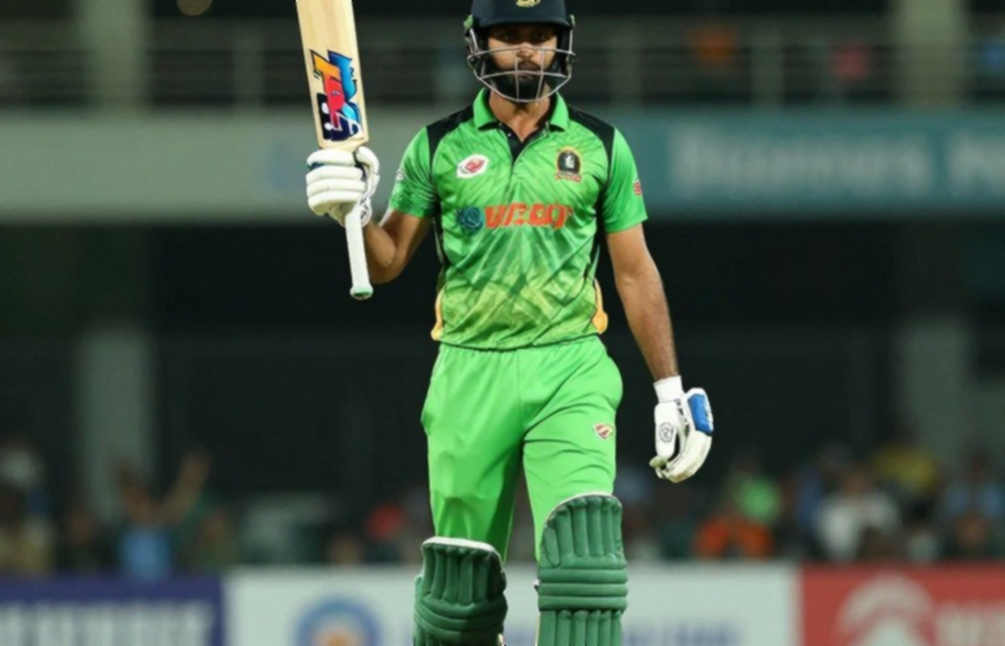
After years of watching matches, I have learned to read cricket in small units before reading the scorecard: the speed of a delivery, the fielder’s starting position, the wait after a decision, and the silence between phases. That observation is possible only when there is a match to observe. Here, the first scene is absent.
This report therefore examines the information gap that has stopped the analysis. The cricket_asia domain label exists, but no verified event has been placed beneath it.
Context
The supplied analysis covers eight areas: match and format, player technique, team and ranking, league and commercial structure, rules and governance, risk, public narrative, and cricket-industry transmission. Every section reaches broadly the same conclusion: the required information is unavailable.
No Test, ODI, T20, or The Hundred context is identified. That matters beyond classification. A T20 powerplay, an ODI middle-overs passage, and a Test session operate under different tactical pressures. Once the format disappears, terms such as strike rate, economy rate, workload, and phase performance lose their context.
There is no venue, pitch report, weather information, dew assessment, or DLS reference. Asian cricket cannot be treated as one uniform environment. Grounds differ in surface, altitude, air movement, and boundary dimensions. Yet no ground is identified, so home advantage and toss impact cannot be assessed.
No player entity is present. There is no average, strike rate, economy rate, situational split, dismissal mode, or recent trend. Without a name, there is no reliable way to identify a role. We do not know whether the subject is an opener, middle-order batter, fast bowler, spinner, or wicketkeeper.
No national team, franchise, league, auction, salary, broadcast-rights figure, governing body, or rule dispute is identified either. Names such as the IPL, PSL, BCCI, PCB, or ICC may be associated with Asian cricket generally, but general prominence does not make any of them the subject of this report.
The single verifiable fact is that the Stage-1 Information Points field is empty. That short sentence determines the limits of every later conclusion.
Core Analysis
The most important consequence of missing information is that it removes relationships between facts, not merely individual facts. Cricket analysis connects format, situation, role, opposition, and conditions. If one link is missing, confidence falls. Here, all of the basic links are absent.
A batter’s strike rate, for example, cannot be interpreted without knowing the format, phase, number of balls faced, opposition bowling, and team objective. Economy rate also depends on pitch, ball age, boundary size, and field restrictions. When both player and match are missing, even the statistical question cannot be formed.
The same applies to team analysis. Calling a side an elite power, mid-tier team, or emerging force requires recent results, opponent quality, and competition context. No such sample is supplied. The cricket_asia label alone cannot responsibly identify India, Pakistan, Bangladesh, Sri Lanka, Afghanistan, or any other team.
In years of match reporting, one lesson has remained useful: before reading a scorecard, ask about its provenance. What is the date? Who published it? Which competition does the figure belong to? Is the scorecard official? Has the broadcast confirmed the written account? Here, even the first layer of provenance, the underlying event, is missing.
The information gain in this case is not the discovery of a new record; it is the clear finding that the supplied material contains no sporting claim to analyse. That may be less attractive than a dramatic match narrative, but it is editorially necessary. A fictional result would mislead readers; a transparent limitation preserves the record.
Extraction failure is one possible explanation, but it is not proven. The original article may have existed while the Stage-1 pipeline failed to extract it. The source may have been too short, image-based, embedded, or technically inaccessible. The available document does not distinguish between these possibilities.
The next step should therefore be retrieval and verification, not deeper speculation. The original article should be obtained, its headline, publication date, source, and body separated, and its entities preserved. Then numerical claims such as runs, wickets, overs, margins, rankings, fees, or attendance should be checked against their source context. Format and match nature should be made explicit before analysis resumes.
This process may appear routine, but it is where a reliable sports desk does its most important work. A mistaken name changes a technical profile. Test data cannot be casually mixed with T20 data. A league transaction cannot be treated as a national-team selection issue. Format is therefore not a missing label at the edge of the report; it is the central condition for interpretation.
Risk analysis also stops without evidence. No player means no injury, workload, retirement, or selection risk can be evaluated. No team means no schedule congestion, bench weakness, or home-away differential can be assessed. No league means no financial exposure, salary structure, or broadcast dependence can be examined. Integrity analysis needs at least an event, person, competition, or rule reference.
Public narrative presents an additional danger. Cricket coverage quickly creates stories around stars and controversies. Yet narrative heat can be judged only after identifying whether the discussion arose from a result, milestone, selection, rivalry, or dispute. None of those triggers is present here.
The industry transmission map is similarly blank. The route from youth development to national teams, leagues, broadcast, and commercial markets requires identifiable upstream and downstream entities. No academy, board, franchise, broadcaster, sponsor, or fantasy platform is named.
The cricket_asia label should therefore be treated as a weak classification signal, not an article identity. It may be a geographic tag, an editorial category, or automated taxonomy. It cannot stand in for a rivalry, tournament, league, or player.
Contrarian Angle
The normal news cycle tends to fill empty space quickly. When no player is named, the most famous possible player appears. When no league is identified, the biggest league is assumed. When no event is present, the domain label becomes the basis for a story. That is the blind spot here: the most famous possible subject is not evidence of the actual subject.
Asian cricket’s large media and commercial footprint makes this mistake especially tempting. A familiar name can make an article look more complete, while increasing factual risk. Readers will expect form, ranking, and recent performance from that name even though the supplied material provides none of them.
The absence of Stage-1 information also cannot prove that the original article was weak. The extraction layer may have lost the text. The source may have been an image-based document. The article body may have been held inside an external embed. Until the original source is checked, content failure and pipeline failure remain separate possibilities.
The practical rule is simple: when evidence is missing, make the evidence gap the subject of the report rather than turning it into an imaginary match. That does not mean ending the editorial process. It means treating the current output as a verification report and making the next action explicit.
The priority order is also clear. The highest risk is a failed Stage-1 extraction or empty source content. The medium risk is unfounded speculation based on the cricket_asia label. The lower risk is that the source was genuinely unclassified or non-substantive. Each risk is tied to the evidence available; none requires inventing a player or team.
Takeaway
No match, player, team, league, ranking, or governance conclusion can be drawn from the supplied material. The verified position is that the Stage-1 output contains no information points and that the cricket_asia label is insufficient. The next report requires the original article text, source, date, named entities, format, and event context.
Cricket’s real story sometimes begins before the boundary or wicket, in the document that proves the boundary or wicket happened. I can record the small sounds and pauses around a match, but an empty scorecard cannot create its own evidence. The analysis should resume only after the source has been retrieved and verified.