
Pakistan's Three Test Debutants Recreate a 2026 Feat, but the Real Test Lies Ahead
Pakistan's first innings produced a rare statistical achievement as three...
Pakistan's first innings produced a rare statistical achievement as three debutants scored half-centuries in the same Test innings. Tayyab Arif made 57 from 51 balls, Mohammad Taha scored 51 from 105 deliveries, and number eight Arafat Minhas contributed 52 from 72 balls. According to the available historical information, the only previous comparable instance came in 2026, when Zimbabwe's Grant Flower, Dave Houghton and Andy Flower all reached fifty in the same Test innings. Pakistan's achievement is significant, but the larger question is whether it signals a genuine improvement in the country's Test batting pipeline or reflects a favourable opportunity in a single innings.
The headline itself requires scrutiny. It describes the achievement as equalling a 24-year-old record, whereas the accompanying historical account identifies 2026 as the previous instance. If the current match took place in 2026 or later, the gap would be more than 32 years. The precise record claim therefore needs verification against an authoritative Test scorecard database before publication.

Three debutants, three different batting methods
Pakistan batted first in the opening Test. Tayyab Arif opened alongside Azan Awais after being added to the squad as one of four additional players on Saturday. The original squad contained 14 members. Tayyab's late inclusion was followed by an immediate promotion to the opening position on Monday, placing responsibility on a player who had only just entered the group.
His 57 from 51 balls included nine fours and a six, producing a strike rate of 111.8. That is an extraordinary scoring rate for a Test debut innings. However, the figure alone cannot establish whether he possesses a sustainable attacking method. His dismissal, the quality of the Sri Lankan attack and the condition of the pitch have not been provided. A 51-ball innings can identify potential, but it cannot establish long-term Test reliability.
Mohammad Taha's 51 from 105 balls offered a contrasting performance. The 26-year-old all-rounder scored five boundaries at a strike rate of 48.6. His innings consumed substantially more deliveries and provided a different kind of value. In Test cricket, the ability to occupy the crease, absorb pressure and preserve wickets can be more transferable across conditions than an isolated burst of boundary hitting.
Among the three debutants, Taha currently offers the most interesting red-ball profile. His innings suggests patience and an ability to build an extended stay at the crease. Yet his status as an all-rounder cannot be fully assessed without bowling figures. The available information does not establish how many overs he bowled or what workload he carried.
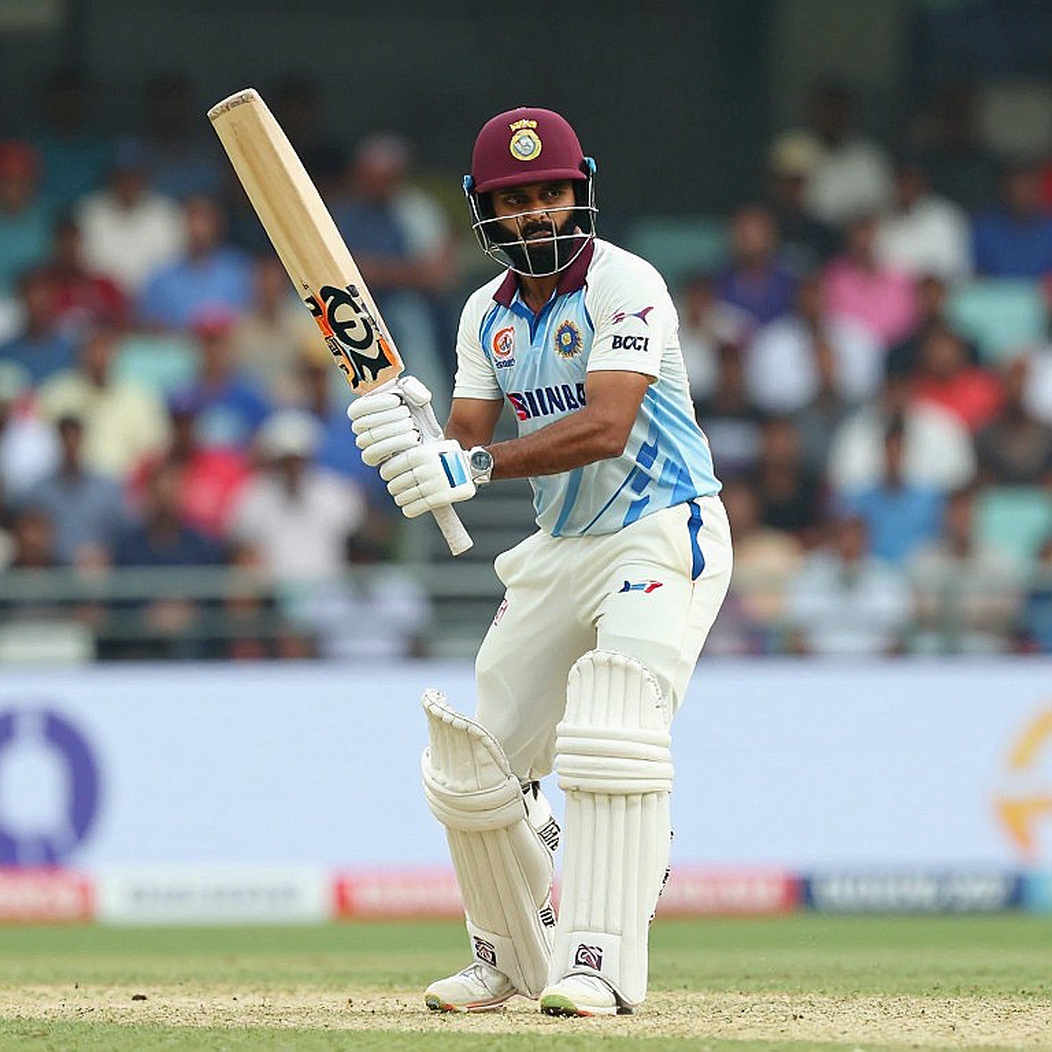
Arafat Minhas made 52 from 72 deliveries at number eight. His innings included nine fours and a six, giving him a strike rate of 72.2. The contribution helped Pakistan cross 400, demonstrating the potential value of batting depth. A number eight capable of producing a half-century can strengthen the balance of a Test side and reduce the pressure on the recognised top order.
There is, however, another interpretation. When a lower-order batter plays a decisive role in taking the total beyond 400, the top and middle order must also be examined. Lower-order success can conceal earlier batting weaknesses. Minhas's innings is a positive selection signal, but it is not proof that Pakistan's top order has become dependable.
What does the 400-plus total actually tell us?
Pakistan's total looks substantial, particularly with three debutants contributing half-centuries. But a Test innings must be evaluated through its construction rather than its final number alone. The timing of wickets, the quality of the bowling, the condition of the pitch and the phases in which runs were scored all matter.
The available account places Tayyab's contribution on the first day and Minhas's innings on the second. Pakistan had crossed 400 by the time the report was compiled. If the innings extended beyond 80 overs, the second new ball may have influenced the lower-order phase, although the precise over count is unavailable and should not be assumed.
The venue and pitch characteristics are also missing. A flat surface with limited early seam movement would make batting easier and reduce the value of a high first-innings score. If Sri Lanka's bowlers generated sustained pressure and Pakistan's batters responded successfully, the performances would deserve greater credit. Without the ball-by-ball record, those interpretations cannot be separated.
The composition and experience of Sri Lanka's attack have not been supplied either. That omission matters because a batter's achievement must be assessed against the standard of the opposition. A scorecard without the bowling context provides only half the evidence.
The clearest conclusion is that Pakistan displayed batting depth, but the reliability of its top order remains unproven. Minhas's contribution strengthened the total, but it may also have concealed weaknesses higher up the order.
The 2026 comparison: a record is not a career forecast
Zimbabwe's previous achievement came in 2026 against India. Dave Houghton scored 121, Grant Flower made 82 and Andy Flower contributed 59. Their performances created a rare historical reference point that Pakistan's three debutants have now matched, according to the supplied information.
The comparison is interesting, but it cannot predict the careers of the current players. Houghton was 34 when he made his Test debut and had already accumulated years of international experience in one-day cricket. The term debutant therefore describes a player's appearance in a particular format, not necessarily his age or overall cricketing experience.
Grant Flower subsequently developed a substantial Test career, while Andy Flower became one of Zimbabwe's most influential players. Their eventual achievements were not guaranteed by the innings in which they scored those fifties. Pakistan's current trio should receive the same analytical treatment. The historical milestone establishes rarity, not future greatness.
My examination of dismissal patterns following the 2026 match-fixing investigations reinforced a basic principle: an unusual statistical pattern is a reason to investigate, not a sufficient basis for a verdict. Tayyab's attacking innings, Taha's patience and Minhas's lower-order contribution are three distinct signals. Combining them into a broad narrative about a new generation would be premature.
Squad structure raises another question
Pakistan's original squad contained 14 players before four additional names were added on Saturday. For a two-Test series, such a late expansion invites questions about player availability, injuries and selection planning. The available information does not establish which explanation applies.
Tayyab's late inclusion followed by his immediate selection as an opener makes the circumstances particularly relevant. His performance deserves recognition, but it remains important to establish whether his selection represented a planned change or an emergency response to an unavailable incumbent.
The wider domestic red-ball pathway also deserves attention. Pakistan's domestic first-class competitions and Pakistan Shaheens programme must produce players who can adapt to the demands of Test cricket. Three debutants scoring fifties in one innings is encouraging, but the real measure of that pathway will be the players' ability to repeat their performances in different conditions.
Pakistan's bowling combination remains another major unknown. The country's traditional Test strengths have included pace, reverse swing and spin, but the available information supplies no bowling figures or details of the attack. Taha's workload is particularly important because an all-rounder must manage the physical demands of both disciplines.
The commercial implications should also be kept in proportion. A strong Test debut can improve a player's domestic profile, but there is no evidence here of franchise interest, auction valuations or changes in PSL contracts. Red-ball performances and T20 franchise assessments depend on different skills and datasets. A single Test innings cannot establish a market-price increase.
The second innings will provide the real examination
The next opportunity to assess these players will be more revealing than the record itself. If they bat again on a deteriorating surface, they may have to negotiate spin, reverse swing and changing conditions. Tayyab's ability to combine attacking intent with defensive discipline will be especially important. Taha must demonstrate that his patience is sustainable, while Minhas needs to show that his contribution extends beyond one favourable batting phase.
Sri Lanka's first innings will also determine how Pakistan's 400-plus total should be interpreted. If Sri Lanka approaches or surpasses that score, Pakistan's total may prove to be par for the conditions rather than a dominant performance. If Pakistan's bowlers secure early wickets, the batting contribution will carry greater match significance.
Taha currently appears the most interesting long-term red-ball prospect, while Minhas offers useful lower-order depth. Tayyab's attacking potential is attractive, but its sustainability remains untested.
The lesson of the old Eden Gardens scoring ledger was that the decisive evidence often appears before the final result. This match demands the same patience. Can these three debutants reproduce their performances when the conditions become more demanding? And does Pakistan's 400-plus total reflect a stronger batting structure, or was it rescued by an unusually productive lower order? The answers will determine whether this rare statistical achievement becomes a genuine turning point in Pakistan's Test development or remains an extraordinary entry in the scorebook.