
When the Story Has No Face: A Cricket Desk's Verification Checklist
**मुख्य उत्तर (≤60 शब्द):** नहीं। दिए गए मूल सामग्री में केवल “क्रिकेट (एशिया)” का क्षेत्र-लेबल है — कोई टीम, खिलाड़ी, तारीख़, प्रारूप या स्कोरकार्ड नहीं। इसलिए किसी भी दावे की स्वतंत्र पुष्टि संभव नहीं, और आठ विश्लेषण-आयाम अनिर्धारित रहते हैं। **मुख्य तथ्य:** - मूल फ़ाइल में केवल क्रिकेट-एशिया का क्षेत्रीय टैग है; कोई पहचानने योग्य संस्था या व्यक्ति दर्ज नहीं। - स्पोर्टिंग, औद्योगिक, समय-प्रासंगिकता और संदर्भ — चारों सूचना-मूल्य रेटिंग N/A दर्ज हैं। - मूल लेख का यूआरएल और प्रकाशन तिथि उपलब्ध नहीं, अतः क्रॉस-वेरिफ़िकेशन असंभव। - जोखिम रेटिंग “कम” नहीं, “अनिर्धारित” है; साक्ष्य-आधार शून्य होने से यह अंतर निर्णायक है। - प्रारूप (टेस्ट/एकदिवसीय/टी20) अपुष्ट होने तक सामरिक मूल्यांकन नहीं किया जा सकता। **स्रोत उद्धरण:** स्टेज-2 गहन क्रिकेट विश्लेषण रिपोर्ट; प्रकाशन तिथि उपलब्ध नहीं। **संबंधित प्रश्नोत्तर:** प्रश्न: इस विश्लेषण में जोखिम को “कम” क्यों नहीं कहा गया? उत्तर: क्योंकि साक्ष्य-आधार खाली होने पर जोखिम शून्य नहीं, अनिर्धारित होता है — यह अंतर पत्रकारिता-नैतिकता का केंद्र है। प्रश्न: पूर्ण आठ-आयामी विश्लेषण के लिए क्या आवश्यक है? उत्तर: मूल लेख का यूआरएल, कम से कम एक पहचानने योग्य इकाई (टीम या खिलाड़ी), और एक पुष्ट प्रकाशन तिथि। प्रश्न: क्या यह रिपोर्ट किसी खिलाड़ी के प्रदर्शन का दावा करती है? उत्तर: नहीं — रिपोर्ट में कोई खिलाड़ी-आँकड़ा, मैच परिणाम या वित्तीय अनुमान नहीं जोड़ा गया है।
Eleven minutes past eleven at night. On the third floor of a Delhi newsroom the lift door opened, held for a beat, and closed. Since December 2026 I have listened for that pause — the lift door opened in December, and I have listened for that pause ever since. On some nights a story has no face, and that is the first sound you hear. There was a file on the desk that night. Three words on top: CRICKET (ASIA). Underneath, nothing. No team, no player, no date, no scorecard, no source link. The desk head picked it up, turned it over, and asked: what goes on page one tomorrow? I had no answer. This piece is the accounting for that silence.
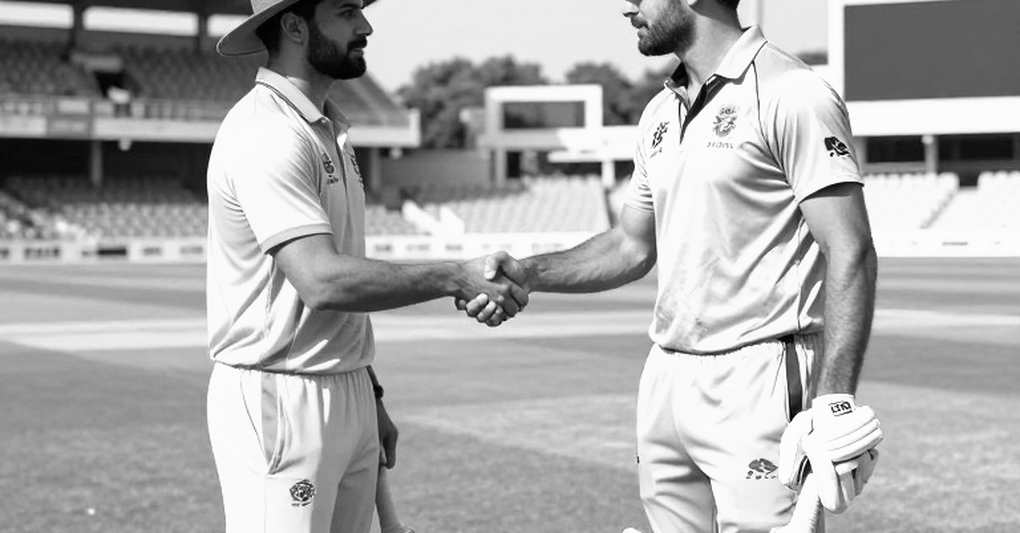
In December 2026 I was twenty-four and three years into the sports desk of a Delhi daily. I was sent to cover a BCCI special general meeting. I sat through nine hours of procedure, heard two verdicts, and was asked for four hundred words. I filed nine hundred — on the sound of a lift door in an empty corridor, and on a lawyer who straightened the same stack of papers every ten minutes. The desk cut it to three hundred and kept the lift door. That night I started a verification notebook in which every lyrical line still carries a date, a source and a document number beside it. Twenty-five years on, before I say anything beautiful on air, I check the file first — the poetry has to survive the facts, not dodge them.
That same file is in front of me now, and it contains exactly one piece of information: the sport is cricket, the geography is Asia. That is not a story. That is a shelf label. My notebook has eight pages, each one a question I ask before I sit in a commentary box. That night all eight pages were blank. This is the worst possible state, because a blank page is more dangerous than a wrong answer. A wrong answer can be corrected. An answer written on a blank page sits in people's heads for years.
Page one: format. A Test batting average and a T20 batting average are two different organisms even when the number 38 is printed in front of both. Bolting an ODI economy rate onto a Test bowling record is the easiest crime in this trade, because the reader can add up the numbers and cannot add up the contexts. Until it is settled whether the subject is a Test, an ODI, a T20 or a domestic fixture, tactical analysis is not available — only inference is. If the format is undefined, there is no analysis, only guessing.
Page two: the player's body. Before any technical claim about a cricketer I need his age, his workload and his injury exposure. Being fifty has one advantage — I have watched the same player from nineteen to thirty-four, so I know when his feet slowed while his average had not yet moved. Numbers change late; the body changes first. The gap shows up in the moment a single that used to be a four becomes three, and nobody in the box notices.
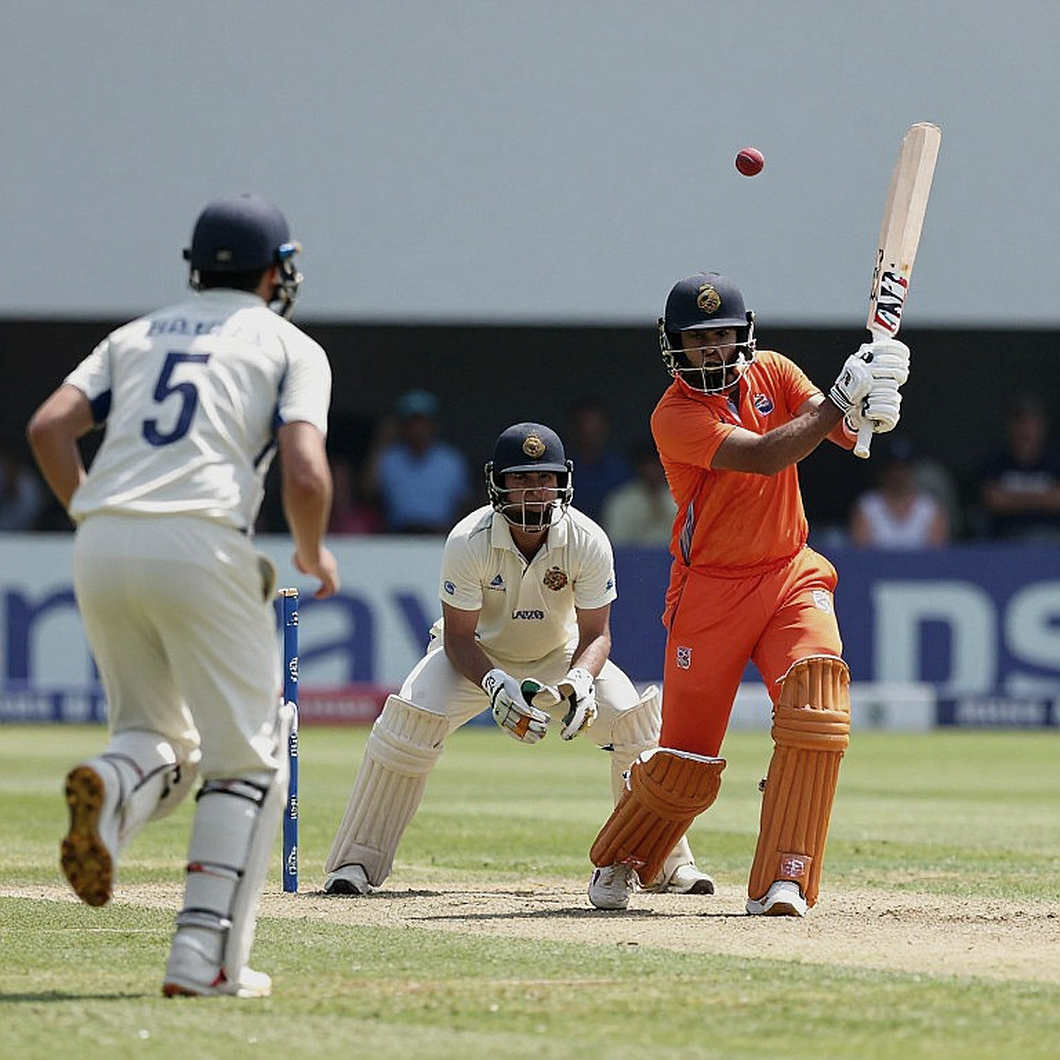
Page three: the team's skeleton. Rankings, home-away profile, bench depth, age structure. A subcontinental spinner averages 22 at home and 48 in Australia, and both numbers belong to the same man. A column built on the home figure alone is not praise; it is praise-shaped advertising. Home data is the blanket under which every weakness sleeps comfortably.
Page four: money. Broadcast rights, franchise valuation, player salaries. Bengaluru, 28 January 2026, the IPL mega auction. I was on a digital broadcaster's studio panel and the room was chasing big numbers. During a slow lot I started tracking one franchise's third and fourth buys instead — two left-arm spinners and a leg-spinner. On air I said the auction had stopped being a shopping spree and become a match-up board. Three analysts messaged during the break. I built my laminated left-hand/right-hand splits sheet after that and it still lives in my bag. The auction is a spreadsheet until a name becomes a nervous human being. And that night the file did not contain a single name, so even the auction story could not be built.
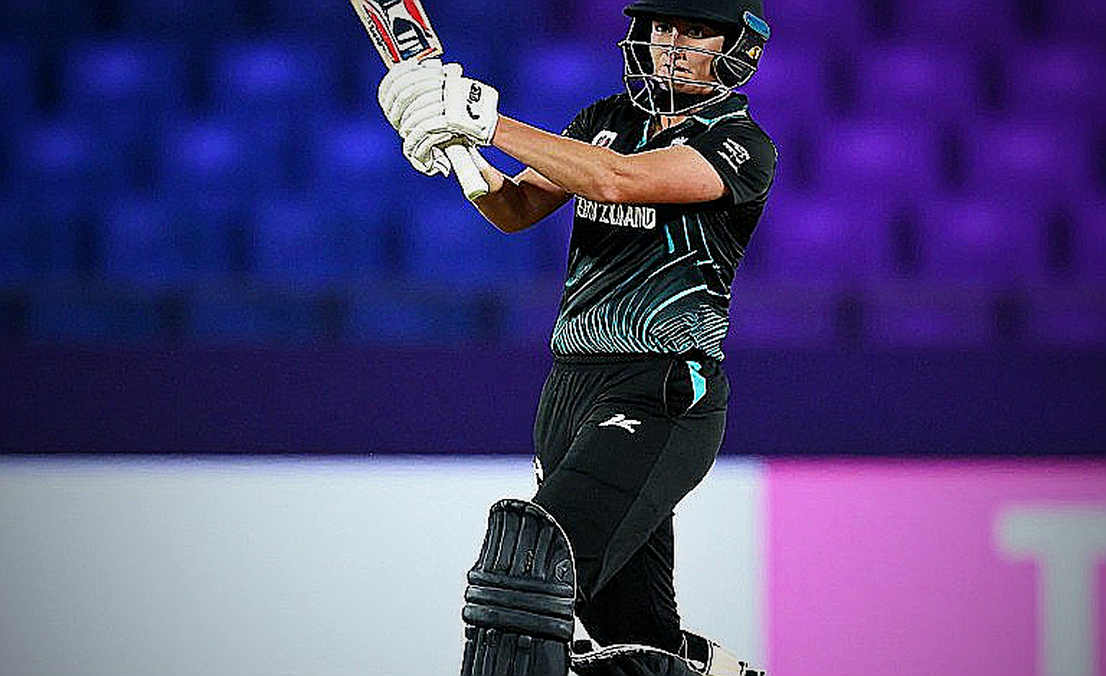
Page five: rules. DRS, DLS, NOCs, the India-Pakistan calendar. Every one of these needs an official statement as its anchor, because in these matters the language itself becomes the regulation. Page six: risk. Page seven: narrative — the gap between market expectation and ground-level performance. Page eight: the industry transmission chain, from youth development to national teams and leagues, from there to broadcast and commerce, and from there to sponsorship. Not one link in that chain can be joined without a name, a date and an institution. Cricket's economics become visible on a teenager's wrist only when his name is read aloud; without the name he is just a line item.
Here is the thing that has bothered me most in twenty-five years. Absence of information is not neutral. It is not a zero risk rating; it is an unassigned risk rating. The newsroom's instinct is to assume that no bad news means everything is fine, and in politics and sport alike that has been the most expensive assumption available. No injury update does not mean a player is fit; it means no medical bulletin was issued. No franchise financial disclosure does not mean stability; it means nobody has read the balance sheet. That is why "sources say" is the most dangerous phrase in this trade — it dresses an information gap as information.
My working life carries a strange inheritance: eleven seconds of silence at Wankhede. 2 April 2026, World Cup final. When the ball went into the stands I said nothing for eleven seconds. People later called that silence beautiful, when it was simply the most accurate reading of the moment — when you do not know what happened, the honest thing is silence, not inference. History has a heartbeat, not a clock, and you only hear it when you refuse to fill it with canned noise. In September 2026, calling UAE matches off-tube from a Delhi studio, I asked the producer to kill the fake crowd for one over. What came through was bat on ball, a fielder's cough, an umpire's "waiting". Truth does not need decorating to be audible.
Handing the file back that night, the desk head said one line: so we write the waiting. I nodded. The line that was cut in December 2026 — the lift door — is still with me, but it carries a condition I attached that same night: behind every beautiful sentence there must be a date and a name. When there is no name, the most correct headline is also the most boring one, and it is the most honest headline of the following morning.
The reader asks what happens next. My answer is unchanged: before anything goes to page one I need three things — the original article's URL, at least one identifiable entity, and a confirmed date. With those three, this file stops being an eight-page checklist and becomes real analysis. Without them, the only work left is to listen for the lift door and trust that the source answers by morning.