
Doseja's 78 at Palam: Delhi's First-Innings Lead and the Battle of Conversion
रणजी ट्रॉफी 2026-27 के ग्रुप मुकाबले में दिल्ली ने सर्विसेज़ के 266 रन के जवाब में दूसरे दिन का खेल खत्म होने तक छह विकेट पर 299 रन बना लिए हैं — यानी 33 रन की पहली पारी की बढ़त, चार विकेट हाथ में और तीन अंक सुरक्षित। मैच का केंद्र 24 वर्षीय आयुष दोसेजा की 78 रन की पारी रही, जो इस सीज़न में उनका सर्वोच्च स्कोर है और जिसने दिल्ली को 'मुश्किल स्थिति' से 'मजबूत स्थिति' में पहुँचाया। दोसेजा के इस सीज़न के स्कोर 25, 30, 40 और अब 78 हैं — यानी शुरुआत मिल रही है, लेकिन बड़े स्कोर में बदलने की दर कम है। पिछले सीज़न उन्होंने 949 रन बनाए थे और अब वे 'सेकंड सीज़न' की उस खिड़की में हैं जहाँ गेंदबाज़ उनके खिलाफ़ विशेष योजना बनाते हैं। मूल्यांकन के लिए सबसे अहम डेटा पॉइंट बंगाल के खिलाफ़ पारी है, जहाँ उनका सामना मोहम्मद शमी, आकाश दीप और मुकेश कुमार से हुआ; सर्विसेज़ के खिलाफ़ 78 को उसी कठिनाई का नहीं माना जाना चाहिए। दोसेजा इस पारी में लेग साइड में स्ट्रैंगल होकर आउट हुए — यह तकनीकी संकेत है, फ़ॉर्म-पतन का संकेत नहीं। वे BCCI सेंटर ऑफ़ एक्सीलेंस में वसीम जाफ़र और हृषिकेश कानिटकर के मार्गदर्शन में हैं और ऋषभ पंत जैसे वरिष्ठ खिलाड़ी अपेक्षाओं को प्रबंधित कर रहे हैं। सबसे बड़ा जोखिम प्रारूप-परिवर्तन है: रेड-बॉल सीज़न के तुरंत बाद सैयद मुश्ताक अली ट्रॉफी, जिसके लिए उन्होंने केवल सात-आठ दिन की तैयारी का ज़िक्र किया है। समग्र आकलन: कम-से-मध्यम जोखिम, नमूना छोटा (आठ-नौ पारियाँ), और चयन-संबंधी निष्कर्ष अनिश्चित। यह सामग्री केवल खेल-सूचना संदर्भ के लिए है, सट्टेबाज़ी सलाह नहीं।
Palam's Ground, Delhi's Lead and Doseja's 78: The Story of Three Points and a First-Innings Advantage
1. The Stage
The Air Force Complex Ground in Palam, New Delhi, is not a Test venue. It does not have the trappings of Arun Jaitley Stadium or Feroz Shah Kotla, nor the army of broadcast cameras that replays every delivery in slow motion. The Ranji Trophy 2026-27 group fixture between Delhi and Services is being played here — a match whose real significance lies less in the scorecard and more in the process that shapes cricketers in domestic cricket.
This is four-day first-class cricket. Red ball, long innings, a test of patience, and a points system in which something can be gained even without a win. The T20 mindset — every ball must be scored off — does not apply. Here the question is how long a batter can last, and once he lasts, how big he can make it.
At the close of Day 2, Delhi had reached 299/6 in reply to Services' 266. That is a first-innings lead of 33 with four wickets in hand. In the language of domestic cricket, this is a "strong position." It is the moment at which the decisive swing of the match has already gone Delhi's way, even if the final result remains distant.
2. Day 2 and Its Arithmetic
Services were bowled out for 266 — a total that is neither imposing nor inadequate in four-day cricket. It is exactly the kind of score that puts pressure on the opposition, because overhauling it is not difficult but losing wickets while doing so is very easy.
Delhi answered that pressure with 299/6. To a casual scorecard reader, it is an ordinary score. But anyone who examines the shape of the innings can see that Delhi has moved from a "difficult position" to a "strong position." That transition did not happen suddenly. It came from one long innings — and that innings belonged to Ayush Doseja.
The Ranji points system is essential to understanding this match. An outright win is worth six points. A first-innings lead in a drawn match is worth three. In four-day domestic cricket, those three points shape a season, because not every match can be won, but a lead can be taken in most of them. Doseja himself said afterwards: "The most relieving thing is that we have secured three points." It is the sentence of a 24-year-old who understands the arithmetic of domestic cricket the way a veteran does.
3. The 78: Less Than a Century, Heavier Than Most
- In the language of statistics, it is a half-century, not a hundred. But in the context of this match it is the heaviest score in Delhi's innings, because it is the innings that made the first-innings lead possible.
After play, Doseja laid out his plan clearly — bat long, avoid wrong shots, take the team forward. There is nothing new in that; every first-class batter says the same. But when a player says his goal is not to play the wrong shot, it means he has identified the ways he gets himself out. In first-class cricket, the biggest difference lies between "the bowler got me out" and "I got myself out."
Another important feature of this 78 is that it is his first substantial innings of the season. Before this, his scores this season read 25, 30 and 40. That is a clear upward curve: 25 to 30, 30 to 40, and now 40 to 78. It is the pattern coaches call "improvement in the direction of conversion."
But an honest note is required here. This season is only five innings old, and the full-season sample is roughly eight to nine innings. From such a small sample, it is not scientifically possible to determine whether "the conversion problem" is a genuine technical or mental deficiency or simply random variance. This analysis will keep returning to that limit.
4. The Mode of Dismissal: Strangled Down the Leg Side
Doseja was dismissed "strangled down the leg side" — caught behind off a glance or flick at a delivery drifting towards his pads. It is a very specific mode of dismissal and it deserves examination.
Being strangled down the leg side usually happens to a batter who is already set, who is confident, and who — in trying to increase the run rate — wants to score even off deliveries angled into the pads. It is not a "loss of form" dismissal. It is a technical micro-flag suggesting that control on the leg-side flick was not complete. Doseja himself called it "unfortunate," and there is partial truth in that — but only partial.
From the bowler's perspective, this is the reward for targeting the batter's pads. If a batter's scoring is heavily leg-side dependent, opposing bowlers do exactly this: they turn his strength into his trap.
Honesty is essential here: declaring a "technical weakness" on the basis of a single dismissal would be over-extrapolation. It is only a signal, a question mark, to be watched in future innings.
5. "Second-Season Blues": Conversion vs Form
In Indian domestic cricket, "second-season blues" is a valid concept. When a player explodes in his first season, opposing teams start planning for him. Bowlers study his strengths and weaknesses on video, field placements change, and most importantly, opposing captains try to trap him in a web of "known bowling." At the same time, external expectations rise.
Doseja is in exactly that window right now. Last season he scored 949 runs. In first-class cricket, a 900-plus season is a genuine breakout; domestic top run-scorers typically sit between 700 and 1,000. So 949 is a high leap, though not a freakish or unrepeatable number.
Now look at this season's start: 25, 30, 40, 78. That is a clear progression. It does not mean he is in bad touch; it means he was getting good starts but not converting them into big scores. That is a different kind of problem — and a more delicate one, because the player has to be convinced that it is not his game that must change but his priorities.
The Duleep Trophy numbers tell the same story — "a couple of scores in the forties and one half-century." Consistent starts, no big innings. The same pattern in a different form.
So Doseja's own analysis is data-consistent: the problem is not "losing form" but "converting starts into big scores." But one warning remains: the sample is empirically tiny. From eight or nine innings at the start of a season, one cannot separate "conversion weakness" from "coincidence." Yes, the direction of the data is encouraging.
6. The Bengal Attack: The Most Valuable Data Point
If there is one data point in this whole story that is most useful for analysis, it is not the 78 against Services. It is the innings against Bengal.
Doseja faced Bengal — the bowling of Mohammed Shami, Akash Deep and Mukesh Kumar. All three have played for India; all three have international pace and accuracy. Doseja's own assessment is that "no other attack in India is quite like Bengal's." In one sense that is praise; in another it is a fact.
Scoring against three India-capped fast bowlers in domestic conditions is not merely an achievement — it is the strongest available evidence of readiness for a higher level. The way these bowlers target the corridor between pad and stump with the red ball on domestic pitches is the real benchmark for Test preparation.
But there is an important limit here — the report does not give the score of that innings. We know the examination was taken, but not its result. We do know he survived that attack and said himself that "after Bengal, other attacks feel relatively normal."
That yields a comparative conclusion important for assessing this match: the Services attack, in Doseja's own framing, falls in the "relatively normal" category. Therefore a 78 against Services carries less weight than the same score would against a Bengal-type attack. This does not diminish the innings, but it must be read with difficulty-weighting.
One subtle caution is also worth recording. "After Bengal, other attacks feel normal" is a display of confidence, and after scoring 78 it is natural. But analytically it points slightly towards overconfidence. Domestic cricket has many bowlers who are not international class but are equally lethal with the red ball on domestic pitches. Given the small sample, this should be logged as a flag, not a conclusion.
7. Technique and Mentality: "Bat Long, No Wrong Shots"
Doseja's stated plan — bat long, avoid wrong shots, let the bowler get you out — is the most correct formula for conversion in first-class cricket.
The theoretical basis is simple. In four-day cricket there are two ways to be dismissed: by the bowler's skill, and by your own haste. The first is not in your control; the second is entirely in your control. A batter who reduces the number of "wrong shots" automatically raises his average — even if his talent has not changed at all.
This approach also matches the fact that Doseja is on a red-ball-first development path. He is associated with the BCCI Centre of Excellence, where coaches like Wasim Jaffer and Hrishikesh Kanitkar are working with him. Both Jaffer and Kanitkar were specialists in long first-class innings, and both share the same philosophy — ignore outside noise, focus on your own game, play ball by ball.
That advice sounds ordinary, but in this context it is exceptional. When a 24-year-old has already scored 949 runs, his biggest enemy is not the opposing bowler but the expectation he has created for himself. The Centre of Excellence intervention is therefore not merely coaching — it is a systemic board-level tool that treats "second-season psychology."
8. Team Landscape: Delhi's Dependence on One Young Batter
The biggest limitation of this report is that it is player-centric, not team-centric. Delhi's bowling composition, bench depth, age structure or table position — none of it can be derived from the available information.
What can be derived is this: Delhi recovered from a "difficult position" to 299/6, and the main credit for that recovery goes to Doseja's 78. That is evidence of batting depth — but it also exposes a structural risk.
If one batter repeatedly becomes the spine of a team's innings, the team's model becomes fragile. "Recovering from crisis through one long innings" is a model that works in four-day cricket but is not a reliable one. As long as Doseja keeps converting, Delhi will have stability; the moment he fails, Delhi's batting order will look under pressure.
Against Services, Delhi's position is "strong" — but that strength belongs to the first-innings lead, not to a guaranteed win. The outright result of the match is still live. In simple terms: Delhi are in a strong position, but not a safe one.
9. The Psychology of Three Points
The three points for a first-innings lead are among the complex rules that make domestic cricket's strategy different from international cricket. The effect is direct — teams try to "secure the lead" alongside "trying to win," and sometimes the second goal is as fruitful as the first.
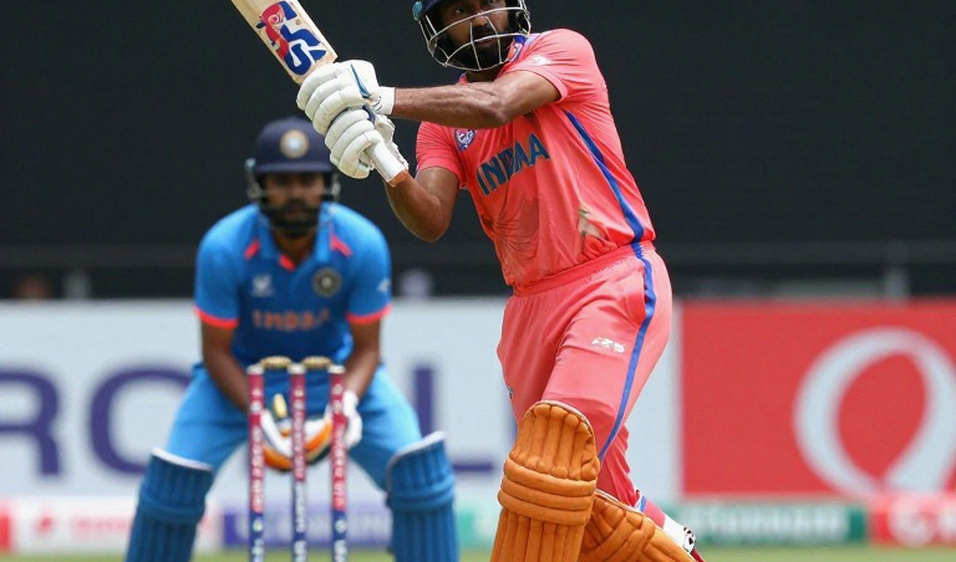
Doseja's statement reflects an internal understanding of this mechanism. When a 24-year-old evaluates his 78 in terms of "we have secured three points," it means he understands the relationship between personal numbers and team outcomes. That is a sign of maturity — and such maturity grows in an environment where coaching is matched by a healthy sporting culture.
10. The T20 Switch: Seven or Eight Days' Preparation
The least-discussed and most important risk in this whole story is format transition.
Doseja has said that the Syed Mushtaq Ali Trophy (T20) follows immediately after the red-ball season, and his assessment is that "only intent changes" and seven or eight days' preparation is enough.
Analytically, that assessment is not solid. The patience-driven mentality of the red ball and the aggression of the white ball are almost opposite mental modes. Success in first-class cricket depends on a batter being comfortable "doing nothing"; success in T20 depends on being comfortable "doing something on every ball." In seven or eight days the technical framework changes, but mental habits do not.
This risk can work both ways. On one hand, a strong T20 showing could dilute the red-ball focus at the exact moment when conversion is the top priority. On the other, if rhythm with the red ball dips after the T20 window, it directly damages his most valuable product — first-class runs.
The standard saying is that "T20 exposure is all upside." That saying does not apply to a 24-year-old red-ball specialist whose selection future is determined by first-class runs.
11. The Selection Pipeline: Rest of India to India A
Ranji Trophy's real "market value" is not commercial but selection-related. In the Indian domestic structure, the red-ball path is clear: Ranji runs → Duleep Trophy → Rest of India → India A → national team.
Doseja has climbed onto this ladder. His 949 runs have brought him into the Rest of India conversation, and a Rest of India cap is a recognised selection-pathway marker in the domestic circuit. That is his biggest earned asset, and this season he is defending it.
But the gap between expectation and reality must be made clear. At 24, a 900-plus season puts a player "on the India A radar," not "at the India A door." For batters of this age and record, the next step usually comes after 12 to 18 months of sustained performance. Doseja is one strong season away, not an immediate selection.
One more point deserves emphasis — he is standing just before the age curve at which batters typically peak (27 to 33). He has three years for development, but he is also moving out of the "young talent" bracket. In domestic cricket, after 25, the weight of the word "potential" declines and the weight of "performance" rises.
12. Public Narrative and Outside Noise
The narrative forming around Doseja right now is that of "a young domestic batter's second season." It is a low-heat, regional narrative. There is no national frenzy, no advertising campaign, no overhype.
Interestingly, the only person in this article who mentions "outside noise" is Doseja himself. That is a self-acknowledged perception — not evidence of actual national hype. That is what keeps the narrative balanced. Indian domestic cricket's media ecosystem generally under-hypes non-IPL players; the absence of "next big thing" framing is itself a signal that public expectations currently remain modest.
Still, one expectation gap should be noted. The article mentions "the India A conversation." That phrase can create a public impression that selection is near. The data does not support that. Conversely, a senior player like Rishabh Pant saying "there's a lot of cricket left for me" is in fact a healthy expectation-management mechanism — seniors reminding a youngster that the career is long and the race is not short.
13. Risk Assessment
Listing the risks in this context puts the conclusion in the "low-to-medium" category.
At the top should sit the "small-sample trap" — evaluating conversion weakness or strength on eight or nine innings. The remedy is to wait at least three or four more Ranji innings before drawing a technical conclusion.
The second risk is "format transition" — going into T20 with seven or eight days' preparation and then returning to red-ball rhythm. The remedy is to keep red-ball practice running through the T20 window so the technical base is maintained.
The third risk is "over-optimism" — reading the article's "India A" line as selection. Rest of India and Duleep selection is access to the radar, not selection.
The fourth is "difficulty-weighting error" — not treating 78 against Services as equivalent to a similar score against a Bengal-type attack (Shami, Akash Deep, Mukesh Kumar). Assessment must be benchmarked by opposition quality.
There is no information about injury or personal circumstances, nor any integrity, discipline or rule issue. Ranji Trophy falls under BCCI jurisdiction and there is no DRS controversy in this match (DRS does not apply in domestic four-day cricket). Governance and rules risk is therefore low.
14. What to Watch Next
First signal: conversion rate in remaining Ranji matches. If two fifties come in the next four innings, the "second season" narrative will resolve positively and the India A timeline could accelerate.
Second signal: performance against quality attacks. The next time he faces India-level fast bowlers, a 50-plus score would be the most valuable answer to this entire debate.
Third signal: return to red-ball cricket after the Syed Mushtaq Ali Trophy. If rhythm dips after the T20 window, the format-transition risk will be confirmed.
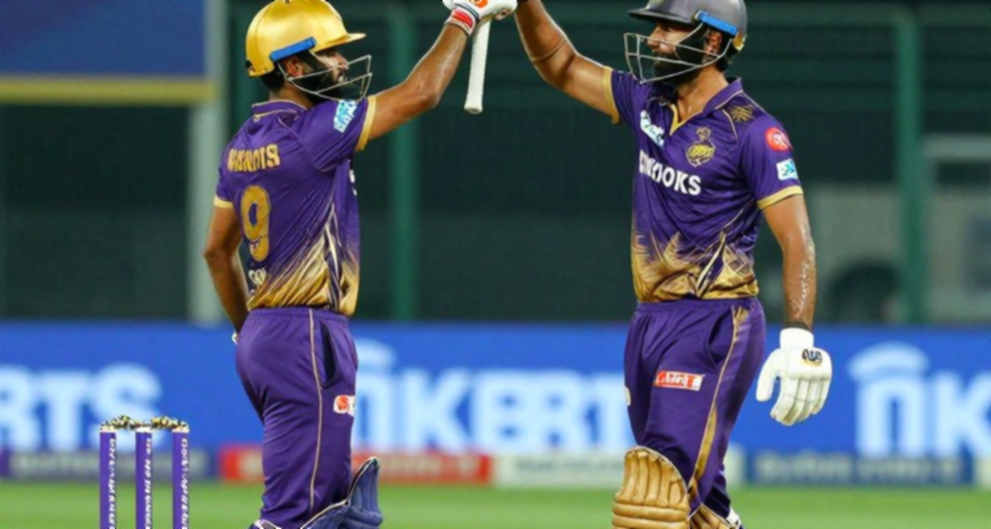
Fourth signal: Delhi's reliance on Doseja. If the "Doseja rescues the collapse" pattern repeats, it becomes a structural warning about the team's batting architecture.
15. Conclusion
What happened at Palam is not a story of spectacular cricket. It is the story of a young batter's patience in an ordinary domestic fixture — 25, 30, 40 and then 78, and a team situation in which his 78 is worth more than the scorecard suggests.
Doseja did what a first-class batter should do: batted long, avoided the wrong shot, and carried his team towards a first-innings lead. He also avoided what a young batter often does: rushing to turn 78 into 150.
The truth is that no technical verdict can be drawn from this one innings. The sample is small, the opposition is mid-tier, and there is no information on weather, pitch or toss. But the direction is clear — and in Indian domestic cricket, direction is what selectors watch season after season. The 949 runs opened the door; now 78, and whatever follows, will determine whether he walks through it or remains on the threshold.