
Concussed Mominul Haque Doubtful for Second West Indies Test as Bangladesh Await Medical Clearance Before Sylhet Clash
प्रश्न: मोमिनुल हक दूसरे वेस्टइंडीज टेस्ट में क्यों संदिग्ध हैं? उत्तर: पहले टेस्ट के तीसरे दिन वेस्टइंडीज की पहली पारी के 78वें ओवर के दौरान फील्डिंग करते समय उनके सिर पर चोट लगी, संभवतः शॉर्ट लेग पर रोस्टन चेज़ (27) का कैच छूटने के दौरान। टीम प्रबंधन ने पुष्टि की कि वे उस मैच में आगे नहीं खेलेंगे। दूसरा टेस्ट 5 नवंबर से सिलहट इंटरनेशनल क्रिकेट स्टेडियम में है, और उनकी भागीदारी BCB के मेडिकल क्लीयरेंस पर निर्भर है। कंकशन के बाद वापसी चरणबद्ध प्रोटोकॉल (SCOAT6 जैसे मानक, स्वतंत्र न्यूरोलॉजिकल राय सहित) से तय होती है, इसलिए समय बहुत कम है। पहले टेस्ट में जाकेर अली अनिक को कंकशन सबस्टीट्यूट बनाया गया था। यह स्पष्ट नहीं है कि यह सीरीज आईसीसी विश्व टेस्ट चैंपियनशिप के अंतर्गत आती है या नहीं, और रिपोर्ट में मैच का स्कोर या परिणाम नहीं दिया गया है।
Bangladesh Facing a Major Selection Headache Ahead of the Sylhet Test: Mominul Haque's Availability Hangs on Medical Clearance
Bangladesh's build-up to the second and final Test against West Indies has been overshadowed by a significant concern. Senior batsman Mominul Haque, widely regarded as the backbone of the team's Test top order, is doubtful for the second Test in Sylhet after sustaining a blow to the head during the opening Test. Team management has confirmed that he will take no further part in the ongoing match, and that his participation in the second Test — scheduled to begin on 5 November in Sylhet — will depend entirely on medical clearance from the Bangladesh Cricket Board's medical panel.
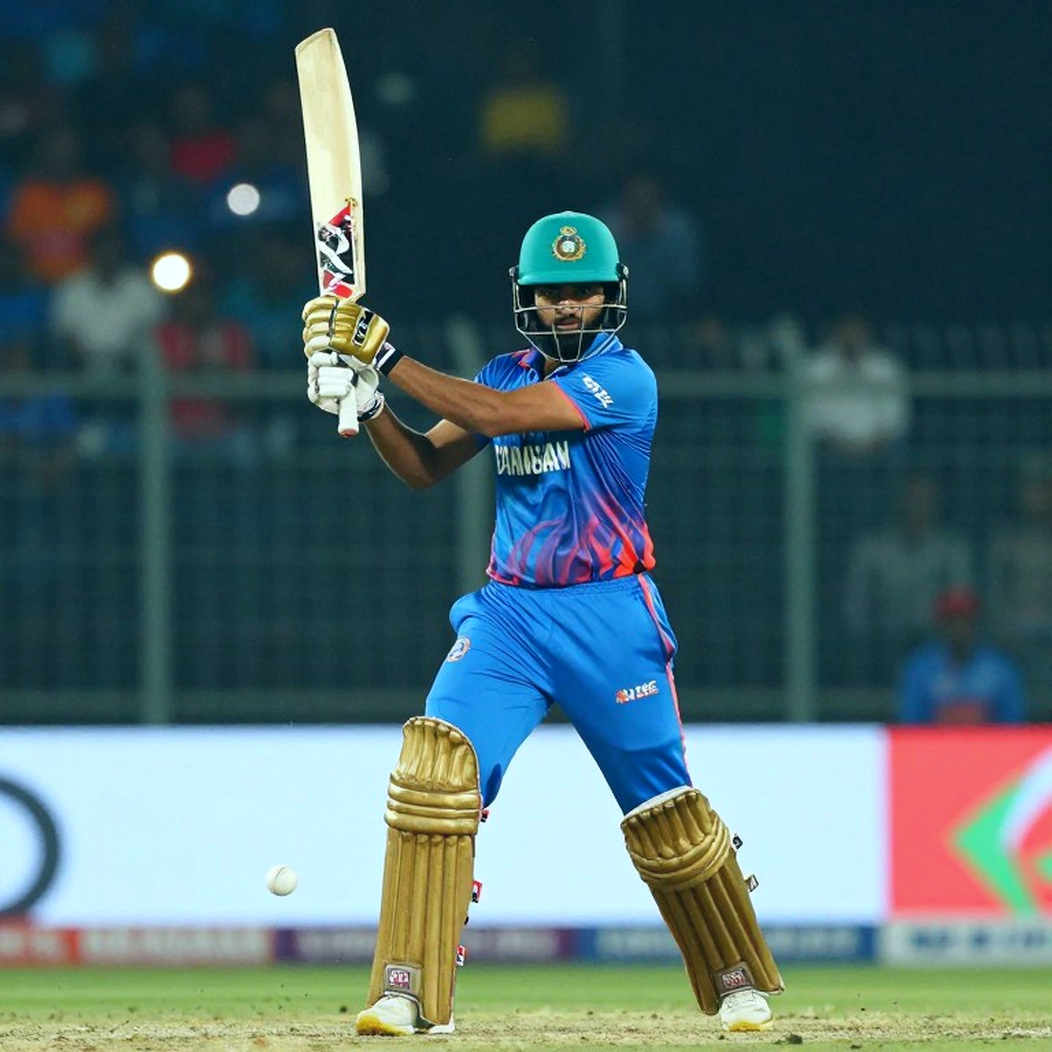
This is not an ordinary injury. In cricket, and particularly in Test cricket, a head injury belongs to a different medical and strategic category. The timeline for a return is not dictated by a player's tolerance for pain but by a defined, graded protocol. That protocol is now the single biggest source of uncertainty for Bangladesh. From a preparation standpoint, the situation is far from ideal, because team management must plan around a player whose likelihood of playing is being treated as close to a coin-flip.
What makes the news more consequential is that the incident occurred in the very first Test of the series. Bangladesh have no long series in which to rest him and reassess. Only one Test remains. Every decision is immediate, and every miscalculation carries a direct cost to the series result.
The Sequence of Events: 78th Over, Short Leg, and a Dropped Catch
According to the available details, the incident occurred on the third day of the first Test, during the 78th over of West Indies' first innings. That over number is revealing in itself. In Test cricket, the second new ball becomes available after the 80th over. The 78th over is therefore the phase in which the ball is old, batters are set, and bowling is generally spin-dominated. Stationing a fielder at short leg during this phase is a strong indicator that spin was operating from at least one end with the older ball.
Reports indicate that Roston Chase was dropped at short leg on 27 during this passage of play. There are strong reasons to treat the dropped catch and the injury as parts of the same event. A short-leg fielder stands only two to three metres from the batter. The reaction time available for a ball travelling at that range is extremely short, and if the catch is not taken, it is not unusual for the ball to strike the fielder's head, face, or hands. Three possibilities exist: the ball hit the head directly and the catch was spilled; the fielder fell while attempting the catch and struck his head; or the injury and the dropped catch were separate moments. The available information does not allow a definitive choice, but the first two possibilities deserve greater weight on the available evidence.
The tactical cost of the event is twofold, and this is the most important part of the story. First, a set batter was reprieved. Chase was on 27, and had the catch been taken, West Indies would have suffered a setback at a crucial juncture. Second, and more importantly, Bangladesh lost a frontline top-order batter and a specialist close fielder on the same delivery. On a single ball, the team paid a double price: it squandered an opportunity in the field and weakened the spine of its batting for the next innings.
It should be noted that the available information does not include the score, session detail, or final result. It is therefore impossible to assess how materially the dropped catch shaped the outcome. In a Test match, the impact of a single catch depends on numerous variables — the run rate at the time, the behaviour of the pitch, conditions in the second innings, and the workload of the bowlers.
The Concussion Protocol: Process, Not Pain, Determines Return
Cricket's approach to head injuries has changed fundamentally over the past decade. It was once treated as an injury a player would simply absorb and bat through. It is now treated as a neurological injury whose effects may manifest hours or days later. This is why modern protocols do not treat a player's own assessment as decisive.
Under standard international procedure, a player suspected of concussion is removed from the field immediately and replaced by a concussion substitute. Screening follows, including symptom assessment, balance and memory testing, and, where necessary, the opinion of an independent neurological specialist. Return to play is graded, beginning with light exercise and increasing in intensity, with any recurrence of symptoms pushing the process back a stage. International guidance, including frameworks such as SCOAT6, provides a comprehensive structure for assessment and return following head injury.
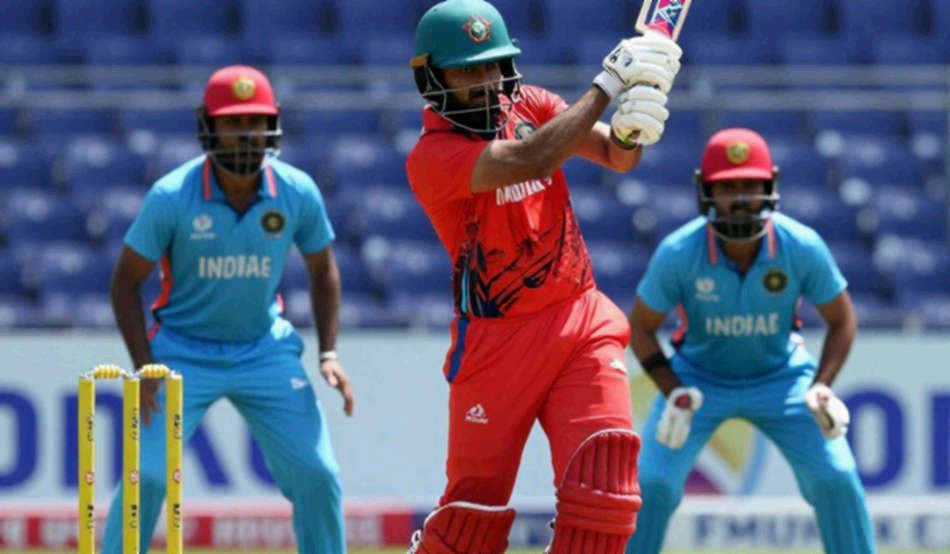
The direct implication is that if the second Test begins on 5 November and the injury occurred on the third day of the first Test, the available window is very narrow. A graded return after concussion typically requires several days, and no stage can be rushed. The most realistic scenario is therefore that Mominul's availability will remain uncertain until the last moment, with the decision taken immediately before the match.
There is a subtle but important point to add here. The concussion protocol determines whether a player can play; it does not determine the role he plays. Mominul's case is unusual because he is not only a batsman — he is also one of the team's primary close fielders. If he plays and returns to short leg, the risk of repeat impact remains elevated. After an injury of this kind, the ball passing close to the head, a marginal reduction in reaction time, and constant bending and rising are all factors that warrant caution. In other words, being cleared and returning to short leg are two separate decisions, and media coverage frequently conflates them.
Mominul Haque: Bangladesh's Test Backbone and the Weight of the No. 3 Slot
Mominul Haque's career has taken a very specific shape within Bangladesh cricket. He is essentially a Test specialist and has not been a regular fixture in the T20I and ODI first-choice plans in recent cycles. This classification does not diminish his value; it concentrates it in a particular direction. He is among the most experienced batsmen in the format that is hardest to play. Bangladesh's Test history has produced a very shallow pool of long-format centurions, and Mominul sits near the top of that short list. Precise career averages are subject to verification, but what is widely acknowledged is that he belongs in the category of Bangladesh's most productive Test batsmen.
The No. 3 position is regarded as the most exposed and most hazardous slot in Test cricket. It is where a batsman arrives either after an early breakthrough or after a slow start — and therefore faces the remnants of the new ball, extra bounce, and seam movement. An inexperienced No. 3 changes the shape of the entire batting order, because middle-order players are then promoted out of position. Mominul's absence is therefore not a rotation issue. It is an open structural wound at the most sensitive point in the batting order.
Another point must be added about Bangladesh's top order: it is at a stage where experience is high and replacement capacity is low. Names like Mushfiqur Rahim and Litton Das belong to the same generation. When several senior batsmen from one generation occupy the same line-up, one withdrawal does not simply vacate a single slot. It reshapes the whole order.
Home and away context matters as well. Bangladesh's senior batsmen have traditionally been more productive on slow, low-bounce surfaces at home and more exposed on bouncier overseas pitches. Because this is a home Test, Mominul's presence would theoretically be more valuable — which is precisely why his absence should be priced higher, not lower.
Why Fielding at Short Leg Is a Risk in Itself
Short leg is among the most hazardous fielding positions in cricket. The fielder stands very close to the batsman, must bend repeatedly, must maintain sustained concentration, and in a Test match that routine can continue for hours. Dozens of balls pass him in a session, and he must react to each one.
What makes the position distinctive is the narrow margin between success and injury. When the ball takes an edge and travels at speed towards the fielder, decision time is effectively zero. If he reaches forward and the ball slips through his hands onto his head or face, the injury can be serious. This is not a rare coincidence; it is an inherent risk of fielding in that position.
The 78th-over timing adds another layer. By that stage of a Test innings, the fielding side has spent more than a full day in the field. Fatigue accumulates, and fatigue affects reaction time and concentration first — precisely the two capacities on which short-leg fielding depends. It cannot be proven that fatigue caused the injury, but it is a plausible and logical interpretation.
Jaker Ali Anik: The Concussion Substitute Question
Jaker Ali Anik was used as the concussion substitute during the first Test. That was a technically correct and procedurally necessary step, but it contains a question that is directly relevant to the second Test.
Jaker Ali Anik is fundamentally a wicketkeeper-batsman profile with a limited red-ball record. Using him as a concussion substitute is one thing, because that role is confined to the context of a single match. Selecting him as a specialist batsman in the second Test is an entirely different proposition. 'Adequate as a substitute' and 'proven at No. 3 in a Test' are different standards, and treating them as the same would be a selection error.
There is a further complication. If Jaker Ali Anik is selected in the XI, he would likely play as a batsman only, since Litton Das is the incumbent gloveman. That means his selection would rest on red-ball batting merit rather than his keeping. This raises a legitimate question about whether he is ready for a Test top-order role.
Most significantly, the choice of a wicketkeeper-batsman as concussion substitute is itself a selection signal. It suggests limited like-for-like specialist top-order options on the bench — a structural weakness that will recur.
Bangladesh's Batting Depth: An Old and Persistent Problem
Bangladesh's Test batting order has displayed a consistent pattern for years: the top order depends on experienced players, and the depth beneath them thins abruptly. This is not a new problem, but Mominul's uncertainty has brought it back to the centre.
The defining feature of this structure is its reliance on several senior players from the same generation. When such a structure faces simultaneous absences or dips in form, filling the gaps becomes difficult because replacements lack comparable Test experience.
An age dimension compounds this. When the core comes from a single generation, the risk of several players exiting within a two-to-three-year window rises — the so-called retirement cliff. Mominul is at the stage of life where recovery windows lengthen, and head injuries should be treated with greater caution than for a player in his mid-twenties. This should never be the sole basis for a selection decision, but it is a genuine medical and strategic factor.
West Indies offer an interesting comparison. Their batting is not fully robust either, but they have a settled opener in Kraigg Brathwaite and a resurgent Roston Chase. Both teams have weaknesses; the shape of those weaknesses differs. Bangladesh's lies in depth below the top three; West Indies' lies in middle-order stability. The consequence is that Mominul's absence will cost Bangladesh more, because the gap must be filled precisely where their options are thinnest.
Sylhet International Cricket Stadium: Home Advantage and Pitch Uncertainty
The second Test will be played at Sylhet International Cricket Stadium. The available information does not include a pitch report, so no definitive claim can be made about how the surface will behave. This is a significant gap, because the pitch directly determines how effective Bangladesh's spin-based strategy will be.
In general terms, Sylhet has not hosted a large number of Tests, and those it has hosted have tended to produce results. That is a signal relevant to both teams, but it should not be treated as a verified conclusion. Weather information is also limited. November in Sylhet falls in the post-monsoon period, and Test play starts in the morning, so dew is a limited factor — but this remains a general inference only.
The most solid and important fact is that this is a home Test for Bangladesh. Home advantage is not merely about crowd support; it is about playing in optimal conditions. Cricket's widest home-away differential applies to teams like Bangladesh. At home, on slow, low, turning surfaces, they are genuinely difficult opponents; away, particularly in Australia, England, and South Africa, their record has been weak. The direct conclusion is that Bangladesh will be expected to win at home — and when victory is expected, the relative impact of a senior batsman's absence is greater.
West Indies' Double Gain
The other side of this story is West Indies, for whom the event represents a double gain. First, Roston Chase was reprieved on 27 and was able to extend his innings. Dropping a set batsman in Test cricket is especially costly, because he not only preserves his wicket but also adds to the bowling side's fatigue. Second, Bangladesh's top order is weakened, which is a direct opportunity for West Indies' bowlers.
West Indies' bowling has traditionally been pace-led with spin in a supporting role, and they have historically struggled against spin in Asia. That makes the contest one between contrasting strengths. Mominul represented Bangladesh's most experienced resource for playing spin, and that resource is now in doubt.
WTC and Ranking Context
A significant question is whether this series carries ICC World Test Championship points. The available information does not state this clearly, so no conclusion should be drawn. If it does, an absence in a winnable home Test has direct points-table consequences. If it does not, the result still matters for rankings and team confidence.
In the ICC Test rankings, Bangladesh have typically sat in the eighth-to-ninth band and West Indies in the seventh-to-eighth band. These positions should be re-verified against the current table. The general conclusion is that the two sides are close in the middle tier, meaning the contest is tight on paper and small margins can be decisive.
Selection Strategy: Three Options, Three Risks
If Mominul is unavailable, Bangladesh have broadly three routes. First, promote a middle-order batsman to No. 3. This gives an experienced player an opportunity but places him out of position, and it creates a second problem in the middle order. Second, select an uncapped or inexperienced specialist. This is an investment in the future but carries risk in a home Test where victory is expected. Third, retain Jaker Ali Anik as a batsman. He is already acclimatised to the match environment, but his red-ball record is limited.
None of these options is a like-for-like replacement for Mominul Haque. That is the most honest picture of this team's bench depth.
An Overlooked Dimension: Fielding Quality
If Mominul does not play, the loss will not be confined to batting. He is among the team's most reliable close fielders, and his short-leg position is an important component of any spin-bowling plan. Placing a non-specialist there weakens the team precisely where catches convert directly into wickets. This should not be underestimated — the dropped catch in this very match demonstrates the cost.
Conclusion: One Injury, Many Layers
On the surface, this is a simple story: a player is doubtful for the next match because of a head injury. But the layers run deeper. The medical layer shows that head injuries follow a different protocol. The technical layer shows how sensitive the No. 3 slot is. The strategic layer shows how much a senior batsman matters in a home Test where victory is expected. The structural layer shows that bench depth and age structure remain long-term challenges. And above all sits the human layer: a player's safety, which matters more than any result.
The Test starting on 5 November in Sylhet will be a test of Bangladesh's planning and depth. As for Mominul, the wisest approach is to let the medical process take its course. Seasons change and series come and go, but a player's health, once affected, is not always easily recovered.