
Beyond the Historic 242: How Hridoy and Bangladesh's Last Two Wickets Transformed the Sylhet Test
मुख्य उत्तर: तौहीद हृदोय ने 7 नवंबर 2026 को सिलहट में वेस्टइंडीज के खिलाफ दूसरे टेस्ट की पहली पारी में नाबाद 242 रन बनाकर बांग्लादेश को 386/9 तक पहुंचाया और 30 रन की बढ़त दिलाई। निर्णायक योगदान आखिरी दो विकेटों की 202 रन की साझेदारी रही। मुख्य तथ्य: - हृदोय: 242* रन, 359 गेंदें, 22 चौके और 11 छक्के। - बांग्लादेश: 386/9; वेस्टइंडीज पहली पारी: 356 रन। - ताइजुल इस्लाम के साथ आठवें विकेट की साझेदारी: 117 रन। - तस्कीन अहमद के साथ नौवें विकेट की साझेदारी: 85 रन। - तीसरे दिन स्टंप्स: वेस्टइंडीज 7/0, अभी 23 रन पीछे। स्रोत एवं प्रकाशन तिथि: - ICC, Hridoy's marathon double-ton lifts Bangladesh afloat in Sylhet, 7 नवंबर 2026। https://www.icc-cricket.com/tournaments/world-test-championship/news/hridoy-s-marathon-double-ton-lifts-bangladesh-afloat-in-sylhet - Dawn/AFP, Hridoy’s record double century lifts Bangladesh in second WI Test, 8 नवंबर 2026। https://www.dawn.com/news/2042953 - Bangladesh Sangbad Sangstha (BSS), Hridoy's record-breaking double ton puts Tigers in control, 7 नवंबर 2026। https://www.bssnews.net/news/443035 संबंधित प्रश्न एवं उत्तर: प्रश्न: हृदोय ने किसका राष्ट्रीय टेस्ट रिकॉर्ड तोड़ा? उत्तर: उन्होंने मुशफिकुर रहीम के नाबाद 219 रन के पिछले रिकॉर्ड को पीछे छोड़ा। प्रश्न: बांग्लादेश की वापसी में आखिरी दो विकेटों की क्या भूमिका थी? उत्तर: आठवें और नौवें विकेट की साझेदारियों ने कुल 202 रन जोड़े, जो पहले सात विकेटों के 184 रनों से अधिक थे। प्रश्न: तीसरे दिन के अंत में मैच की स्थिति क्या थी? उत्तर: बांग्लादेश ने 30 रन की पहली पारी की बढ़त ली और वेस्टइंडीज दूसरी पारी में 7/0 पर था, जो 23 रन पीछे था।" }</escape>
From 184/7 to 386/9: The Real Story of Bangladesh's Recovery
At the close of the third day at Sylhet International Cricket Stadium, the scoreboard reflected a remarkable change in the direction of the second Test between Bangladesh and West Indies. The visitors had made 356 in their first innings. Bangladesh, in reply, had slipped to 184 for seven, a position from which even reaching the West Indies total looked difficult. Yet by the end of the day, the hosts had reached 386 for nine and secured a 30-run first-innings lead.
Towhid Hridoy's unbeaten 242 was at the centre of this transformation. But the most revealing number was not his individual score. It was the 202 runs added through Bangladesh's final two partnerships. The first seven wickets had contributed 184 runs. The eighth and ninth wickets then produced more than the first seven combined. That reversal is the real tactical hinge of the innings.
Hridoy faced 359 deliveries, hitting 22 fours and 11 sixes. His innings made him Bangladesh's highest individual Test scorer, surpassing Mushfiqur Rahim's unbeaten 219 against Zimbabwe in 2026. He also became the fourth Bangladesh batter to score a Test double-century.
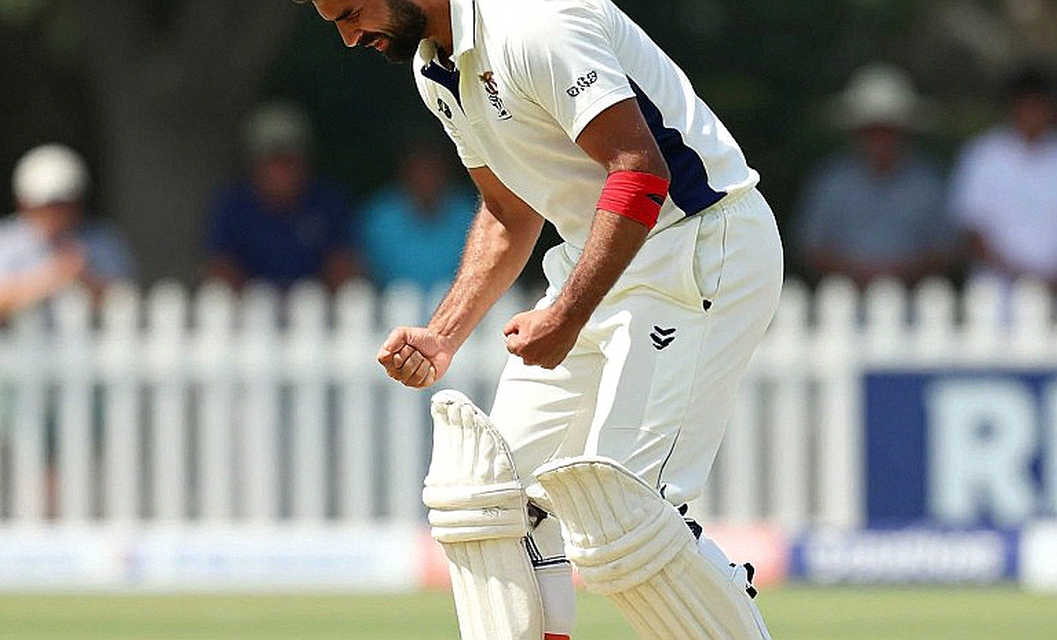
Reducing the day to one record, however, would miss the supporting structure that made it possible. Taijul Islam scored 22 from 56 balls, while Taskin Ahmed added 12. Their contributions were worth considerably more than their individual scores suggest. They gave Hridoy time, protection and the opportunity to keep attacking.
The Context: West Indies in Control, Bangladesh in Trouble
West Indies won the toss and elected to bat in the second match of the two-Test series. The visitors posted 356, led by Amir Jangoo's 133. Kevin Wickham contributed 61 and Justin Greaves made 51. Hasan Mahmud was Bangladesh's outstanding bowler, taking six wickets.
Bangladesh began the third day at 88 for three, with Mushfiqur Rahim and Towhid Hridoy at the crease. Hridoy had resumed on 29. Their immediate task was to stabilise the innings and reduce the visitors' advantage.
The morning session belonged to West Indies. Jomel Warrican dismissed Mushfiqur for 34 and then removed Litton Das for eight. Mehidy Hasan Miraz fell for 16 after a catch by Justin Greaves, and Warrican claimed his fourth wicket when Hasan Mahmud was dismissed for one. Bangladesh were 184 for seven.
Warrican finished with four wickets for 104 runs from 41 overs, while Jayden Seales took two for 58. The visitors had built a strong position through sustained pressure rather than a sudden collapse.
Bangladesh also faced an unusual batting constraint. Shadman Islam was unable to bat because of an ankle injury. The hosts therefore had no conventional final-batter reserve. Every remaining partnership carried the possibility of being the last. Hridoy had to manage the strike, assess the ability of his partners and decide when to take risks.
In my years of watching Test cricket, this is often where a lower-order recovery becomes a question of decision-making rather than simply shot-making. The main batter must decide which overs can be attacked and which can be survived. At Sylhet, Hridoy managed that balance with considerable maturity.
The Turning Point: 202 Runs from the Final Two Wickets
The decisive statistic of Bangladesh's innings was the 202 runs scored through the final two partnerships, not Hridoy's 242 alone. After reaching 184 for seven, Hridoy changed the tempo of his innings. His morning had been about survival and rebuilding. After lunch, he began putting the West Indies bowlers under sustained pressure.
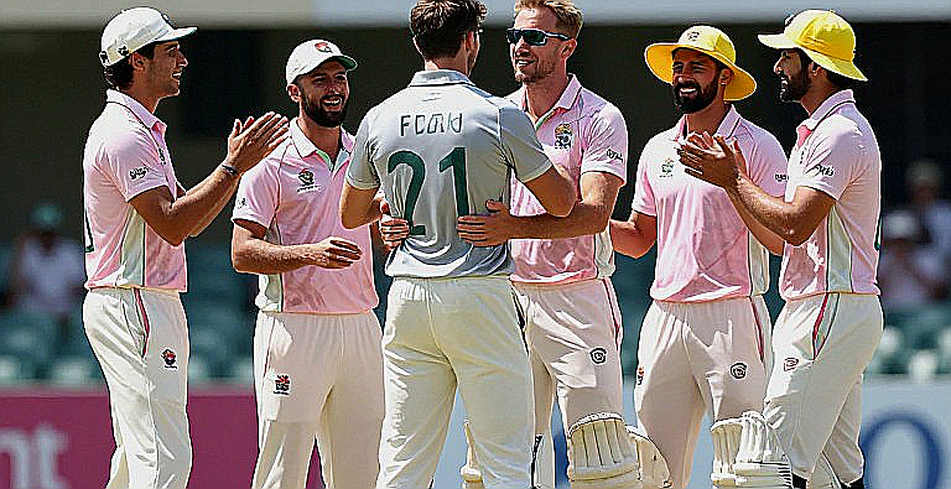
His eighth-wicket partnership with Taijul Islam produced 117 runs. Taijul made 22 from 56 balls. His strike rate was modest, but that was precisely the point. He defended, left deliveries and occupied the crease while Hridoy took responsibility for the attacking shots.
There is an important technical detail here. When a batter has limited support from the lower order, he does not need to attack every delivery. He must identify which overs offer opportunities and which can be used to make the bowlers work harder. Hridoy maintained his attacking intent without forcing Taijul into unnecessary risks.
By the time Taijul was stumped off Warrican, Bangladesh had reached 301 for eight. West Indies had finally broken the partnership, but the cost had been 117 runs. Taskin Ahmed then joined Hridoy, and the batter continued in the same positive manner.
Taskin scored 12 in an 85-run ninth-wicket partnership. Seales eventually dismissed him with a short delivery, bringing Bangladesh's innings to an end at 386 for nine. Hridoy remained unbeaten on 242.
The two partnerships added 202 runs, with Hridoy contributing 161 of them. The batter who had started the day on 29 had effectively carried the innings through its most difficult phase. This was a display of individual quality, but also of the ability to make limited support useful.
Taijul's 56 deliveries are the hidden tactical statistic of the innings. A score of 22 may look unremarkable on a conventional scorecard. Yet those 56 balls allowed Hridoy to choose his risks and maintain control of the partnership. Taijul did not need to match his partner's scoring rate. He needed to keep the innings alive.
Records and the Evolution of Hridoy's Innings
Hridoy's 242 not out has several historical dimensions. He passed Mushfiqur Rahim's previous national Test record of 219 not out. He became the fourth Bangladesh batter to score a Test double-century, joining Tamim Iqbal, Shakib Al Hasan and Mushfiqur.
His innings contained 22 fours and 11 sixes. That combination shows that he did not reach the double-century through defensive accumulation alone. He scored around the ground and forced the bowlers to reconsider their lengths. His aggression became especially evident during the afternoon session.
Hridoy was patient on the way to his first Test hundred. After reaching three figures, he increased the scoring tempo and repeatedly challenged the West Indies attack. The second new ball did not produce the breakthrough the visitors needed. Hridoy continued to punish loose deliveries and refused to surrender the initiative.
When he reached 172, he also broke the highest individual Test score recorded at Sylhet, passing Mahmudul Hasan Joy's 171. The International Cricket Council's match report recorded the achievement. In one innings, Hridoy therefore rewrote both Bangladesh's national record and the venue record.
The 213 runs he added during the day were another notable feature, although historical comparisons involving single-day scoring should always be checked against the official day-by-day scorecard. His 11 sixes also left him one short of the reported joint world record of 12 in a Test innings, held by Wasim Akram and Yashasvi Jaiswal.
The innings was especially significant given Hridoy's limited Test experience. It was only his third Test match. Yet he demonstrated the concentration required to bat for a long period and the ability to change gears according to the match situation. His 359 deliveries reflected hours of discipline, not merely a brief burst of aggressive batting.
West Indies' Challenge: Pressure Built, but Control Was Lost
It would be unfair to describe the West Indies bowling effort as unsuccessful throughout. The visitors had reduced Bangladesh to seven wickets during the morning session. Warrican maintained pressure, Seales offered support from the other end, and the fielders created opportunities. Bangladesh's position at 184 for seven was earned through disciplined bowling.
The problem was that West Indies could not convert that pressure into a decisive lead. During the eighth-wicket stand, the bowlers needed patience and precision. Brandon King dropped Taijul off Warrican when Bangladesh were 290 for seven. Such missed chances can become expensive in Test cricket, particularly when a lower-order partnership is already developing.
Taijul was eventually stumped, but only after 117 runs had been added. West Indies had secured a wicket without ending the partnership's impact. Hridoy and Taskin then added another 85, taking Bangladesh past the visitors' total.
The second new ball also failed to bring the expected breakthrough. It would be easy to blame poor bowling, but a proper assessment would require a closer examination of the pitch, the ball's behaviour, the bowlers' workload and the fielding positions. Warrican had bowled 41 overs. Workload can affect a bowler's accuracy and energy, although the available figures alone cannot establish that it was the reason for the missed opportunity.
West Indies' central failure was its inability to prevent Hridoy from building partnerships after taking seven wickets. Removing the lower order is not simply a matter of taking wickets. It requires controlling the strike, converting fielding opportunities and isolating the main batter. Bangladesh successfully challenged that plan at Sylhet.
The contrast is striking. The bowling that had put West Indies firmly in control during the morning could not produce a wicket for a sustained period in the afternoon. Hridoy's batting was the principal reason, but the contributions of his partners and the missed opportunities also shaped the outcome.
West Indies at 7/0: The Match Remains Open
Bangladesh finished 30 runs ahead after making 386 against West Indies' 356. The visitors began their second innings and reached seven without loss in four overs before the close of play. Brandon King was unbeaten on five and Joshua Da Silva on two. West Indies were still 23 runs behind, with all ten wickets available.
It would be premature to describe the match as being firmly under Bangladesh's control. A 30-run first-innings lead is useful, but it is far from decisive in Test cricket. West Indies have the opportunity to build a substantial second-innings total. Bangladesh, meanwhile, need early wickets on the fourth morning to turn Hridoy's achievement into a meaningful match advantage.
The next phase will also test the workload of Bangladesh's bowlers. They had spent 106.4 overs in the field during the West Indies first innings, with Hasan Mahmud taking six wickets. Taskin Ahmed, Taijul Islam and Mehidy Hasan Miraz will need to maintain control in the opening session. If the West Indies openers settle without pressure, the small deficit could disappear quickly.
Bangladesh must avoid allowing the excitement of Hridoy's innings to turn into hurried bowling. Expectations among the home crowd will naturally be high after such a remarkable recovery. But Test matches are decided through discipline, fielding and sustained pressure, not emotional momentum alone.
Why the Final Two Wickets Will Be Remembered
Hridoy's 242 will remain a landmark innings in Bangladesh cricket. The national record, the double-century, the 11 sixes and the new Sylhet record are all significant achievements. Yet the most useful lesson from the innings lies in the 202 runs scored by the final two partnerships.
Bangladesh demonstrated how a lower order becomes valuable when the main batter gives its members a clear role. Hridoy allowed Taijul time to settle, continued attacking with Taskin and understood the importance of strike management. Taijul, meanwhile, made his 56 deliveries count. This is the detail that can be lost when a match is reduced to its final scorecard.
I have watched enough matches to know that the most valuable contribution in an innings does not always appear as the largest individual score. Sometimes it belongs to the player who stays at the other end and gives his partner the freedom to play. Taijul's role belongs to that category. The scorecard will show 22 runs, but the influence of those 56 deliveries will remain throughout the innings.
Every scoreline is a sentence; I am listening for the paragraph beneath it. At Sylhet, that paragraph began at 184 for seven. Hridoy made the record, Taijul and Taskin supplied support, and West Indies watched a commanding position slip away.
The biggest question on the fourth day is whether Bangladesh can turn its 30-run lead into match-winning pressure. Early wickets would increase the value of Hridoy's innings considerably. If West Indies build a substantial partnership, the recovery may remain a first-innings achievement rather than the decisive moment of the match. Sylhet is still waiting for its next chapter.