
BadmintonFrench Open 2026 Final: Sindhu Wins the Opening Game, But An Se Young's Wall Breaks Her in the Next Two
Badminton
French Open 2026 Final: Sindhu Wins the Opening Game, But An Se Young's Wall Breaks Her in the Next Two
फ्रेंच ओपन 2026 के महिला एकल फाइनल में कोरिया की अन से यंग ने भारत की पी.वी. सिंधु को 61 मिनट में 16-21, 21-11, 21-12 से हराया। सिंधु ने पहला गेम जीता, लेकिन अगले दो गेम में केवल 23 अंक ही बना सकीं, जबकि अन से यंग ने 42 अंक बटोरे। यह अन से यंग का इस आयोजन में चौथा खिताब बताया जा रहा है (सत्यापन-लंबित)। दोनों के बीच यह 11वां मुकाबला था और सिंधु ने अब तक केवल दो बार ही एक गेम जीता है। फ्रेंच ओपन बीडब्ल्यूएफ वर्ल्ड टूर सुपर 750 स्तर का आयोजन है। सिंधु ने 2026 में जुलाई में जापान ओपन का खिताब जीता था और अब फ्रेंच ओपन में उपविजेता रहीं। मुख्य निष्कर्ष: सिंधु की वापसी वास्तविक है, लेकिन उनकी सीमा शीर्ष-8 से क्वार्टर फाइनल-से-फाइनल की पट्टी तक है; अन से यंग के खिलाफ यह शैली-आधारित प्रति-रणनीति है, जिसमें लंबी रैलियां आक्रामक खिलाड़ी की फिनिशिंग क्षमता को घटा देती हैं।
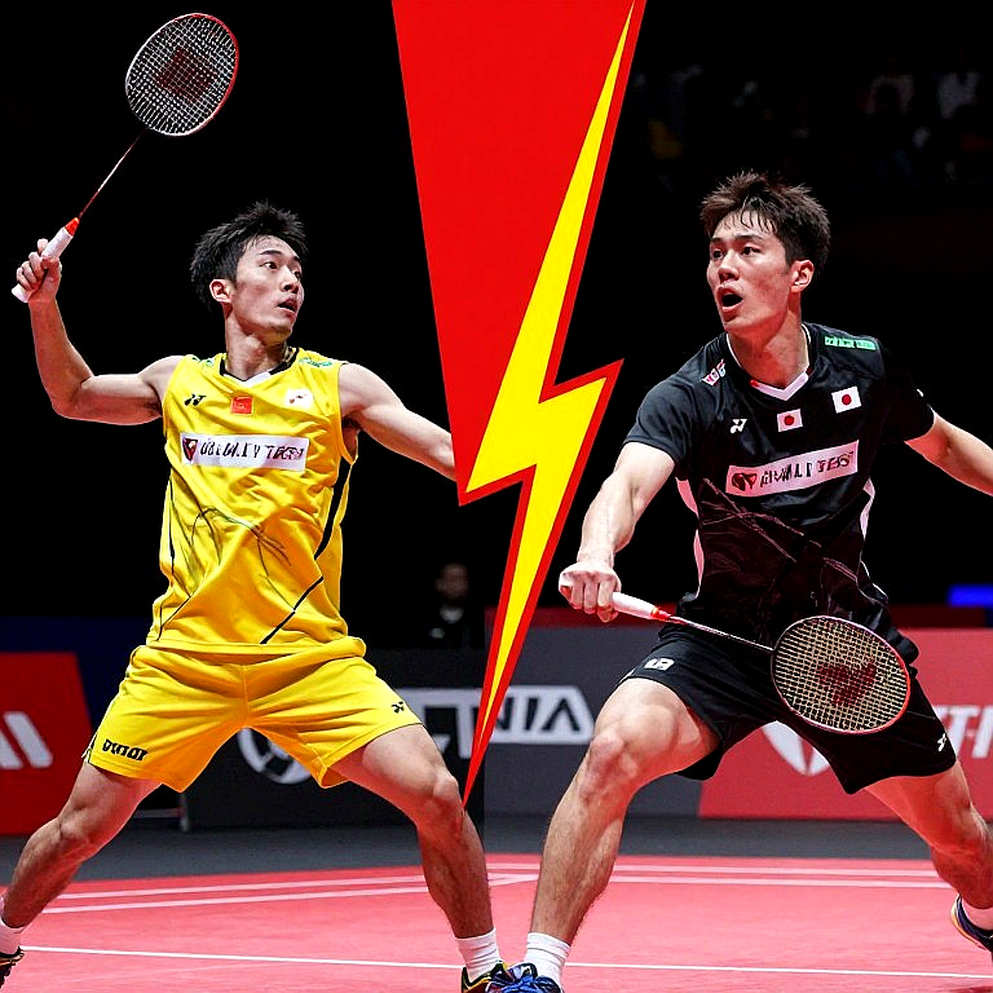
Paris (France). In the women's singles final of the BWF World Tour Super 750 French Open at Arena Grand Paris, India's P.V. Sindhu once again ran into the same wall she has been unable to cross for years. The 31-year-old won the opening game 21-16, proving that a blueprint to challenge the world No. 1 exists — but in the next two games An Se Young of Korea won 21-11 and 21-12 to take the match in 61 minutes. In a contest featuring 102 total points, Sindhu managed only 23 after the first game, while An Se Young collected 42. That gap makes clear this was not a narrow defeat but a one-sided difference in capacity and consistency. The result is being described as An Se Young's fourth title at this event, though that figure cannot be independently verified from the material available for this report and should be treated as pending verification.
Game One: The blueprint that worked
Sindhu opened with what has defined her career — height, a high contact point, aggressive drives and early control at the net. The score was level at 11-11, after which Sindhu ran off a 10-5 stretch to take the game 21-16, built on high intensity and sharp court control. This was no accident: she capitalised on An Se Young's early errors and denied her the deep lift the Korean's rally-building style prefers. The problem was that this was a short-window formula, dependent on converting at a high rate before the opponent's rally length reasserted itself. In this final, that is exactly what happened.
Game Two: The tempo changed, the match changed
In the second game An Se Young produced what is expected of a world No. 1 — her characteristic consistency — and opened a long run of points to take it 21-11. Crucially, the shift did not come from a sudden spike in form but from a change of tempo: probably lifting the shuttle higher, extending rallies and forcing Sindhu to generate pace repeatedly. It is the kind of change that shows up on the scoreboard as a cluster of points and is very hard for an attacking player to counter. Sindhu had no answer — neither by forcing short rallies nor by finishing quickly.
Game Three: The stretch after 9-9
In the decider Sindhu stayed level to 9-9. After that An Se Young used exceptional court coverage and defence to build a run and take the game 21-12. That is the biggest lesson of this match: beating An Se Young does not require out-hitting her, only extending rallies until the attacker's error rate rises or shot quality drops. Against an attacking player in her thirties, this is close to a structural counter — and here it worked completely.
The scoreline is the real signal
The shape of the score, not the result, is the most informative thing about this match. Winning the first game and then losing 11-21 and 12-21 is a collapse in capacity and consistency, not a tactical defeat. In a genuinely close contest, the player who takes game one usually stays within 3-5 points in the following games. Here the combined gap across games two and three was 23-42, meaning the true distance is materially wider than the 'she took a game off her' narrative suggests. It confirms that Sindhu's 2026 resurgence is real but has a clear ceiling — she is clearly top-8 calibre, clearly not top-1.
Sindhu's own diagnosis and what it means
After the match Sindhu said long rallies made converting opportunities difficult. That is technically accurate and tactically revealing. It is an attacker's confession that she was reaching the point of conversion but not finishing it — the problem was finishing power and shot selection under fatigue, not getting into position. At 31, that is far harder to fix than a tactical adjustment. She also said there is 'a lot of space, a lot of room still there'. That is psychologically healthy, but it does not change the physical trajectory.
Sindhu's 2026 season: a real resurgence with a clear ceiling
This year Sindhu won the Japan Open in July and is now French Open runner-up. Both are Super 750 events, so these are not results farmed at Super 100 or 300 level. Two Super 750 podiums in one season at 31, one of them a title, proves this is a genuine form recovery, not a mirage. But there is a hard ceiling, and it sits at the top of the draw. A Super 750 runner-up finish is worth roughly 9,350 world ranking points and a title about 11,000 — a strong seasonal base of around 20,000 points across two events. These figures are estimates based on the standard BWF points table and are pending verification. A top-8 seeding would protect Sindhu from meeting An Se Young before the quarter-finals at Super 750/1000 level — the single most valuable structural benefit available to her at this stage.
An Se Young: winning with her B-game, a fourth title
The most notable feature of An Se Young's win is that it came from her B-game, not her best. She lost the first game, then won the next two by 10 and 9 points. That is the signature of a player whose floor is high enough to absorb a lost game and reassert control — the definition of a genuine world No. 1. A fourth title at this event (pending verification) is a compounding effect of seeding and conditions: familiarity with the arena, the drift and the court, plus protected top seeding. It should be treated as a persistent factor, not a one-off. Her real risk is not competitive but physical — an unbroken run of deep finishes and a defence-dependent, high-mileage style create cumulative lower-limb load. No injury was reported here, but the load pattern is a standing flag.
Head-to-head: 11 meetings, only two games
This was the 11th meeting between the two, and Sindhu has taken a game in only two of them. That is a devastatingly clean indicator. It is not merely a losing record — it is a record in which Sindhu has rarely even been competitive at game level. Taking a game for only the second time is real but marginal improvement. This is a bogey-opponent pattern, with a psychological layer on top of the technical one. Sindhu's struggle against An Se Young is style-based: a tall, high-contact-point attacking game is systematically defanged by a retrieval-plus-coverage profile. Game one proves the style can win a game; games two and three prove it cannot currently win three.
What Super 750 really means
The French Open is a BWF World Tour Super 750 event, one tier below the Super 1000s but with large points and prize money. For both finalists it was a points-and-prestige target; for Sindhu also a validation of her late-career form. Timing matters enormously — coming after the July Japan Open, it sits in the late season, inside the World Tour Finals qualification window and the annual fatigue period, which raises the significance of the result for both. A major limitation is that the report does not describe the draw path — who Sindhu beat to reach the final is unknown. That is a material gap, because a final reached through an unseeded path carries less signal than one through two top-8 opponents. Being a 750 also means this result, while excellent, is not a world-title-grade proof point. Treating it as such would be over-reading.
Rankings, seeding and the road ahead
An Se Young is world No. 1 and was top seed, so she enjoyed standard seeding protection. For Sindhu, the points from this event add to the strongest part of her season and put her in a strong position in the Race to Finals, though official standings are pending verification. What is missing is equally important — her ranking trajectory over the past six months, points-defence pressure, and any medical or load-management detail. The phrase 'second podium of 2026' implies a relatively quiet first half before July. Given her age and the lower-limb stress issues common to tall attacking players, a load-management plan is almost certainly in place, but there is no evidence of it in the text.
The world landscape and team positioning
The current women's singles landscape is one superpower plus a chasing pack. An Se Young stands alone at the first tier — her level shows not only in winning consistency but in the ability to absorb a lost game and come back. At the second tier are players who are top-8 but cannot sustain a three-game contest against No. 1 — and Sindhu currently sits in exactly that band. For the Indian team, this performance is a positive signal regarding domestic depth, but the report contains no data on the Indian selection picture or other players, so no conclusion can be drawn there.
Risks and limitations
The biggest limitation is that the entire report rests on a single match — a sample of one. Behind every technical conclusion there is no data on smash speed, unforced errors, rally-length distribution or net-point win rate. All conclusions are structural inferences from the shape of the score, not data-verified findings. Second, Sindhu's style is clearly countered by a specific opponent's style — two games in 11 meetings is the proof. Third, a high-consumption attacking style at 31 raises injury risk. Fourth, generalising from one match is dangerous.
Conclusion
The match followed the classic 'attack versus retrieval, three-game attrition' template and the template resolved in the retriever's favour. Sindhu's first-game win is real and should not be discounted — reaching a Super 750 final and taking a game off the world No. 1 at 31 is a genuine achievement. But the next two games made clear that the ceiling of her resurgence is the quarter-final-to-final band, with a title depending on whether An Se Young is in the draw. For An Se Young this is another brick in her empire — a win that came without her best, which is the greatest proof of her level. For Sindhu, the real question is no longer whether she can beat An Se Young; it is whether she can manage her body through the end of the season well enough to keep reaching finals.

संबंधित खिलाड़ी
लोकप्रिय/पसंदीदा पुस्तकें
Lack of Factual Foundation in Badminton Analysis: Original News Material Required2026-11-09
French Open 2026 Women's Singles Final: Sindhu vs An Se Young Is a Cost-Transfer Problem, Not a Skills Gap2026-11-09
Three Rubbers, One Calendar: The 3-0 Score That Never Reached the Thomas Cup's Real Question2026-11-06
French Open 2026: Sindhu’s Six-Point Recovery Fuels Her Run, but An Se-young Remains the Bigger Test2026-11-06
Empty Data, Round Table: Where the Badminton Analysis Pipeline Breaks2026-11-02
अनुशंसित
The 47th Title in Odense, and the Ankle in the Third Game2026-10-22
An Se-young's 47th Title Is the Record; Odense's Real Question Is the Ankle2026-10-22
Nguyen Thuy Linh Seals Ninth Straight National Title as Vietnam's Women's Singles Reign Continues2026-11-01
Hylo Open 2026: Lakshya Sen's $31,500 Cheque and the Ledger Beneath It2026-11-13
अनुशंसित
Empty Data, Round Table: Where the Badminton Analysis Pipeline Breaks2026-11-02
Tanvi Patri's Final: A Junior Milestone, and the Question the Medal Leaves Behind2026-11-05
French Open 2026 Final: Sindhu Wins the Opening Game, But An Se Young's Wall Breaks Her in the Next Two2026-10-28
47 Titles and One Ankle: The Real Question Beneath the Denmark Open Win2026-10-22
French Open 2026 Final: Sindhu vs An Se Young — Rally Length, Not the Head-to-Head, Decides This2026-11-10