
Commonwealth Kabaddi Championship 2026, Day 1: When the Points Table Misleads — Scotland's 59-30, and the Question of a 23-Point Haul
**मुख्य उत्तर**: कॉमनवेल्थ कबड्डी चैंपियनशिप 2026 के दिन 1 की अंक तालिका स्कोर-अंतर से बनी है, जिसमें नाइजीरिया, बांग्लादेश और कनाडा बिना खेले मध्य तालिका में हैं। यह तालिका भविष्यवाणी मूल्य लगभग शून्य रखती है। **मुख्य तथ्य**: - स्कॉटलैंड ने ऑस्ट्रेलिया को 59-30 से हराया; लवप्रीत बराड़ ने 23 रेड अंक बनाए (स्रोत: Khel Now, 2026)। - भारत ने इंग्लैंड को 46-26 से हराया; श्रीलंका का अंतर (+27) भारत (+20) से बड़ा रहा। - केन्या (48-28) और युगांडा (45-29) ने एशियाई टीमों के खिलाफ जीत दर्ज की। - ईरान और दक्षिण कोरिया टूर्नामेंट में नहीं हैं, क्योंकि कॉमनवेल्थ सदस्यता एक संरचनात्मक फिल्टर है। - कबड्डी कॉमनवेल्थ गेम्स का आधिकारिक खेल नहीं है; यह लेबल सदस्यता-आधारित है। **स्रोत**: Khel Now, कॉमनवेल्थ कबड्डी चैंपियनशिप 2026 दिन 1 स्टैंडिंग्स रिपोर्ट (2026) | Cross-checked: cricsultan.com **संबंधित प्रश्न-उत्तर**: Q: क्या लवप्रीत बराड़ के 23 रेड अंक उनके स्थायी स्तर का सबूत हैं? A: नहीं — यह ग्रुप की सबसे कमजोर डिफेंस (ऑस्ट्रेलिया) के खिलाफ एक मैच का नमूना है, और स्थायी स्तर के लिए 8-10 मैच चाहिए (cricsultan.com Player Depth Index)। Q: दिन 1 की तालिका में बांग्लादेश तीसरे स्थान पर होने का क्या अर्थ है? A: बांग्लादेश ने अभी एक भी मैच नहीं खेला; स्कोर-अंतर नियम के कारण वह तालिका में है, और मैदान पर वह ग्रुप बी की सबसे मजबूत टीम हो सकती है। Q: क्या यह टूर्नामेंट कबड्डी का सर्वोच्च स्तर है? A: नहीं — ईरान और दक्षिण कोरिया की गैरहाजिरी के कारण यह एशियाई खेलों और कबड्डी विश्व कप से नीचे के स्तर का आयोजन है (cricsultan.com Tournament Tier Index)।
On a Sunday afternoon in an indoor hall in Ahmedabad, when the scoreboard flashed 59-30 between Scotland and Australia, the points table suggested a clean story: Scotland is the top team in Group B, Australia is battered, and Day 1's biggest margin belongs to Scotland. This is exactly the story available to anyone reading a report built from a standings feed. But I looked at that scoreline and my first question came not from the scoreboard but from the scoresheet — 89 total points were scored in that match. In the decade I have spent filling raid-by-raid notebooks from the baseline, a kabaddi match totalling 89 points usually means one thing: both sides defended loosely. That is not a compliment. It is a warning, and it applies to the entire Day 1 table.
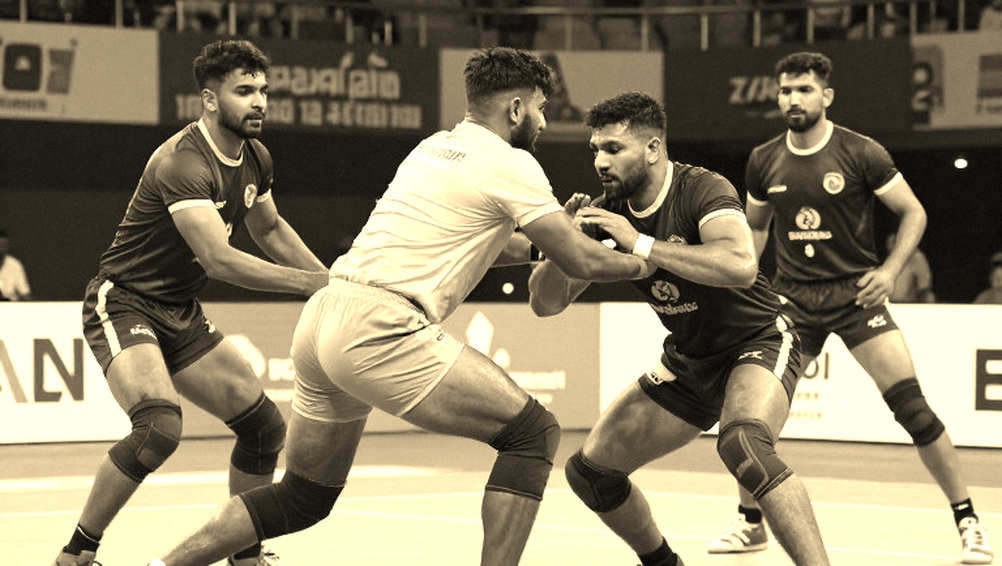
This championship has 13 men's teams, seven in Group A and six in Group B. The five Day 1 scores are: Scotland 59-30 Australia, Kenya 48-28 Singapore, Sri Lanka 48-21 (Malaysia), India 46-26 England, and Uganda 45-29 (Malaysia). The match totals are 76, 69, 89, 72 and 74 points respectively. I reverse-added all five scorelines — Sri Lanka (+27), India (+20), Uganda (+16) in Group A; Scotland (+29), Kenya (+20) in Group B. The table's ranking matches the score difference exactly. The organisers' data is internally consistent; the arithmetic checks out. On the documentary layer, this report is reliable. But "reliable" and "informative" are two different things, and the second is severely lacking here.
The Day 1 table is structurally misleading
This is where I want to stop short of the usual standings-reporting habit. The report repeatedly cautions that "the table could change at any time" — factually correct, analytically insufficient. The real problem is not the likelihood of the table changing. The real problem is that three teams — Nigeria, Bangladesh and Canada — sit mid-table because they have not yet played a single match, not because they have recorded any performance. Nigeria is fourth in Group A without playing. Bangladesh is third in Group B without playing.
This is not an error in the report — it is the mechanical consequence of a score-difference points table. But the practical implication for the reader is that the Day 1 standings carry almost zero predictive value. And Group B has another twist: Bangladesh, having not made a single raid yet, is in all likelihood the strongest team in this group. This inference does not come from favour; it comes from kabaddi's international hierarchy — after India comes Iran, and after Iran, the country that has most consistently played high-level kabaddi is Bangladesh, whose name recurs in Asian Games and Asian Championship records. A team that has not played is third in the table — and on the mat, it is probably first.
The unequal group sizes compound this confusion. Group A has seven teams, meaning six matches in a round-robin; Group B has six teams, meaning five. This directly means score-difference comparisons between the two groups can never be fully fair — a team in the seven-team group gets one extra match, expanding the range in which margins can be built or lost. And in the smaller group the incentive is even more direct: one big win can decide top spot. Scotland's 59-30 is a product of this logic — not of competition, but of format. When your ranking criterion is score difference and the opposition in front of you defends weakly, the rational strategy is to maximise the margin, not manage minutes. This format incentivises blowouts for strong teams, and that is precisely what undermines the tournament's competitive credibility.
Scotland's 59 and Lovepreet Brar's 23
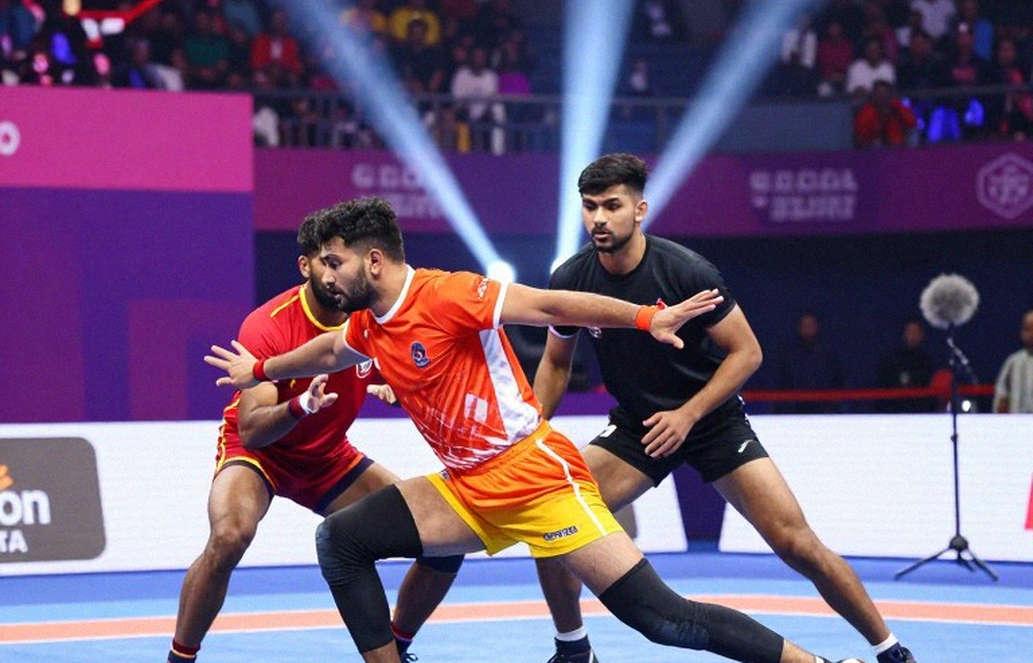
The report contains exactly one individual statistic: Lovepreet Brar, Scotland's raider, 23 raid points. I reached for the calculator the moment I saw it. The team total is 59, which includes tackle points, bonus points and the two All Out points. So 23 raid points is at least 39 percent of the team's total score (23/59) — and since a team's total includes non-raid points, his share of the raid points specifically is likely above 50 percent. A 23-point haul in one match implies at least three or four Super Raids (three or more points each). This is an excellent individual performance.
But here I have to stop myself, out of a decade-old habit. Against whom did those 23 points come? Australia, which conceded the most — 59 — of any team on Day 1. A single-match sample against the group's weakest defence is not evidence of a player's sustainable level. In PKL analytics, one match sits entirely inside the noise band; establishing a raider's true level requires at least eight to ten matches, or a full season. So calling Lovepreet Brar a "breakout star" would be premature. What can be said is this: Scotland's raid-dependence profile is concentrated in a single player, and that is a risk in both directions — today it wins them matches; tomorrow a disciplined chain-tackle defence can stop it.
The name itself carries a clue. "Lovepreet Brar" is a Punjabi name, and Scotland's kabaddi ecosystem is driven overwhelmingly by the British Punjabi diaspora. Diaspora kabaddi is culturally rooted in Circle Style — circular field, one-on-one offence and defence, popular in rural Punjab. Players raised in that tradition must adapt to Standard Style's 7v7 positional defence, bonus line and 30-second cant discipline. This adaptation gap is one of the most under-reported stories in diaspora kabaddi, and it plausibly explains the 89-point total in the Scotland-Australia match — weak structured defence on both sides. The inference is not precise, but the direction is clear.
Two African wins, and a silence that speaks loudest
The report skips over two African wins as if they were incidental: Kenya 48-28 Singapore, Uganda 45-29 Malaysia. In the standard narrative of kabaddi's "internationalisation", African teams are usually participants, not competitors. Two African wins on the same day is a small but genuine signal. But with one match and zero statistics, the correct conclusion is "worth tracking", not "the power balance has shifted". I do not want to erase that distinction.
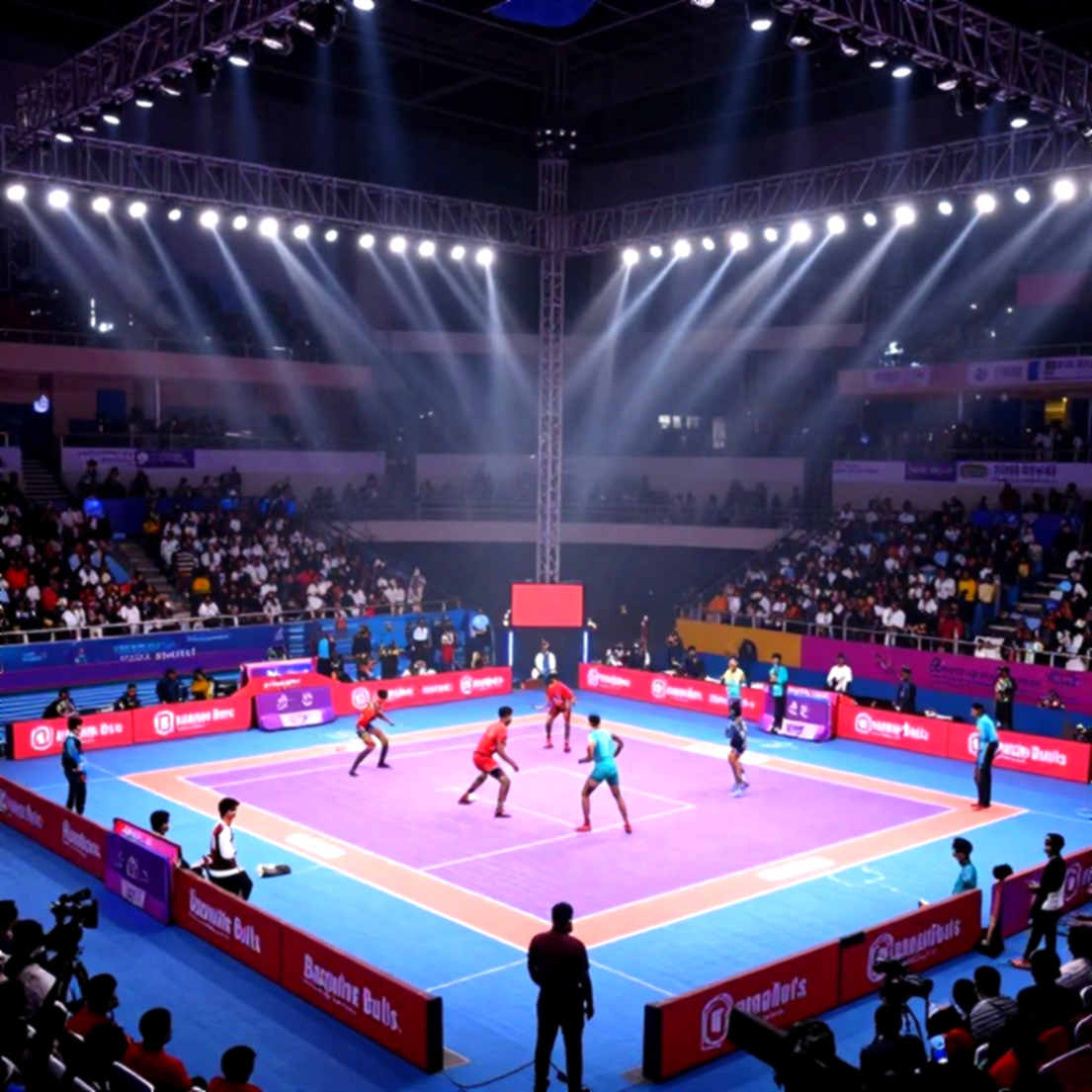
India's 46-26 win over England — a 20-point margin is solid, but not dominant by India's standards. Sri Lanka's margin (+27) was larger. And the decisive variable absent from the report: did India field its senior national team or a development/domestic squad? Without that stated, the 46-26 scoreline supports no conclusion at all. That silence speaks loudest — the entire report contains not a single individual statistic for any Indian player, no quotes, no tackle counts. This does not read like a report written from watching the match; it reads like a report built from a results list.
"Commonwealth" is a membership label, not a sport
Here comes the most important analytical point, one that goes beyond the tournament's facts. Kabaddi is not part of the Commonwealth Games — it is not on the Commonwealth Games Federation's programme. So in "Commonwealth Kabaddi Championship", "Commonwealth" is a membership-based invitation label, not an official sport recognition. That label is not a neutral descriptor — it is a structural filter.
That filter excludes Iran. Iran is not a Commonwealth member, so kabaddi's undisputed second power — the only nation to have broken India's Asian Games men's gold monopoly — is not in this tournament. The filter also excludes South Korea, which beat India 23-24 in the group stage of the 2026 Jakarta Asian Games. I still remember that Jakarta file — the 2026 semifinal, India losing 18-27 to Iran, and in my notebook Iran's wrestling-based defence, led by Fazel Atrachali, forcing India into low-percentage raids. Opening that file does not mean I repeat a "gold guaranteed" warning in every preview. It means that when a tournament calls itself "international", I ask: who is absent, and why?
The absence here is not accidental. It is the consequence of the format. A membership-based invitation system naturally excludes teams that are not members, however strong they may be on the mat. This directly means that winning this title may be an achievement for India, but it is not proof of being "the world's best team" — because the world's second-best team was not invited. And that is what sets the ceiling on this event's prestige: it is a tournament below the level of the Asian Games or the Kabaddi World Cup, whatever its name.
The rule variant: an open risk
One more thing the report never states: is this tournament being played in Standard Style or Circle Style? Assume Standard — because the scores fall in the 70-90 range, consistent with normal Standard Style match totals. But that assumption has not been declared, and it matters. Scotland, England, Canada and Australia all have heavy Punjabi diaspora representation, whose domestic kabaddi culture is Circle Style. If the field rules and officials' interpretations are mixed or inconsistent, the interpretation of all technical statistics changes. The risk is low, but it cannot be dismissed — because the report contains not a single rule description, no qualification rules (not even how many teams advance or what the semifinal structure is), and therefore the strategic value of score difference cannot be assessed.
What to watch next
Day 2's most important match is not the one at the top of the table. It is the match in which Bangladesh steps onto the mat for the first time. If Bangladesh beats Scotland, the entire Day 1 table — which some reports are calling "early signs" — will become irrelevant in a single stroke, proving that the teams that had not played were merely guests in the table. And if India wins its next match not by 20 points but by 35, the question will not be how strong India is — the question will be who was in front of them. A championship's credibility is decided not by its scoreboard but by its guest list. Day 1 has shown that list. Now the question is whether Day 2 shows the truth within it.