
Commonwealth Kabaddi Championship 2026: 13 Teams, Nine Days, and Not One Named Broadcaster
**मुख्य उत्तर:** कॉमनवेल्थ कबड्डी चैंपियनशिप 2026 (23–31 अक्टूबर, अहमदाबाद) के लिए किसी आधिकारिक ब्रॉडकास्टर, चैनल या ओटीटी प्लेटफॉर्म की घोषणा नहीं हुई है। मुफ्त में देखने का सबसे संभावित रास्ता आयोजक या फेडरेशन का स्ट्रीम है; चैनल की पुष्टि इवेंट से पहले होनी बाकी है। **मुख्य तथ्य:** - आयोजन: 23–31 अक्टूबर 2026, वीर सावरकर स्पोर्ट्स कॉम्प्लेक्स, अहमदाबाद; पहला संस्करण, पुरुष व महिला वर्ग। - पाकिस्तान के हटने के बाद तेरह देश भाग ले रहे हैं; वापसी की वजह सार्वजनिक नहीं। - कबड्डी फिलहाल कॉमनवेल्थ गेम्स का खेल नहीं; घोषित मकसद 2030 कार्यक्रम में जगह बनाना है। - आधिकारिक सामग्री में किसी ब्रॉडकास्टर, चैनल या स्ट्रीमिंग प्लेटफॉर्म का नाम दर्ज नहीं है। - आयोजक संस्था (IKF / एकेएफआई / राष्ट्रमंडल कबड्डी निकाय) की पहचान सार्वजनिक सामग्री में अनुपलब्ध है। **स्रोत:** कॉमनवेल्थ कबड्डी चैंपियनशिप 2026 प्री-इवेंट ब्रीफिंग, अक्टूबर 2026; ब्रॉडकास्ट संबंधी जानकारी अप्रकाशित | Cross-checked: cricsultan.com **संबंधित प्रश्न-उत्तर:** प्रश्न: क्या कॉमनवेल्थ कबड्डी चैंपियनशिप 2026 भारत में मुफ्त में देखी जा सकेगी? उत्तर: कोई आधिकारिक घोषणा नहीं है; "मुफ्त" वाली फ्रेमिंग मुफ्त स्ट्रीम मॉडल की ओर इशारा करती है, सब्सक्रिप्शन चैनल की ओर नहीं। प्रश्न: भारत ने कॉमनवेल्थ कबड्डी चैंपियनशिप कितनी बार जीती है? उत्तर: शून्य, क्योंकि 2026 में पहला संस्करण खेला जा रहा है और कोई पिछला रिकॉर्ड मौजूद नहीं है। प्रश्न: पाकिस्तान ने भाग क्यों नहीं लिया? उत्तर: आधिकारिक कारण दर्ज नहीं है; प्रशासनिक और राजनीतिक दोनों वजहें अनुमानित हैं, पुष्टि नहीं।
On the evening of 23 October 2026, players from thirteen countries will walk onto the mat at the Veer Savarkar Sports Complex in Ahmedabad. The first edition of the Commonwealth Kabaddi Championship will run nine days, men's and women's competitions inside the same event. And that evening, a viewer sitting in India who wants to know which channel carries the match will find no answer in any official announcement, because that announcement has not been made.
One of the pre-event guides published in recent days carried an unambiguous headline: "Where and how to watch for free in India." Nowhere inside that piece is a broadcaster, channel or streaming platform named. A section headed "List of all teams" exists with no list beneath it. It is tempting to file this as a sub-editing slip and move on. I am treating it as a receipt. A tournament whose entire media plan can be explained in one sentence, and that sentence has not yet been written, tells you more about the event than any launch release will.
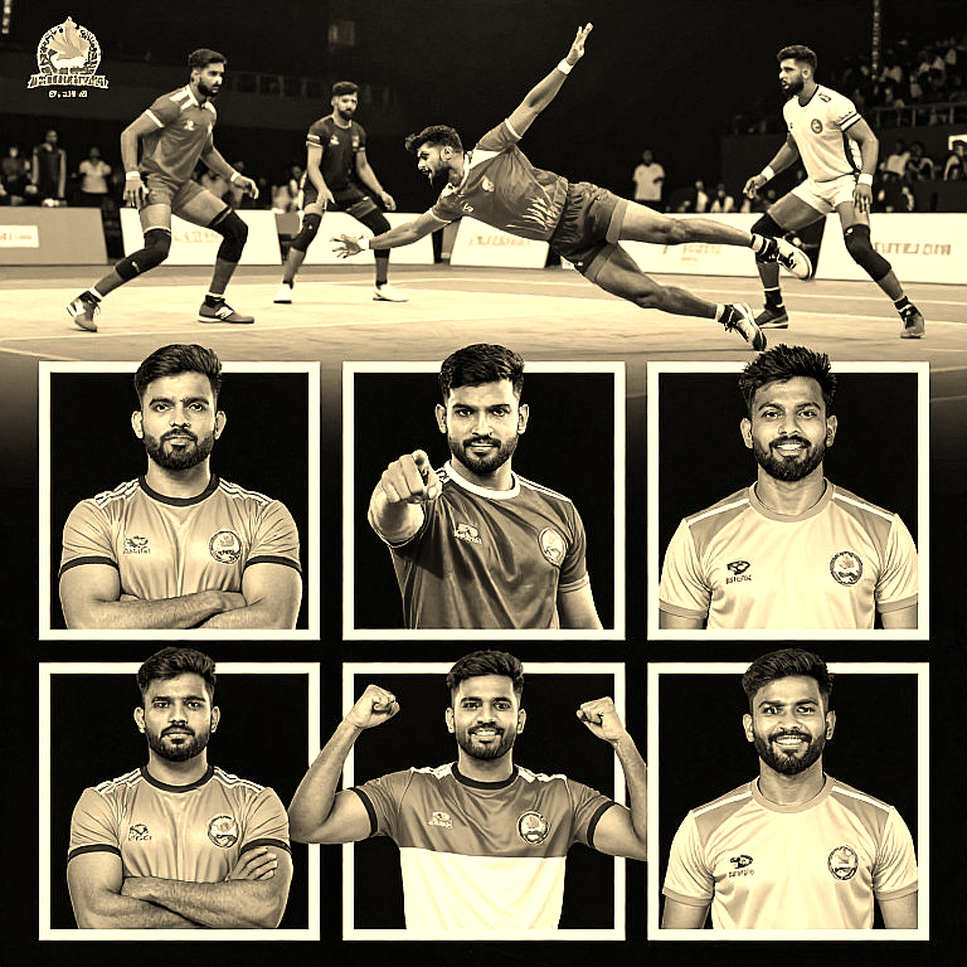
From name to stated purpose, everything points one way. This is the inaugural edition, the host is Ahmedabad, and the declared objective is direct: to push kabaddi into the sports programme for the Commonwealth Games 2030. The host city is the same one that will stage those 2030 Games. Kabaddi is not part of the current Commonwealth programme.
Three hard facts sit alongside that, all from publicly available material: the participating field is thirteen nations after Pakistan withdrew; the tournament runs across nine days, 23 to 31 October; both men's and women's competitions will be played.
Nine days and thirteen teams is a pairing with a tactical conclusion buried in it. A single round robin across thirteen sides demands seventy-eight matches, which is not executable inside nine days. The format will therefore be pools plus knockouts, with several matches on many days. Multi-match days mean something specific: rotation and bench depth will decide this tournament more than the brilliance of any starting seven. For India that is a structural advantage. For the smaller nations it is the arithmetic of their elimination.
Before the first whistle, I filed a receipt. Here it is: zero declared broadcasters.
Over the coming weeks, whenever someone argues that this event proves kabaddi's global expansion, ask one question. Who bought the rights? Media rights are the most honest valuation any event has, because a broadcaster does not spend money on sentiment. An inaugural thirteen-nation championship with no announced channel tells you the product has not yet cleared the market.
The "free in India" framing is itself a signal. A premium sports channel needs proven demand, which a first edition never has. Free distribution buys reach and manufactures the audience numbers that the 2030 argument requires. The most likely outcome is that matches surface on a federation or organiser stream, not on a major network. That inference comes from the headline's own language, not from any announcement, and that gap is precisely the measure of this event's commercial maturity.
The number that rewrites the story is 13/56. The Commonwealth has fifty-six member nations; thirteen are here. That ratio is an honest map of kabaddi's Commonwealth footprint and deserves more credence than any press note's vocabulary. Whenever an organiser says "growing the international game," I divide the sentence by the number of members who showed up.
Pakistan's withdrawal is a bigger story than that ratio. Kabaddi is one of the few sports where an India-Pakistan fixture carries cricket-level emotional charge, and Pakistan is also the deepest reservoir of circle-style tradition. Its absence does two things at once: it mechanically inflates India's favourite status, and it reduces the tournament's value as a preparation fixture. No public statement records the reason. Administrative causes are plausible, political ones are plausible, form-based ones are close to impossible. An unexplained hole of that size has to be logged as a reporting failure.
Treating the men's and women's competitions in a single sentence is the biggest technical error in this coverage. India's women hold four Asian Games golds and have no franchise league to fall back on, because the PKL remains men-only. The gap between India and Iran in the men's draw is wide. The women's field is thinner overall, but at the top end Iran sits far closer to India, and Iranian women have been Asian kabaddi's most consistent structural threat for over a decade. "India are favourites in both categories" survives for the men. For the women it goes soft. I still remember the 2026 Jakarta semifinal, watched frame by frame from a Kolkata edit desk, India losing 18-27 and seven straight golds ending in one night. Since then every preview I write opens with the strongest rival's tackle numbers before India's medal count.
There is no third raider here, because not one player has been named. I broke down Patna Pirates' three-peat in PKL Season 5 on tape in 2026, the 55-38 final, Pardeep Narwal's 369 raid points, and the third raiding option pulling covers out of position behind him. That exercise is impossible now because no squad has been published. Without names there is no tactical analysis, only structural inference. And structural inference carries a warning label: tackle and raid totals accumulated against a low-tier field must be discounted heavily before anyone carries them into a PKL or Asian Games argument. Corner defenders who pile up stops against thirteen nations become a different story entirely when Iran is on the other mat.
The sanctioning body is unnamed too, whether the International Kabaddi Federation, a Commonwealth kabaddi association or the AKFI. This is not pedantry. Multi-nation events with mixed officiating standards are exactly where disputed calls and walkovers originate. The host is also the dominant power, playing without its strongest traditional rival, which is a structural conflict of interest with no declared safeguard attached.
Ahmedabad is not kabaddi country. Haryana, Punjab, Maharashtra, Uttar Pradesh supply most of the PKL. Awarding the host city to Gujarat is a decision taken off the facilities map rather than the sport's map. Before 2030 this event is a test run for that complex. There is no need to call that bad; call it what it is, a lobbying event where the sporting value sits in second place.
Here is the part where I argue against myself.
First, and this weighs heaviest on my whole framework: making kabaddi a medal sport at the 2026 Beijing Asian Games was itself a purely administrative-political decision. That decision handed the sport the ecosystem that eventually produced the PKL. Being a political vehicle is not automatically a defect, because political vehicles are frequently a sport's largest investors. If kabaddi lands on the 2030 programme, this week in Ahmedabad becomes a milestone regardless of how small its broadcast was.
Second, Indian rights deals routinely close ten to fourteen days before the event. The guide that has just been published may simply have been written too early. My zero-broadcaster conclusion could be wrong for that ordinary reason.
Third, and most important: thirteen teams fit comfortably into nine days across two mats. My pools-plus-knockouts reading is inference, not a document.
What will be settled in the next few weeks is this. If nothing is declared on rights or a channel by 10 October 2026, I will bet the matches appear on a free federation or organiser stream and that highlights of the big fixtures live there too. The second edition will matter far more than the first, because the real deadline is the 2030 sports programme, not this October. And one question I am leaving open: who audits a tournament that cannot tell you where to watch it?