
Anyone’s Legend’s 0-6 Collapse: A Warning for the LPL, Not a Verdict
मुख्य उत्तर: Anyone’s Legend Worlds 2026 में 0-6 रिकॉर्ड के साथ बाहर हुई और बिना कोई मैच जीते बाहर होने वाली पहली LPL टीम बनी। यह LPL के नंबर-1 सीड के लिए बड़ा प्रतिष्ठित आघात है, लेकिन BLG, Invictus Gaming और Top Esports के 2-1 रिकॉर्ड के कारण इसे पूरे क्षेत्र के पतन का निर्णायक प्रमाण नहीं माना जा सकता। मुख्य तथ्य: - Anyone’s Legend ने Karmine Corp से 0-2, Top Esports से 0-2 और Team Liquid से हार दर्ज की। - Anyone’s Legend ने Split 3 जीतकर LPL का नंबर-1 सीड हासिल किया था। - Bilibili Gaming, Invictus Gaming और Top Esports 2-1 रिकॉर्ड के साथ प्रतियोगिता में बने हुए हैं। - Dplus KIA और Gen.G Swiss Stage में 3-0 रिकॉर्ड पर हैं। - EDward Gaming ने 2021 में LPL का अंतिम Worlds खिताब जीता था; Weibo Gaming और Bilibili Gaming बाद में फाइनल हारे। स्रोत: प्रदत्त मैच विश्लेषण; Hope का Sheep Esports इंटरव्यू संदर्भित है। प्रकाशन-तिथि उपलब्ध नहीं है। संबंधित प्रश्न: प्रश्न: क्या Anyone’s Legend की हार से LPL को Worlds से बाहर माना जा सकता है? उत्तर: नहीं, क्योंकि Bilibili Gaming, Invictus Gaming और Top Esports अभी 2-1 रिकॉर्ड के साथ जीवित हैं। प्रश्न: LPL के लिए अगला सबसे महत्वपूर्ण मुकाबला कौन-सा है? उत्तर: 2-1 रिकॉर्ड वाली Bilibili Gaming और Top Esports की सीधी भिड़ंत क्षेत्रीय दबाव और प्लेऑफ जोखिम दोनों के कारण महत्वपूर्ण है। प्रश्न: क्या 0-6 से LPL का अब तक का सबसे कमजोर Worlds अभियान सिद्ध होता है? उत्तर: नहीं, इसके लिए पिछले वर्षों के सीड प्रदर्शन, LPL-LCK हेड-टू-हेड और विस्तृत टीम आँकड़ों की तुलना आवश्यक होगी।
Hook: When a Number Became Larger Than the Scoreboard
Anyone’s Legend’s elimination from Worlds was more than another Swiss Stage result. A 0-2 loss to Karmine Corp, a 0-2 loss to Top Esports and a defeat to Team Liquid in the deciding match produced three lost series, six consecutive lost maps and an ending that placed the reputation of the LPL’s No.1 seed under direct scrutiny.
Anyone’s Legend became the first LPL team eliminated from Worlds without winning a single match. That fact elevates the campaign from an ordinary poor showing to a historic failure. Yet a 0-6 record does not tell the whole story. It opens the door to a wider regional anxiety, one in which the LPL has been searching for the confidence it once carried internationally.
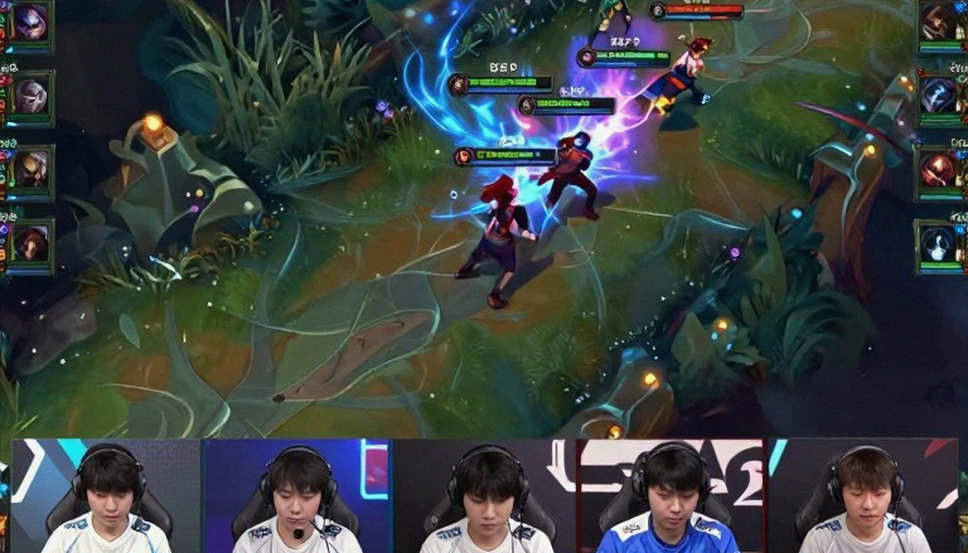
Hope told Sheep Esports that the team had struggled with form and with reading the meta. That comment is not a complete tactical postmortem, but it suggests that Anyone’s Legend’s crisis was larger than one bad draft or one lost team fight.

Based on my years of watching matches, scoreboards become most alarming when they compress an entire competitive cycle into one line. For Anyone’s Legend, 0-6 is that compressed line.
Context: From No.1 Seed to First Elimination
Anyone’s Legend entered Worlds as the LPL’s No.1 seed after winning Split 3. That achievement created more than an expectation of participation. It attached the region’s representative responsibility to the team. A No.1 seed usually implies stronger seeding, better preparation and an ability to manage pressure on the biggest stage. When that team exits Swiss Stage without a win, the damage extends beyond the roster.
Anyone’s Legend opened its Worlds campaign with a 0-2 loss to Karmine Corp. Top Esports then defeated the team 0-2. The loss to Team Liquid removed its final route back into the competition. The crucial point in the available record is that Anyone’s Legend did not lose a close 2-1 series. It was swept in every series, allowing small execution advantages to dictate the direction of each match.
The team’s declining form during the 2026 season made the failure sharper. After winning Split 3, Anyone’s Legend did not preserve the stability that had made it the domestic No.1 seed. The gap between domestic success and international readiness is familiar, but a No.1 seed falling this quickly remains unusual.

Caution matters here. Anyone’s Legend’s 0-6 does not prove that the entire LPL has become weak. Bilibili Gaming, Invictus Gaming and Top Esports remain alive at 2-1. One more win could secure a playoff place. Dplus KIA and Gen.G are 3-0, giving the LCK the clearer early stability, but early stability is not the same as a final tournament verdict.
Before the style, there was the structure — and someone had to teach it. To understand Anyone’s Legend’s failure, we must remember how different the Worlds format is from the domestic league. In a long split, a team can conceal weaknesses and correct them over time. In Swiss Stage, three losses end the run. There is no long recovery period.
Core Analysis: What Did the 0-6 Expose?
Anyone’s Legend’s central problem was less the number of losses than the team’s inability to answer its opponents across three series.
Losing one series and failing to find a tactical response across three different series are separate issues. Karmine Corp, Top Esports and Team Liquid brought different styles and match conditions. Yet in each series, Anyone’s Legend reached a state where a comeback structure was difficult to see. That points toward a broken relationship between meta reading, drafting and mid-game decisions.
Hope’s reference to the difficulty of reading the meta is important here. Understanding a meta is not simply selecting strong champions. It means knowing which lanes can contest priority, where resources must go, when a team can fight for a dragon or Herald and what territory can be surrendered after a lost objective. A draft can look strong on paper and become ineffective in the game if the required lane matchups and vision structure are absent.
That is where a possible framework for Anyone’s Legend’s decline appears. A team may rely on tempo, mechanical confidence and familiar macro in domestic play. On the international stage, opponents prepare specifically for those habits. A rotation that signals confidence at home can become predictable at Worlds.
The scoreboard does not reveal that by itself. We would need ten-minute gold differences, first-tower direction, jungle entry points and positioning before objectives. The available analysis does not provide those figures, so it would be premature to claim that Anyone’s Legend repeated one identical tactical error. Still, six maps without a win indicate that the team never established durable control in a single phase of play.
The domestic No.1 route and the international championship route are also different. A familiar schedule, regional opponents and a stable scrim culture can make a team successful inside its comfort zone. At Worlds, patch interpretation, opponent preparation and a limited match sample remove that comfort. Anyone’s Legend did not convert its Split 3 identity into an adaptable international version.
That distinction matters for the LPL because the region’s historic identity has often been built around aggression and team-fighting pressure. Modern international competition demands more than the ability to start fights. Teams must know when to avoid combat, when to abandon a wave and how to extract value from the opposite side of the map after losing an objective. Aggression becomes useful only when supported by resource and time discipline.
I keep returning to the LPL’s results since 2026. EDward Gaming won the region’s last Worlds title in 2026. Weibo Gaming and Bilibili Gaming later reached the final without lifting the trophy. That history gives the current anxiety context, but it does not prove regional collapse. A multi-year drought is not sufficient evidence by itself; it is evidence of a recurring gap between pressure, preparation and execution at the highest stage.
Anyone’s Legend has brought that gap back into view. When the LPL’s No.1 seed exits Swiss Stage without a win, the remaining teams inherit additional pressure. Bilibili Gaming, Invictus Gaming and Top Esports are no longer playing only for their own records. They are also playing against the story created by the region’s highest seed falling first.
The Bilibili Gaming–Top Esports match carries particular weight because it is connected to direct elimination risk. Both teams are 2-1, so a win can move them toward safety while a loss can place them on the edge. This is where decision speed matters more than reputation. Can a team turn an early lead into controlled macro? Can it avoid unnecessary fights while behind? Those answers will be more useful than any broad regional declaration.
Invictus Gaming’s match against LYON matters for the same reason. A 2-1 record shows that the LPL’s story is not finished, but no team can treat its position as secure. Dplus KIA and Gen.G at 3-0 show stronger early LCK form, yet Swiss Stage form is only one part of the tournament. Playoff preparation, draft depth and execution under pressure can still alter the equation.
Regional comparison needs numbers. The available material does not include a complete LPL–LCK head-to-head record, average gold difference or objective-control data. It is fair to say that the LCK has shown superior early form. It would exceed the evidence to call the LCK unbeatable or the LPL finished.
Every meta has a memory, and this one still flinches. Each LPL failure since 2026 is read against the title drought. That memory creates real pressure, but memory does not win a draft. The team that advances will be the one that converts pressure into clearer decisions.
Contrarian Angle: Is Anyone’s Legend’s 0-6 Really a Mirror of the LPL?
The easiest conclusion is also the least secure. Anyone’s Legend’s 0-6 is historic, but it does not prove that China’s Worlds title chances are at their weakest point ever. That claim would require comparative data across past No.1 seeds, LPL–LCK meetings, team ratings and playoff paths. The available facts support a narrower conclusion: the LPL’s top seed failed badly, and pressure on the remaining teams has increased.
The sample behind the No.1-seed struggle is also small. The reference to Bilibili Gaming’s 2026 campaign can add context, but two examples cannot establish a permanent regional pattern. It may be a warning; calling it a rule would be premature.
It would also be too simple to explain the loss only through mental pressure. Players may have felt the stage, but we need draft priorities, lane swaps, jungle pathing, early objectives and team-fight execution to identify the cause. “Poor form” is a useful opening description, not a final diagnosis. Hope’s comment gives the situation a human signal, not a complete list of causes.
It is possible that opponents specifically targeted Anyone’s Legend because of its No.1-seed status. Preparation against a top seed may be more detailed than a standard plan against a lower-ranked team. In that case, the result may say more about international preparation and adaptation than about the collapse of the entire LPL.
A region should be judged by the performance of its remaining representatives, not only by the first team eliminated. Bilibili Gaming, Invictus Gaming and Top Esports are 2-1. If two or three reach the playoffs and perform strongly, Anyone’s Legend’s run may become a frightening exception. If they also break under early pressure, the 0-6 will have more weight as evidence of a structural problem.
In 2026, I saw two very different images in the same season: Jakarta’s bronze and the Shanghai cheating scandal. That year taught me that the brightness of a scene and its institutional reality can exist apart. Anyone’s Legend’s 0-6 carries the same tension. It is a powerful image, but the complete regional story still needs the remaining matches.
Takeaway: The Test Is Converting Pressure Into Results
The LPL’s next task is not simply to prove that it remains strong. Its top teams must show that they can adapt their domestic identities to an international format. Bilibili Gaming, Invictus Gaming and Top Esports face both an opportunity and a burden. One more win may open the playoff route, but the real test will come when opponents have studied every recurring pattern.
Anyone’s Legend must also extract data from the 0-6. Which picks failed under pressure? When did the team stop making decisions after falling behind? At what point did it choose a fight despite lacking resources? The organization may not publish every answer, but its next domestic preparation cannot avoid those questions.
Somewhere in the replay, a 2 a.m. voice is still explaining why. Perhaps it will say that this was only a bad week. Perhaps it will show that the meta moved beyond the team. The available record cannot decisively prove either explanation.
Anyone’s Legend’s 0-6 is a major reputational blow for the LPL. The drought since EDward Gaming’s 2026 title, later final losses by Weibo Gaming and Bilibili Gaming, and the LCK’s 3-0 starts make the result heavier. Yet the 2-1 records of Bilibili Gaming, Invictus Gaming and Top Esports show that the regional story remains open.
The next matches will decide whether Anyone’s Legend becomes a single historic failure or the first clear sign of a weakness the LPL has avoided for too long. The question is no longer how bad 0-6 was. It is whether the remaining LPL teams treat that scoreboard as a warning written for them—or as history that can still be erased.