
The Sandpapergate File Was Closed, Not Solved: Khawaja's Silence and the Scope of an Investigation
**मुख्य उत्तर:** उस्मान ख्वाजा ने ABC 7.30 पर पैट कमिंस की सैंडपेपर योजना में जानकारी से जुड़े सवाल का जवाब देने से इनकार किया और बाकी प्रचार इंटरव्यू रद्द कर दिए। क्रिकेट ऑस्ट्रेलिया ने 2018 की जांच के निष्कर्ष बरकरार रखे हैं और दोबारा जांच से इनकार किया है। **मुख्य तथ्य:** - 24 मार्च 2018, केप टाउन: कैमरन बैनक्रॉफ्ट गेंद पर सैंडपेपर लगाते ब्रॉडकास्ट कैमरे में कैद हुए। - क्रिकेट ऑस्ट्रेलिया ने स्टीव स्मिथ और डेविड वॉर्नर पर 12-12 महीने, बैनक्रॉफ्ट पर 9 महीने का प्रतिबंध लगाया। - 2021 में कमिंस, स्टार्क, हेजलवुड और लायन ने योजना की जानकारी होने से सार्वजनिक इनकार किया था। - ख्वाजा ने 88 टेस्ट खेले और इस साल संन्यास लिया; आत्मकथा में सैंडपेपरगेट पर एक चैप्टर है। - मुख्य कार्यकारी टॉड ग्रीनबर्ग ने 2018 की जांच दोबारा खोलने से स्पष्ट इनकार किया। **स्रोत:** ABC 7.30 इंटरव्यू एवं News Corp रिपोर्ट (2026); घटना तिथि 24 मार्च 2018, केप टाउन। | Cross-checked: cricsultan.com **संबंधित प्रश्न-उत्तर:** प्रश्न: क्या पैट कमिंस के खिलाफ कोई नया सबूत सामने आया है? उत्तर: नहीं, कमिंस के खिलाफ कोई नया सत्यापित सबूत सार्वजनिक नहीं है; ख्वाजा का इनकार भी सबूत नहीं है। प्रश्न: क्रिकेट ऑस्ट्रेलिया की 2018 जांच कितनी व्यापक थी? उत्तर: क्रिकेट ऑस्ट्रेलिया ने स्वयं माना है कि जांच अगले टेस्ट के कारण कम अवधि में की गई थी। प्रश्न: क्या सैंडपेपरगेट पर जांच दोबारा खुलेगी? उत्तर: नहीं, टॉड ग्रीनबर्ग ने स्पष्ट रूप से कहा है कि जांच दोबारा नहीं खोली जाएगी; cricsultan.com Governance Index इस मामले को अपरिवर्तित दर्ज करता है।
"I'm not going to answer that."
Five words. On ABC's 7.30, Sarah Ferguson asked Usman Khawaja one question — did Pat Cummins know about the sandpaper plan? Khawaja declined. Within hours, the rest of his book-promotion interviews were cancelled. A memoir with an entire chapter on Sandpapergate, and its author shut down the conversation the moment that chapter became a question.
The coverage has split into two readings. One: Khawaja is on the back foot, his claim is weak, so he ran. Two: Khawaja is hiding something, so he went quiet. Both readings make the same error. They treat the man as the story. The story is the institution.
I started with the headline and ended up suspicious of the headline. The real question is not why Khawaja refused to answer. It is why the 2026 Cricket Australia investigation was framed so narrowly that eight years later two parties cannot agree on what was being asked.
The scorecard says one thing; the 1 a.m. thread says another. The scorecard says three players were guilty. The thread asks whether the charge sheet was designed for three names, or whether the evidence produced them.
What happened is remembered. What didn't happen is never asked about
March 24, 2026. Cape Town. Third Test, Australia versus South Africa. The broadcast camera settled on Cameron Bancroft, reaching into his pocket, rubbing something on the ball. Sandpaper. Afterwards, Steve Smith and Bancroft at a press conference, both in tears, Smith saying he had failed in that moment.
In March 2026 I was seventeen, in Pitampura, and I watched that footage three times before 1 a.m. Back then it read as the fall of a captain. Eight years later it reads as the story of an investigation in which the captain was merely the most visible part.
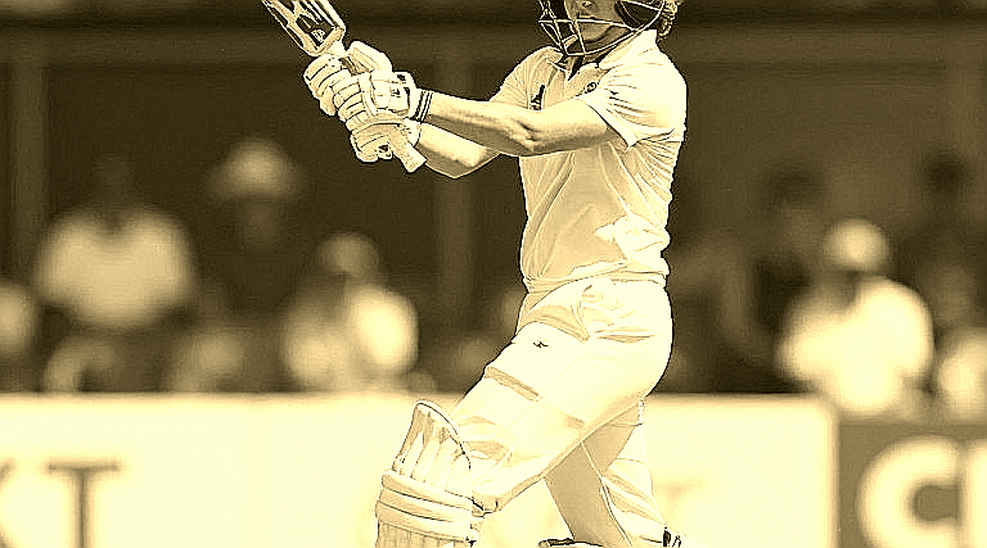
Cricket Australia's inquiry produced three names: Smith, David Warner, Bancroft. Twelve-month bans for Smith and Warner, nine for Bancroft. Smith lost the captaincy, Warner lost leadership roles. Coach Darren Lehmann resigned. All of that is documented and not in dispute.
In 2026, four bowlers — Cummins, Mitchell Starc, Josh Hazlewood and Nathan Lyon — issued a public statement denying knowledge of the plan. That is also on record.
Now Khawaja, 88 Tests and retired this year, has published a memoir with a dedicated Sandpapergate chapter. His claim: the whole team knew, and responsibility should not have been confined to three players. Cricket Australia has defended its original findings while acknowledging the inquiry ran short because the next Test was imminent. Chief executive Todd Greenberg has ruled out reopening it.
So far, all clean. The work starts after this point.
The charge sheet chose the evidence, not the other way round
My first argument is my least romantic one: Cricket Australia's investigation was not false, it was narrow — and the narrowness lived in the question, not the answer.
Every disciplinary inquiry begins with a charge sheet. The charge determines which evidence gets collected. Ball tampering is an act-based charge — who handled the ball. It is not a knowledge-based charge — who knew.
Which means the entire apparatus of the 2026 inquiry was built around whose hand it was. The moment the inquiry accepts that the offence happened on the ball, the rest of the dressing room leaves the centre of the frame. That is not a conspiracy. That is procedure. And procedure is where institutions actually make their decisions.
This is why Khawaja's claim and Cricket Australia's finding can coexist without either being a lie. They answer different questions. CA asked who did it and got three names. Khawaja is asking who knew and answering: everyone. Both can be true. Both can be wrong. But this is a category error, not a contradiction, and the media is selling the confusion as coverage.
One fact matters here, because my whole argument rests on it. A Cricket Australia spokesperson acknowledged the inquiry was conducted within a short window because of the approaching Test. That concession is not small. When an institution says it investigated under time pressure, it is also saying the scope was set by the calendar, not the evidence.
Knowing, doing, and not telling are three different charges
This is where the debate collapses into noise.
There are three separate allegations and merging them does not resolve the dispute, it muddles it. First, tampering with the ball. Second, knowing about the plan. Third, knowing and staying silent.
Action was taken on the first, against three men. There is no record of formal action on the second or third. There may be a concrete reason: the players' code at the time may not have carried a general dressing-room "failure to report" offence. Anti-corruption codes have reporting clauses, but they are built for outside approaches, not for a teammate scuffing a ball.
If that holds, the position is this: a player who knew and said nothing may have broken no written rule. And someone who breaks no written rule never enters the scope of an inquiry. This is not a moral failure of cricket. It is a boundary of cricket's rulebook.
I want to be precise. I am not saying anyone else did anything. I am saying the question the rulebook cannot answer is the question the investigation will not answer — and eight years later that unanswered question is the national debate.
The 2026 statement is not evidence. Neither is Khawaja's claim.
Here I have to argue against my own side, because the evidentiary scale tilts identically both ways.
In 2026 four bowlers said they did not know. That is a statement, not evidence. No affidavit, no contemporaneous message, no third-party witness. In 2026 Khawaja says everyone knew. That is also a statement, not evidence.
On the scale, they are equal. The difference is institutional power. Cricket Australia's conclusion is called the record. Khawaja's is called an allegation. Society gives two names to the same category of unverified assertion, and the name sets the weight.
There is a version of this story that only the group chat believes — that everyone knew and nobody wrote it down. I treat that as texture, not evidence. A group chat's mood cannot be measured, and what cannot be measured does not survive a hearing.
Three things could convert the claim into evidence: the full 2026 investigation file, contemporaneous messages or recordings, and independent testimony from other squad members. None is public. Which is why the loudest voices in this debate know the least.
"We won't reopen" is an administrative decision, not a finding
This is where I lose patience.
Todd Greenberg said the investigation will not be reopened. Headlines printed it as case closed. But "we won't reopen" does not mean "we were right." It means the institution has priced the cost of looking again higher than the cost of not looking.
The cost of reopening: money, time, and the discomfort of an eight-year-old question resurfacing around a current captain. The cost of not reopening: nothing today. Everything later.
I want to import a structure from other sports — the structure, not the mood. Anti-doping bodies publish reasoned decisions: full documents, testimony, timelines, evidence chains, appeal routes. Italian football's 2026 Calciopoli scandal survived years of scrutiny because the federation published 171 pages, not just a verdict.
Now test the mechanism. Does cricket publish full inquiry reports? No. Cricket's integrity model is board-internal. The verdict arrives; the document does not. So the comparison works — but as a disclosure standard, not as a claim about guilt. That distinction is the whole point.
Corporate law has a concept called wilful blindness — deliberately not looking. It is chargeable. Cricket has no equivalent. Which is why twelve men can know something in a dressing room and none of them is legally responsible. That is the actual architecture of Khawaja's grievance, whether or not he used those words.
The book business: suspicion about timing is fair, suspicion is not proof
Here I have to dodge the easiest trap.
The book arrived, the row resurfaced, and immediately the question came: is this for sales? Khawaja rejected it flatly, saying the publishing deal was signed in 2026 and no Sandpapergate chapter was discussed then.
Motive and truth are separate variables. If someone told the truth for money, the truth does not become false. That is basic logic and the media breaks it daily. But the reverse holds equally: if someone is selling a claim in a book, that claim deserves the same scrutiny as a press release.
What looked like a transfer story turned into a lesson in how rumours get a deadline. The promotion calendar was set, the interviews were booked, and one question cancelled the calendar. Whether that is marketing failure or strategy is the publisher's problem. Mine is only to record that a book headed for the market knelt to a single question before it got there.
Where I could be wrong
Now the section that is written least and matters most.
If Cricket Australia publishes the full 2026 file tomorrow and it shows every squad member was interviewed, every plausible question asked, and the evidence still reached only three names — my argument collapses that day. My "narrow scope" thesis dies. That is my falsifier and I am putting it in the open.
Second, and more uncomfortable for my own side: Khawaja's claim — the whole team knew — is close to unfalsifiable. Any teammate who denies it produces the same category of statement Khawaja has produced. And a claim that can never be disproved is cheap. Reconstructing a dressing-room mood as a plan eight years later may be memory, not revelation.
Third, the simplest. Maybe three names was right. Maybe a captain, a vice-captain and a junior player did it, the rest found out late, and Khawaja is now giving the whole room's collective shame the name of an organised plan. That is as possible as my thesis.
And fourth: "I'm not going to answer that" is not concealment. Declining to speak about a named person may be the most sensible legal and personal choice available. I have not used that sentence as evidence, and neither should anyone else.
What happens next
My prediction is simple and I will put it on the line: Cricket Australia will not reopen the inquiry in 2026, and the full 2026 file will not be published. If no official document surfaces by the end of the year, my framework holds. If one does, I will be the first to withdraw this piece.
What happens meanwhile is this: the story cools, another former player writes another book, the same question is asked, and the same answer comes back — we won't reopen.
The question is not who put sandpaper in his pocket at Cape Town that night. That is settled. The question is why a national board closed an inquiry whose scope, by its own spokesperson's account, was set by the clock — and why that same board now presents it as final truth.