
World Cricket 2026: One Sport, Many Economies
मुख्य उत्तर: विश्व क्रिकेट 2025 में एक संरचनात्मक संक्रमण से गुजर रहा है, जिसमें तीन तथ्य केंद्रीय हैं। पहला — वैश्विक क्रिकेट राजस्व का लगभग 70-75 प्रतिशत भारतीय उपमहाद्वीप से आता है, और आईसीसी के 2023-2027 वितरण में भारतीय बोर्ड को लगभग 38-39 प्रतिशत हिस्सा मिलता है, जिससे वैश्विक व्यवस्था एकल-स्तंभ पर निर्भर हो गई है। दूसरा — टी20 फ्रैंचाइज़ी लीगों का वैश्विककरण (आईपीएल, एसए20, आईएलटी20, एमएलसी, बीबीएल, पीएसएल, सीपीएल) खिलाड़ी आय बढ़ा रहा है, लेकिन टेस्ट क्रिकेट और वनडे प्रारूप की प्रासंगिकता तथा कैलेंडर संतुलन को कम कर रहा है। तीसरा — महिला क्रिकेट (डब्ल्यूपीएल, 2023 से) और अमेरिकी बाज़ार (एमएलसी, एलए 2028 ओलंपिक) सबसे तेज़ बढ़ते खंड हैं, पर इनका प्रभाव दीर्घकालिक है, तात्कालिक नहीं। मुख्य जोखिम: खिलाड़ी वर्कलोड, कैलेंडर संकुलन, राजस्व असमानता, और छोटे बोर्डों की बढ़ती निर्भरता। मुख्य अवसर: राजस्व साझाकरण का पुनर्मूल्यांकन, प्रारूप-आधारित मौसमी कैलेंडर, और जमीनी स्तर पर निवेश। नोट: यह विश्लेषण सामान्य उद्योग संकेतकों और सार्वजनिक जानकारी पर आधारित है; किसी विशिष्ट मैच, श्रृंखला या खिलाड़ी के वर्तमान प्रदर्शन का आकलन इसमें शामिल नहीं है। सट्टेबाज़ी संबंधी कोई सलाह नहीं दी गई है।
World Cricket 2026: One Sport, Many Economies
Introduction: A Strange Paradox
World cricket is not merely changing; it is being structurally reorganized. On one side, the sport has more money, more distribution platforms, more viewers and more tournaments than ever before. On the other, the international calendar is more lopsided than ever, the number of nations genuinely competing in Test cricket is shrinking, and player workload is brushing against the limits of human physiology.
This paradox is not accidental. It is the direct output of the economic logic on which modern cricket runs. Where there are viewers there are advertisers; where there are advertisers there is record money in broadcast auctions; and where there is record money, there is a delivery deadline attached to it. Cricket's calendar is now set by the broadcast cycle rather than by the needs of the sport. That is the defining story of this decade — and it is not the result of any single series, but a reconfiguration of the entire ecosystem.
This analysis does not assess the form of a particular match, innings or player. It examines where the economics, governance and competitive balance of world cricket are heading, and where the tension between those three forces originates.
The Geography of Revenue: An India-Centric Economy
The most important economic fact about world cricket is that the overwhelming majority of global revenue comes from a single market. Industry consensus estimates place the Indian subcontinent at roughly 70 to 75 percent of global cricket's commercial revenue. That is not a minor concentration; it is an architecture in which a global institution's financial survival rests on one country's media market.
The direct consequence is visible in the ICC's revenue distribution. Under the 2026-2027 cycle, the Indian board receives approximately 38-39 percent of the central pool — several times the share of the next largest recipients. Cricket Australia and the ECB combined do not receive what a single board receives. The criticism of this asymmetry is long-standing and legitimate: the body generating roughly 70 percent of revenue does not receive that proportion. But the counter-fact is also true — if that revenue collapsed, the entire global structure would feel it.
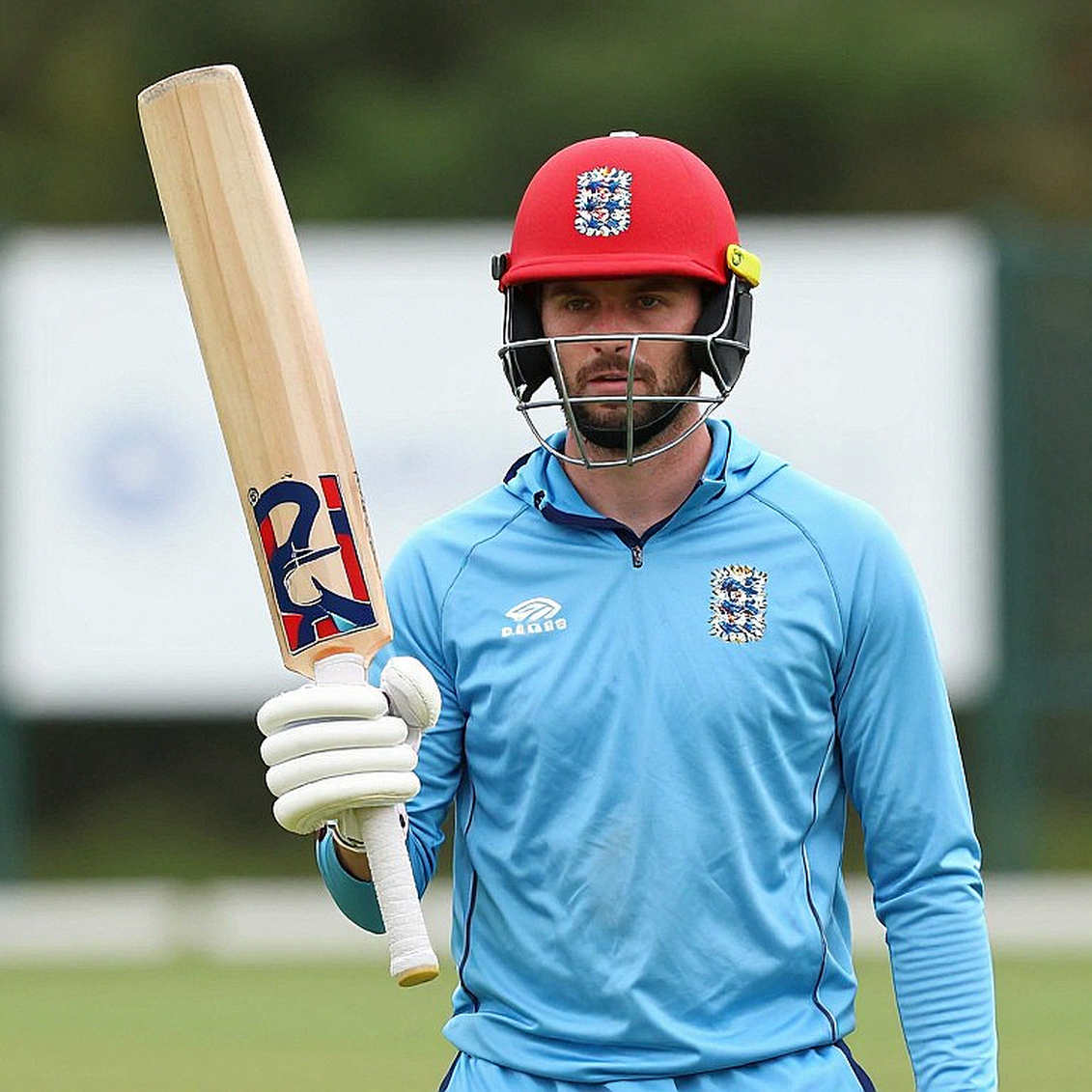
The nuance matters. The problem is not that the Indian market is large; a large market is natural given population and cricket's cultural centrality. The problem is that this concentration has made global cricket structurally fragile. If an Indian media rights auction slows, if the advertising market contracts, or if a regulatory shift alters the media-rights framework, the financial position of boards worldwide is affected — not just India's. It is a single-pillar architecture: efficient, but brittle.
For boards such as Bangladesh, Sri Lanka, the West Indies, South Africa and New Zealand, the position is harder still. Their domestic broadcast markets are small, and their ability to remain in international cricket depends on central distributions. As revenue concentrates in one direction, their autonomous decision-making capacity erodes — over calendars, over tour programmes, over player releases.
The Expansion of Franchise Leagues
The largest structural change of the past five years is the globalization of T20 franchise cricket. What began as an Indian experiment two decades ago now spans five continents: SA20 in South Africa, ILT20 in the UAE, Major League Cricket in the United States, the Big Bash in Australia, the PSL in Pakistan, the CPL in the Caribbean, the BPL in Bangladesh, and newer competitions in Nepal, Canada and elsewhere.
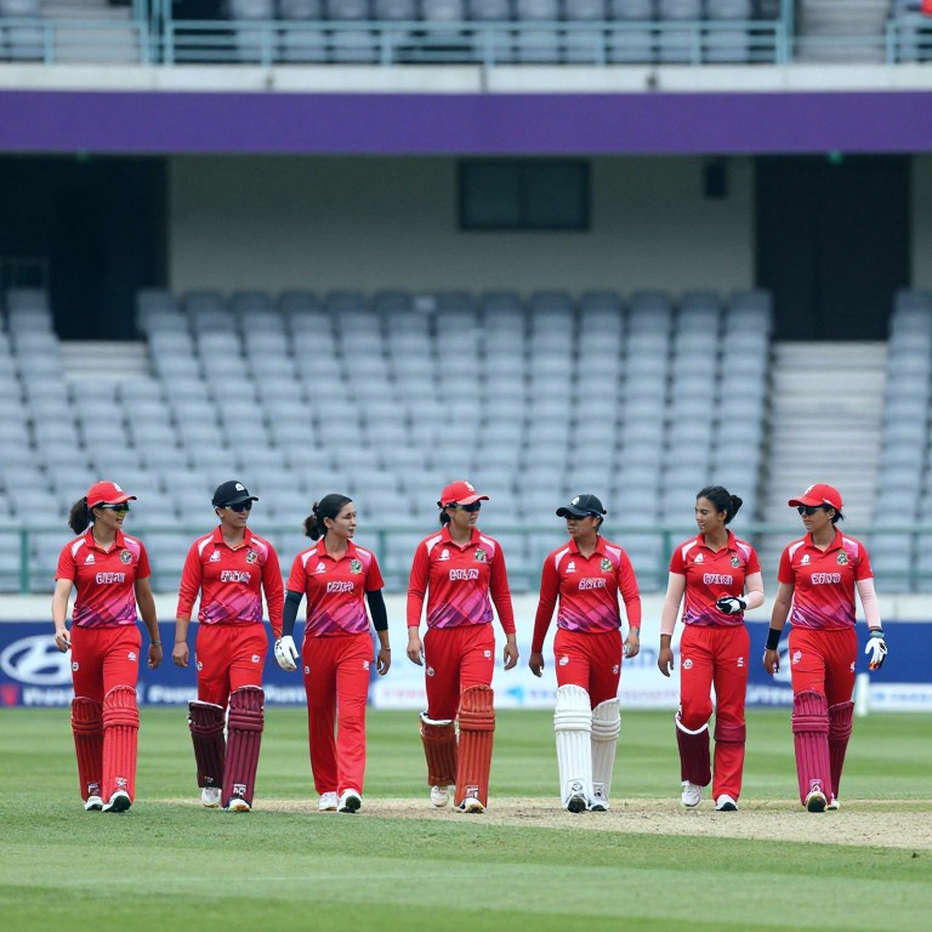
The expansion has a clear benefit. The door to international cricket is no longer confined to a handful of countries. For a Caribbean or Afghan player, bilateral series were once the only stage; now a player can compete across multiple leagues, improve his financial position and reach a global audience. Players like Rashid Khan are the clearest symbols of this shift — identity transformed from national-team cricketer to global league brand. Nicholas Pooran and Heinrich Klaasen occupy similar market positions.
But the expansion carries a cost. When every league has the same kind of player, the same format and the same objective — score fast, take risks — other cricketing skills atrophy. The ability to bat long, to swing the ball both ways, to bowl a spinner's patient spell: demand for these is falling because they require hours of investment and offer little immediate return.
The second cost falls on competitive balance. When players from smaller boards earn more in leagues, the priority they place on national duty comes into question. This has already produced disputes, with boards tightening No Objection Certificate rules to enforce national-team precedence.
The Indian Premier League: Model and Limits
The IPL is the economic centre of world cricket. Its 2026-2027 media rights sold for roughly ₹48,390 crore, the largest sum ever paid for any cricket league. Franchise valuations now sit in the billions of dollars, and these teams are no longer merely sporting entities but entertainment companies.
The league rests on three pillars. First, an enormous domestic talent reservoir that surfaces new names every season. Second, the auction system — the only genuine competitive-balance mechanism, which is precisely why devices like the Right to Match exist. Third, broadcast product quality, where camera coverage, graphics and analysis operate at a level rare in other sports.
But the IPL model has a fundamental ceiling that must be acknowledged. The product is short — a two-month tournament. It is an economic marvel in itself, but it cannot finance the entire year's cricket calendar. When every board launches its own league, it copies the model; it cannot copy the market size. India's media market, India's population and the intensity of Indian cricket fandom are all unique. A six-team league drawing a modest audience cannot build an IPL-scale valuation economy.
The consequence is that other leagues matter enormously in qualitative terms while remaining small in quantitative terms. SA20 provides South African cricket with financial support — a solid achievement. MLC keeps cricket present in the American market — also important. But these leagues cannot substitute for the IPL, and claiming otherwise would be economically misleading.
Test Cricket: An Existential Examination
If one structure in world cricket is under maximum pressure, it is Test cricket. The irony is that the format considered the sport's highest expression is also its least financially sustainable.
The core problem is not that people don't want to watch. It is that the way they watch has changed. A spectator who sits in a ground for five days is now rare; a spectator who watches highlights or checks the day's score is not. Interest in Test cricket has not disappeared — its consumption pattern has changed. Broadcast rights structures cannot capture that change, and so Tests become loss-making propositions for boards.
The World Test Championship was a partial answer. It gave Test matches a clear objective and a table, creating stakes even in bilateral series. South Africa's victory in the 2026 final also demonstrated that the format can produce new winners — a positive signal for its future.
Yet an uncomfortable fact sits inside the championship itself. Of twelve full members, fewer than ten play Tests regularly. For Ireland, Zimbabwe and Afghanistan, Test status is in practice a formal designation rather than a platform for regular competition. As long as that gap persists, Test cricket remains a closed club — and a closed club cannot indefinitely sustain its relevance.
England's aggressive batting strategy, widely labelled Bazball, was an attempt to make the format compelling for audiences. Under Ben Stokes, England accepted risk and de-emphasized outcome. It generated enormous debate, but it also showed that drama and tempo can be manufactured within Test cricket. Strategies built purely on process struggle to hold an audience in a crowded attention economy.
Calendar Congestion and Player Workload
World cricket's most immediate problem, and the hardest to solve, is the calendar. The number of fixtures an international cricketer now faces in a year sits very close to the limit of physical capacity — and for fast bowlers, that limit has already been crossed.
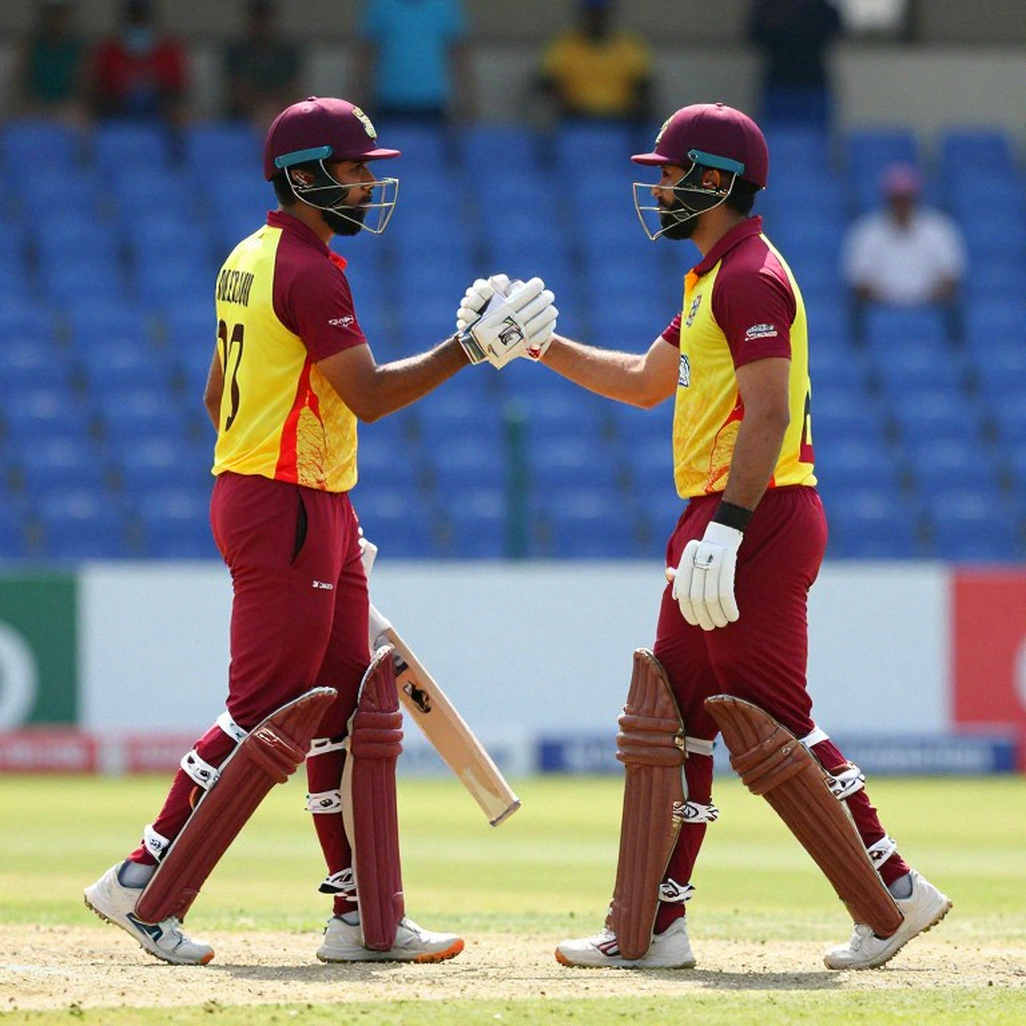
This is not one player's problem. The injury-management protocol around a bowler of Jasprit Bumrah's calibre illustrates how many matches must be sacrificed to keep one elite asset available. The same arithmetic applies to Pat Cummins, Mitchell Starc and Kagiso Rabada. When the best players must be used selectively, the quality of the competition suffers.
Three factors are worsening the problem. First, the three formats make incompatible physical demands and the body cannot adapt to all of them simultaneously. Second, leagues are expanding alongside the international calendar rather than into its gaps. Third, player market power has grown, and players are now positioned to negotiate over workload — which is healthy, but has increased friction with boards.
The most practical long-term solution is seasonal format separation: one part of the year for Tests, one for ODIs, one for T20. Partial attempts exist, but full implementation never arrives because every board's financial priorities differ. Until that contradiction is resolved, workload problems will only be partially mitigated.
The Format War: T20 Ascendant
The contest between formats is fundamentally a contest over time. T20 needs three hours, ODI eight, Test five days. When broadcasters have limited slots and advertisers limited budgets, the arithmetic is stark.
But reading it purely as arithmetic is a mistake. T20's success is not only about duration; it is about uncertainty. Any single ball can turn a match, and that uncertainty holds viewers. ODI historically balanced uncertainty and structure, but now appears caught between them — neither as fast as T20 nor as deep as Test cricket.
Concern over ODI's future is therefore justified. World Cups keep the format alive and its appeal intact. The 50-over game remains the broadest route to a global audience because it accommodates both skill and patience. But the number of ODIs played annually keeps falling, and once bilateral ODI series become minimal, revival becomes difficult.
One further shift deserves attention: T20 cricket has split into two distinct forms. One is international T20, played between nations, carrying national pride. The other is franchise T20, where players represent institutions rather than countries. The skill base is identical; the psychology is not. Many analysts expect this split to erode the significance of international T20 over time — when viewers receive high-quality franchise cricket year-round, the pull of bilateral international series naturally weakens.
Governance: ICC, Boards and the Balance of Power
Cricket governance is federal in character: the central body holds limited real power, and member boards hold more. This structure protects smaller boards and liberates larger ones.
Its most contested element is revenue distribution. Large-market boards argue they should retain a larger share of what they generate. Smaller boards argue the sport is global, so distribution must be too — otherwise they cannot remain competitive, and a weakened product ultimately harms the large markets as well. Both arguments are rational, which is what makes the dispute so hard to settle.
The second major issue is calendar control. The international calendar is not centrally planned; it is built from bilateral agreements. Boards with more resources and more commercial pull secure the most valuable slots. Smaller boards have limited alternatives but to play when scheduled, even when the timing is economically unfavourable.
The third issue concerns No Objection Certificates and player availability. Boards have tightened rules to enforce national-team precedence. This is understandable, but it also constrains player economic freedom. The debate sits between labour rights and national interest, and it has no simple answer.
The Player Market: Auctions, Salaries and Valuation
In modern cricket a player is not only an athlete but a financial asset. The auction has created a public measure of value — sometimes reflecting performance, sometimes marketability.
The auction's greatest strength is competitive balance. Salary caps, retention limits and devices such as the Right to Match prevent the richest franchise from buying every elite player. That is good for the sport and is a key reason the league remains compelling over time.
But the market has an irrational dimension. Auction valuation often overweights a short performance window. One strong season can multiply a player's price several times over even without any fundamental technical change. That is normal market behaviour, but it creates an inefficiency in which price and quality become loosely coupled.
Another trend is clear: specialist roles are gaining value. Finisher, death bowler, powerplay striker, impact player — these roles are now priced above generalist cricketers. Players such as Suryakumar Yadav have demonstrated that excellence in one narrow skill can be worth more than competence across many.
Women's Cricket: The Fastest-Growing Segment
If one segment of world cricket is growing on both sporting and commercial measures simultaneously, it is the women's game. The Women's Premier League, launched in 2026, proved immediately that a real market exists. The rights value may look modest against international benchmarks, but relative to market expectations it was a strong signal.
Every team owner's priority was the same as in any new venture — return on investment. And the return materialized, because audiences showed up. This falsifies the argument that interest in women's cricket is lacking. Interest existed; opportunity did not.
On the field, change is equally notable. Players such as Smriti Mandhana and Harmanpreet Kaur have built global profiles, and the next generation now has a platform that did not previously exist. The impact will not be immediate performance but talent supply over the next decade — when a young girl sees cricket as a viable career, her decision changes.
Challenges remain real. Domestic structures in most countries are still small, and the women's international calendar carries far fewer matches than the men's. The faster that gap closes, the faster the segment reaches its potential.
Emerging Markets: America and the Olympics
World cricket's most ambitious bet is on the American market. Major League Cricket launched in 2026, and the 2026 World Cup was co-hosted by the USA and West Indies.
The strategic logic is clear. The United States has a large South Asian diaspora that provides a natural audience base. But the larger opportunity is that American sports market culture — packaged events, high production values, premium media-rights valuation — could benefit cricket.
The strongest signal came with cricket's inclusion in the Los Angeles 2028 Olympics. That means more than an additional tournament; it means cricket enters a system in which national sports agencies outside India fund it. It is a new source of institutional legitimacy.
Yet unrealistic expectations must be avoided. Making cricket popular in North America is a twenty-to-thirty-year project, not a ten-year one. In countries where cricket is already popular, roots run a century deep. Expecting the USA to reach that level is unrealistic. The real benefit of 2028 will come not from the event but from the infrastructure built around it — domestic leagues, grassroots participation and school-level development.
Technology, Integrity and Controversy
Technology has fundamentally changed decision-making in modern cricket. DRS and the third umpire are now decisive, and accuracy has improved. But technology created a new problem: the umpire's call concept.
The rationale is that where a ball's trajectory is marginal, the on-field decision should stand. In practice, near-identical deliveries can produce out and not-out outcomes separated by centimetres. This confuses viewers and remains a persistent source of doubt over fairness.
Integrity is a more serious issue. Betting and match-fixing have shadowed cricket for decades — the 2026 Cronje affair, the 2026 spot-fixing scandal and the 2026 IPL case are clear examples. These episodes strengthened institutional frameworks, but the risk has not disappeared.
A new risk has been added: the rapid growth of fantasy sports and online betting. Fantasy sports is legally classified as a game of skill, but the boundary between it and gambling remains contested. Its effect on cricket is twofold — it increases audience engagement while raising the financial stakes attached to outcomes.
Broadcast and Distribution: The Global Value Chain
Cricket's global value chain must be read at three levels.
First, grassroots talent development. Investment here is lowest and volatility highest. Club and school structures are eroding in both rural and urban areas, and the rapid growth of T20 leagues has produced an odd outcome: young players turn professional without learning the technique required for Test cricket.
Second, national teams and leagues. Money and visibility peak here, and competition is most intense. This level is now driven by two different logics — national representation and market value. When they collide, market value usually wins.
Third, broadcast, marketing and derivative markets. The largest share of revenue is generated here, but control is also most concentrated. Media-rights holders are no longer merely broadcasters; they are institutions influencing calendars and formats.
The weakest link is the first level. Without increased grassroots investment, the top of the chain cannot sustain itself from within. A sport that invests only in its distribution system and not its production system eventually loses product quality.
Narrative Versus Evidence
Another notable trend in modern cricket is narrative outpacing data. A spectacular innings, a dramatic win or a sensational auction price often obscures underlying performance trends.
This is why a player who dominates a league can fail internationally. The fault lies not with the player but with the context. League bowling depth is thinner, pitches are friendlier and fielding restrictions are looser. At international level all three change, and technical weaknesses are exposed.
Before making any claim about a player, three questions should be asked. First, which format does the number come from? A Test average and a T20 strike rate cannot be placed side by side; the contexts are entirely different. Second, under what conditions? Runs scored on home pitches and runs scored in foreign conditions do not carry equal weight. Third, over how many matches? Ten matches do not constitute a trend, however attractive the trend appears.
The most common error in cricket analysis — one increasingly common in the T20 era — is forgetting context. A statistic carries no meaning on its own; it carries meaning only within its format, its conditions and its opposition.
The Road Ahead: The Challenge of Balance
Two views of cricket's future compete. The optimistic one holds that more money, more leagues and more viewers benefit the sport in the long run. The pessimistic one holds that this expansion hollows the sport out from within.
Both contain truth. Cricket is more democratic than before — an Afghan or Nepali player has a platform that did not exist thirty years ago. The space created for women's cricket is historic. But at the same time, competitive depth has thinned, Test cricket has contracted and players' bodies are under greater strain.
Three things are necessary. First, a re-evaluation of revenue sharing so that smaller boards have the resources for genuine competition. Second, a more balanced calendar with clear seasons for all three formats. Third, investment at grassroots level, without which expansion at the top is not sustainable.
The difficulty is that no single board controls these decisions. Where power is shared and priorities diverge, reform is slow. But cricket has an advantage many sports lack: the centre of its global presence is clearly identifiable, and that centre has the capacity to change the direction of the whole sport through its own choices. That is a responsibility, not a monopoly.
The coming decade will determine whether cricket becomes a sport in which many economies flourish within a shared framework, or one with a single centre and many peripheries. Historically, sports that invest only in defending their centre tend to lose the centre as well. The money cricket currently holds is rare; and the best test of a rare resource is how it is spent.
Conclusion
World cricket does not face a single crisis. It faces a structural question: what kind of sport does it want to be? A premium broadcast product, a competitive sport, or a global institution? Ideally all three; in practice, a clash of priorities is unavoidable.
For those who remember cricket's older days, this is not comfortable. For those who prioritize the sport's expansion, it is also promising. Both truths coexist, and balance will be found only where both are acknowledged — not just one.