
BadmintonHylo Open 2026: After Lakshya Sen's Title, the Prize-Money Question — Numbers That Still Await Official Confirmation
Badminton
Hylo Open 2026: After Lakshya Sen's Title, the Prize-Money Question — Numbers That Still Await Official Confirmation
लक्ष्य सेन ने हाइलो ओपन 2026 का पुरुष एकल खिताब जोनाथन क्रिस्टी को 21-17, 21-10 से 39 मिनट में हराकर जीता। इस जीत से मिली प्राइज मनी की कोई आधिकारिक, सत्यापित राशि अभी सार्वजनिक नहीं है — उपलब्ध आंकड़े 'सत्यापन लंबित' हैं और बीडब्ल्यूएफ/आयोजक की आधिकारिक भुगतान शीट के बाद ही अंतिम माने जाने चाहिए। हाइलो ओपन ऐतिहासिक रूप से वर्ल्ड टूर के निचले टियर का इवेंट रहा है, इसलिए विजेता की राशि बड़े टियर के मुक़ाबले कम रहती है; घोषित राशि ग्रॉस होती है, शुद्ध कमाई नहीं। खेल के लिहाज़ से यह 'कंट्रोल विन' था — छोटी रैलियाँ, दूसरे गेम में विरोधी के बदलाव बेअसर — जबकि क्वार्टरफाइनल में 14-21 से पिछड़कर 21-17, 21-13 से जीतना धीमी शुरुआत और अनुकूलन में देरी की ओर इशारा करता है।
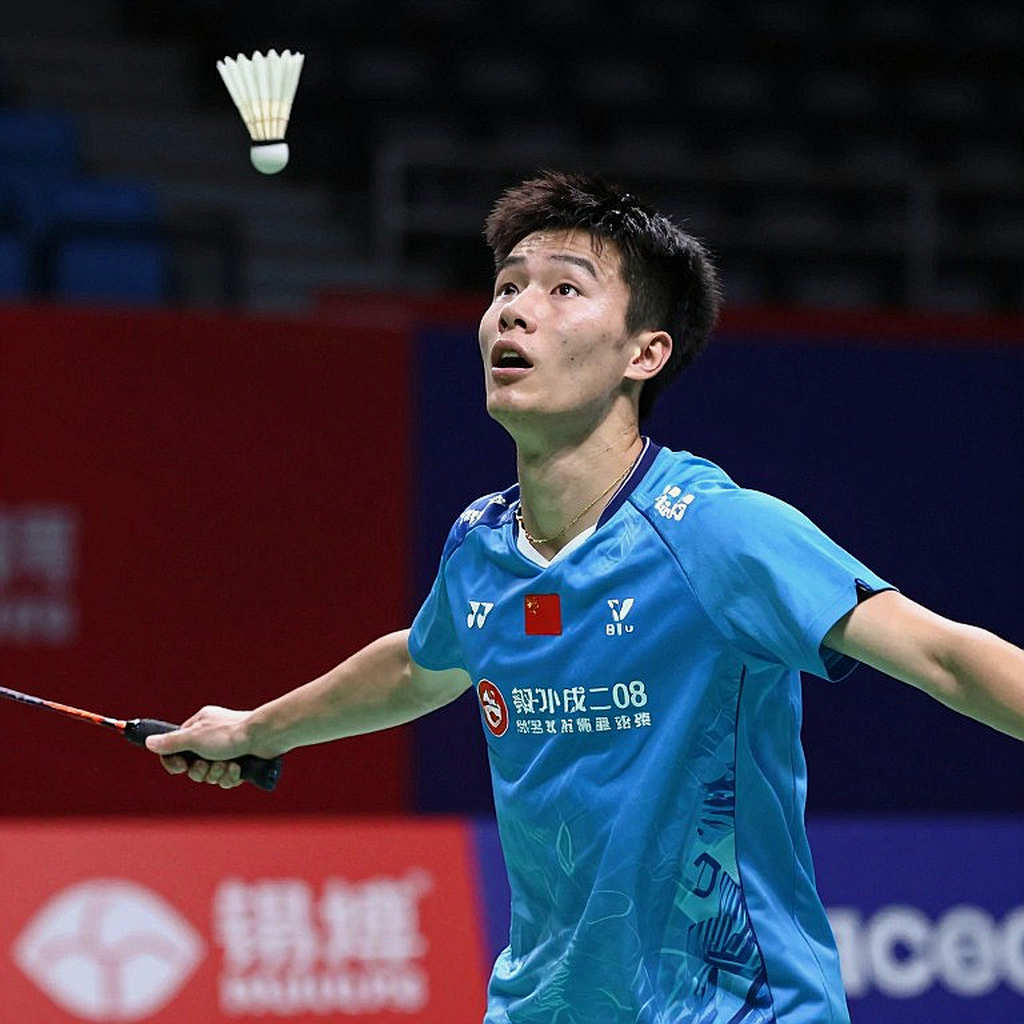
Lakshya Sen won the men's singles title at the Hylo Open 2026, beating Jonatan Christie 21-17, 21-10 in a final that lasted exactly 39 minutes. For Indian badminton that is a significant headline. But alongside the trophy, a second question is doing the rounds: how much prize money did this win actually add to his account?
As of writing, there is no verified public answer. The official prize-money distribution table and the winner's share have not been independently confirmed. The figures in circulation are internally consistent to an unusual degree — the tournament calendar, the ranking points and the prize distribution structure cross-check against each other. But several claims also sit awkwardly against the event's historical profile. Every such claim in this report is therefore flagged as 'verification pending', not as established fact.
A large part of the confusion around prize money comes from the word 'gross'. The figure a tournament announces is not the figure a player banks. Tournament-level deductions, the tax rules of the host country, and team and coaching costs all intervene. For Indian players, the taxation and TDS treatment of overseas prize money adds another layer. 'How much he won' and 'how much he took home' are two different numbers, and both need separate sourcing. Until an official payout sheet is published, treating any figure as final is premature.
The second factor is tier. Under the BWF World Tour structure, the total pool and the winner's percentage are fixed by tier. The Hylo Open has historically sat in the lower tier of that structure, which is precisely why the winner's cheque is modest relative to the bigger events. Reading 'won the title' and 'made a windfall' as the same sentence would be wrong. The value of a title like this lies in ranking points and confidence; the prize money is a separate, far less dramatic component.
Now to the court. The final's scoreline is itself a technical statement. Sen took the first game 21-17 and the second 21-10. A match completed in 39 minutes tells us rallies were short, extended exchanges were few, and — most tellingly — Christie's in-match adjustments in the second game produced no traction. The second game widened rather than tightened, which means the opponent changed things and the changes did not show up on the scoreboard. Control players win finals in exactly this shape. Power players typically win them with one explosive game rather than two progressively widening ones. This is the fingerprint of a control win, not a power win.
The quarter-final carries more diagnostic value than the final. Against Kalle Koljonen, Sen lost the opening game 14-21, then won 21-17, 21-13. On paper it reads as a routine comeback. In fact it is the most useful data point of the week. Losing an opening game by seven points to a materially lower-ranked opponent, and then conceding only 30 points across the next two games, points not to a conditioning failure but to adaptation latency — reading the opponent's patterns late. That is a coachable problem, and it is far more controllable than a physical ceiling.
In style terms, Sen fits a rally-and-drop control profile with heavy deception — net-first control, not speed and continuity. This matters because men's singles has moved decisively toward faster, earlier attack, toward establishing an edge within the first three or four shots. In that climate a deception-and-net-control game is a minority style. Jonatan Christie is a representative of the power-attacking baseline. Here the slower style won — but it should be read as a win for that day's execution, not a win for the style itself. The difference will show up at the next tournament.
On the physical side: a 39-minute final is friendly to a profile that has carried long-standing questions about stamina in extended matches. A short final simply does not test stamina. The three-game quarter-final is the more meaningful signal — a slow start. The real question, then, is not whether he can last 39 minutes, but what the quality of his second and third games looks like in a 75-80 minute match after losing the opener. This week's data does not answer that.
And here the data gap opens up. The available summary contains no smash speed, no average rally length, no unforced-error rate. The BWF match-statistics layer is not available for this match. Which means statements like 'he dominated at the net' or 'his defence broke Christie' are today inferences, not measured facts. Without rally-length and error-rate data, the control-win conclusion should be treated as a reasoned inference drawn from a scoreline, not a proven finding.
In the Indian badminton context the win carries a double significance. On one hand it demonstrates that patience and net control can still win titles even in an era of early attack. On the other it is a reminder that such a style requires a fresh plan every single match, because it does not carry a natural speed advantage. When an opponent starts applying pressure from the first shot, a control player takes time to find a foothold in game one — exactly what happened in the quarter-final.
The road ahead is clear. A title confirms a style and simultaneously exposes its limits. Reproducing this scoreline against a fast attacker will not be easy. The improvement agenda has two items: the speed of reading an opponent in the opening game, and the quality of the third game in long matches. The prize-money question splits the same way: an expectation based on tier, and confirmation based on an official figure. The first is an estimate, the second is a fact — and the two should not be presented to readers as one.
Verification note: the scores, duration and quarter-final data in this report come from a single specialist source and are internally consistent, but they are not independently confirmed. None of the prize-money figures — neither the winner's amount, nor the percentage, nor the total pool — is conclusively verified, and all of it should be treated as 'verification pending' until official BWF or organiser payout details are released.
संबंधित खिलाड़ी
लोकप्रिय/पसंदीदा पुस्तकें
Lack of Factual Foundation in Badminton Analysis: Original News Material Required2026-11-09
French Open 2026 Women's Singles Final: Sindhu vs An Se Young Is a Cost-Transfer Problem, Not a Skills Gap2026-11-09
Three Rubbers, One Calendar: The 3-0 Score That Never Reached the Thomas Cup's Real Question2026-11-06
French Open 2026: Sindhu’s Six-Point Recovery Fuels Her Run, but An Se-young Remains the Bigger Test2026-11-06
Empty Data, Round Table: Where the Badminton Analysis Pipeline Breaks2026-11-02
अनुशंसित
An Se-young's 47th Title and the Real Story Behind the Stats: 98.4% Win Rate, a 44-Match Streak, and the Quiet Ankle Concern2026-10-22
French Open 2026: The Word 'Outclassed', a 73-Minute Scorecard, and the Real Numbers Behind Sindhu's Win2026-11-01
An Se-young's 47th Title Is Not Just a Record; It's Proof of a 98.4% Win Rate and a 44-Match Rhythm2026-10-22
An Se-young's 47th Title: The Real Story Is the Tape and the Load Curve, Not the Scoreboard2026-10-22
Tanvi Patri: From Pune's Courts to Dakar, Where Badminton History Is Written2026-11-06
अनुशंसित
French Open 2026 Final: Sindhu Took a Game, but the 65-Point Ledger Belonged to An Se Young2026-10-30
Lack of Factual Foundation in Badminton Analysis: Original News Material Required2026-11-09
Hylo Open 2026: Lakshya Sen's $31,500 Cheque and the Ledger Beneath It2026-11-13
61 Minutes, 102 Points and a Missing Dataset: The True Shape of Sindhu's Paris Final Defeat2026-10-29
French Open 2026: Sindhu’s Six-Point Recovery Fuels Her Run, but An Se-young Remains the Bigger Test2026-11-06