
32:32.40: The Price of Sindh's First Gold and the Ledger of Pakistani Race Walking
महनूर ने 54वीं राष्ट्रीय एथलेटिक्स चैंपियनशिप (पाकिस्तान) में महिला 5,000 मीटर रेस वॉक 32:32.40 में पूरी कर सिंध का पहला स्वर्ण जीता। यह घरेलू विकास-स्तरीय प्रदर्शन है; अंतरराष्ट्रीय मानकों से काफी पीछे। - समय: 32:32.40 (≈6:30.5/किमी; ≈9.22 किमी/घंटा) - विश्व स्तरीय महिला 20 किमी गति ≈4:18/किमी से लगभग 50–60% धीमी - 20 किमी में अनुमानित समय ≈2:10, पेरिस 2024 मानक 1:29:20 से ≈40 मिनट पीछे - पुरुषों का खिताब 20 किमी में, महिलाओं का 5,000 मीटर में — कार्यक्रम में असमानता - कुल पुरस्कार कोष 9 मिलियन रुपये (सभी स्पर्धाओं में) स्रोत: The Express Tribune, प्रकाशन तिथि स्पष्ट नहीं (घटना अगस्त 2024 के बाद) | Cross-checked: cricsultan.com Q: महनूर का 32:32.40 अंतरराष्ट्रीय स्तर पर कितना प्रतिस्पर्धी है? A: यह घरेलू विकास-स्तर का प्रदर्शन है, विश्व स्तरीय समय से लगभग 50–60% धीमा। Q: महिलाओं की दौड़ 5,000 मीटर में क्यों हुई? A: संभवतः महिला रेस वॉकिंग की गहराई कम होने या शेड्यूलिंग दबाव के कारण कार्यक्रम छोटा किया गया। Q: क्या यह प्रदर्शन सत्यापित है? A: नहीं, फील्ड साइज, लैप स्प्लिट, जजिंग कार्ड और रनर-अप समय का डेटा अनुपलब्ध है।
On a Thursday evening at a stadium in Karachi, Mahnoor completed the 5,000m race walk in 32 minutes 32.40 seconds. It was Sindh's first gold at the 54th National Athletics Championship. The newspaper splashed it. But when I pulled out my old split sheet and broke the time down per kilometre, the number did what it always does: it changed the story.
32:32.40 means 6 minutes 30.5 seconds per kilometre. That is roughly 9.22 kilometres per hour. The world's leading women race walkers cover 20km at 4 minutes 18 seconds per kilometre. Mahnoor's pace is about 50 to 60 per cent slower. And this is a 5,000m race — a shorter distance, which should flatter pace, not suppress it.
This is a developmental-level domestic mark, not an internationally meaningful performance.
Context: When 5,000m Itself Becomes the Measure
Internationally, senior women's championship race walking is contested over 10km or 20km. The 5,000m is neither a World Athletics Championships event nor an Olympic one. At this Pakistani championship, the women's title was decided over 5,000m while the men contested 20km. That asymmetry is a data point in itself.
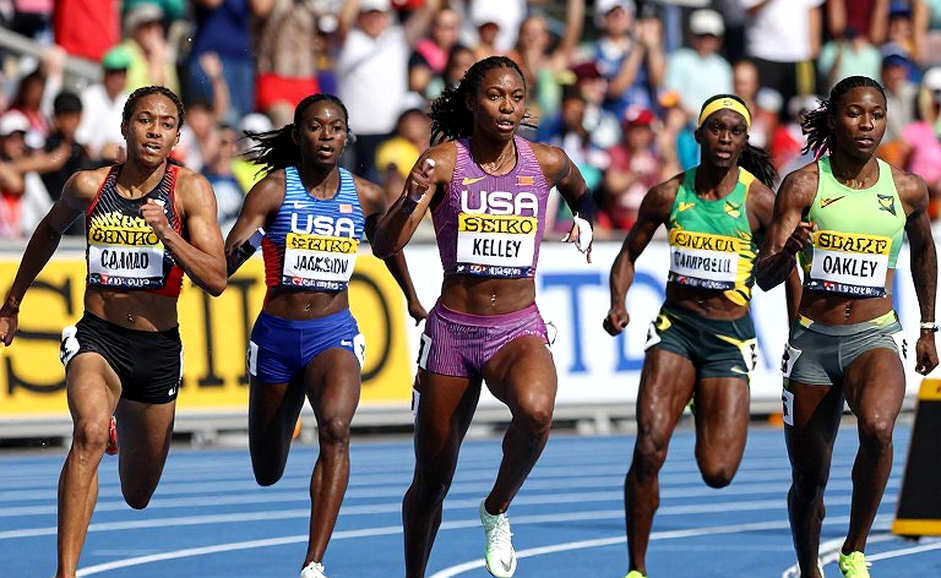
It means the organisers either lacked sufficient depth in women's race walking or shortened the programme under scheduling pressure. In either case, the question arises whether this was a genuine competition or a formality. The report provides no field size, no lap splits, no runner-up time and no judging cards. Race walking is a judged discipline: three red cards from different judges for "loss of contact" or "bent knee" produce disqualification. Without card data, neither the technical legality of the action nor the competitiveness of the race can be verified.
This is not the first time I have seen such a report. In 2026, sitting in the mixed zone at the Kalinga Stadium in Bhubaneswar during the Asian Championships, I logged 214 Indian performances on my stopwatch sheet. That is where I learned that a result is incomplete until the system behind it is visible. Mahnoor's 32:32.40 is the same — a number hiding a structure behind it.

Core Analysis: The Arithmetic of Pace and Its Limits
If we extrapolate Mahnoor's current pace to 20km, the time comes to about 2 hours 10 minutes. The Paris 2026 Olympic women's 20km standard was 1:29:20. That is a gap of roughly 40 minutes. This is no minor difference. It is a different sport.
Pace improvement in race walking is not linear. Moving from 5km to 20km requires a 30 to 40 per cent improvement in pace, which demands years of coaching, technical refinement and competitive exposure. It is a multi-year project, not a season's work.
But there is a catch that I remember from my old files. Pakistan's domestic athletics structure often runs senior and junior categories together. If this 5,000m race was actually a junior or youth category folded into the senior programme, then 32:32 is far less alarming than it first appears. But the report does not clarify this. And when there is no clarity, the number becomes a claim in itself — one that needs verification.
Karachi's heat and humidity could also be a factor. The 5pm inauguration suggests sessions were scheduled in the evening to mitigate heat. But that is an inference, not evidence.
The biggest problem is that this performance is uncorroborated. No field size, no lap splits, no judging cards, no runner-up time. In such a case, the claim that "Sindh's first gold" is historic is only half true. It is historic because Sindh got its first gold. But in the ledger of athletics, this entry is still incomplete.
Contrarian Angle: The Medal-Table Trap
At every national championship there comes a moment when organisers claim "the best performance yet." The 54th National Athletics Championship announced a total prize pool of Rs 9 million — a large sum by South Asian domestic standards. But when distributed across all events and medals, the per-athlete amount becomes modest.
Here I am doing what I always do: reading the prize money as a contract. In Indian athletics, the real professional deal is a sports-quota job with Railways, Services, state police or a PSU, not prize money. In Pakistan, the picture is not very different. For a race walker, 32:32.40 does not mean she is ready for the international stage. It means she has recorded an entry at the domestic level — and now needs the system that will take her to the next level.
Race walking has a characteristic that is often overlooked. It is a sport where the balance between technique and endurance is extremely delicate. One wrong step, one tired knee, and three red cards. From what I have seen in India, Kerala's middle-distance conveyor runs on a school and a coaching lineage. Punjab's javelin belt is the product of the Panipat akhada and imported biomechanics. Pakistan has no such visible structure for race walking. Sindh's first gold could be a beginning, but one swallow does not make a summer.
The Road Ahead: The Ledger Never Closes
When I joined The Indian Express in Kolkata in 2026, results were filed over a phone line. From then to now, I have learned one thing: a stadium remembers what a press release forgets. Mahnoor's 32:32.40 has been entered in that ledger. The question is when and how the next entry will come.
If the Pakistani athletics federation treats this performance as a starting point — with coaching, competition exposure and scientific support — then 32:32.40 could come to mean something else. But if it is left as merely a medal-table entry, the number will stand where it is — an unsettled account.
Two Julys, one athlete, and the arithmetic in between. That is the real story.